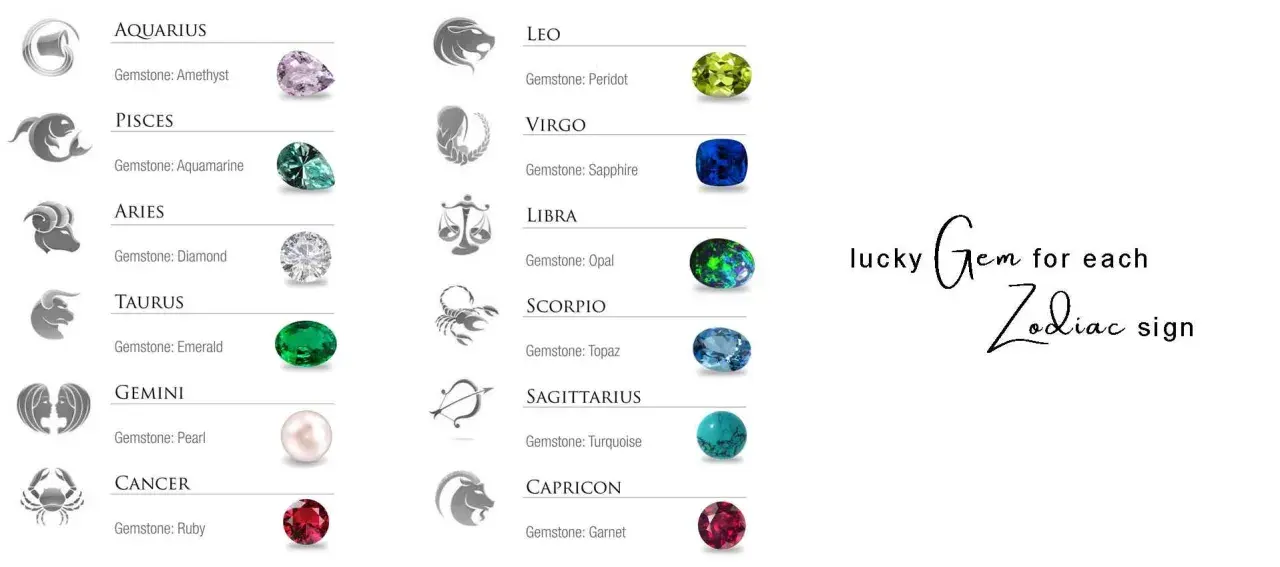
Zodiac birthstones are easiest to use when you treat them as a symbolic jewellery system rather than a hard rulebook. In this guide, I’ll show you the most common sign-to-stone pairings, why different sources disagree, and how to choose a piece that suits real wear, not just a horoscope. I’ll also flag the stones that can handle everyday use and the ones that are better left to pendants or occasional rings.
What matters most before you choose a stone
- There is no single universal chart. Sign-based gemstone lists vary, so always check which tradition a seller is using.
- Monthly birthstones and sign stones are not the same system. They overlap sometimes, but they do not always point to the same gem.
- Durability matters. Diamond, sapphire and ruby are the easiest daily-wear choices; pearl and opal need far more care.
- The best setting depends on the gem. Softer stones often work better in pendants, studs or protective mounts.
- Style should come before symbolism. The most wearable piece is the one that fits the person’s wardrobe and habits.
Why the lists are not one-size-fits-all
There is no single official zodiac chart. Some jewellers follow a modern Western list, others lean on older astrology traditions, and a few mix in month-based birthstones when a sign and month overlap. The result is confusion if you expect one stone per sign. I think the better way to read the system is as a set of symbolic pairings, each with a different history and a slightly different logic.
The American Gem Society notes that the modern monthly chart and older sign-based links developed separately, which is why a Taurus ring might be emerald in one place and sapphire in another. That is not a mistake; it is a reminder to check which tradition the seller is using before you buy.
Once you know that, the sign-by-sign chart becomes much easier to use.
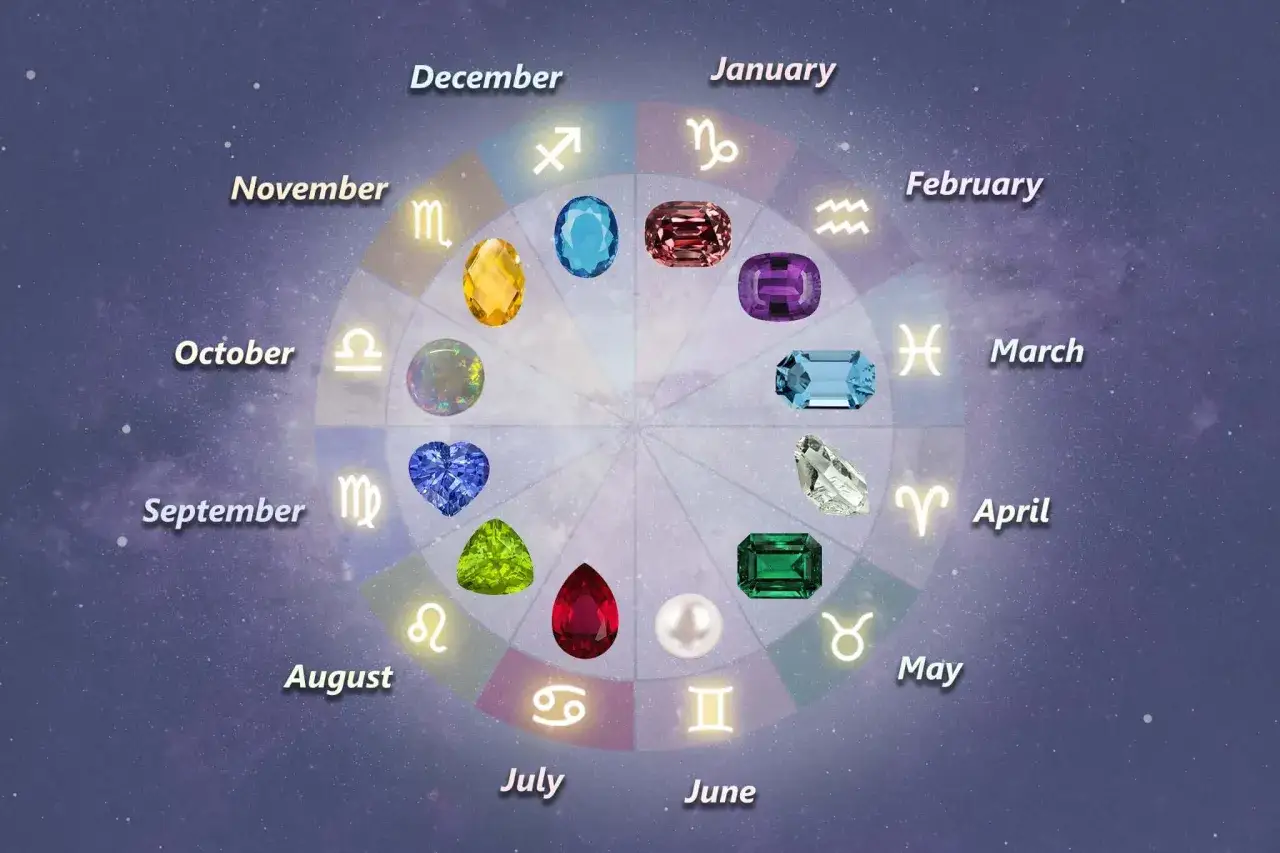
The twelve sign stones I would start with
I’m using one common modern Western chart below because it is the version most shoppers recognise. If you see older alternatives such as bloodstone, agate, onyx, carnelian or turquoise, you are usually looking at a different tradition rather than bad information.
| Sign | Commonly linked stone | Why people reach for it | Best for |
|---|---|---|---|
| Aquarius | Amethyst | Cool colour, calm feel, easy to wear with silver-toned metal | Pendants and simple rings |
| Pisces | Aquamarine | Soft blue tone that feels light rather than heavy | Earrings, pendants and layering pieces |
| Aries | Diamond | Strong, classic and hard-wearing | Everyday rings |
| Taurus | Emerald | Rich green colour with a quietly luxurious look | Protected rings and pendants |
| Gemini | Pearl | Clean, luminous finish that feels refined rather than flashy | Necklaces and studs |
| Cancer | Ruby | Deep colour and strong presence | Rings and statement pendants |
| Leo | Peridot | Fresh green tone that looks lively in gold settings | Statement jewellery and summer pieces |
| Virgo | Blue sapphire | Clean, precise colour with broad jewellery appeal | Rings, studs and everyday pendants |
| Libra | Opal | Play of colour and a softer, more artistic feel | Pendants and occasional rings |
| Scorpio | Topaz | Clear, expressive colour range with a strong personality | Low-set rings and pendants |
| Sagittarius | Tanzanite | Blue-violet colour that stands out without looking harsh | Special-occasion jewellery |
| Capricorn | Garnet | Deep red tone that feels understated and polished | Rings, bracelets and signet-style pieces |
If you come across a different pairing, it usually comes from an older or alternative chart. That is especially common with Gemini, Cancer, Leo, Scorpio and Sagittarius, where retail traditions do not always line up perfectly. The main thing to notice is that some stones are naturally better suited to daily wear than others, and that matters when the jewellery is meant to be worn rather than simply collected.
How zodiac birthstones differ from monthly birthstones
GIA keeps its public birthstone guide month-based, so a June birthday can point to pearl, moonstone or alexandrite depending on the list you are reading. That is why the month system and the sign system are easy to confuse if you only glance at one chart. They answer slightly different questions: “what month were you born in?” versus “what sign were you born under?”| Aspect | Zodiac chart | Monthly chart |
|---|---|---|
| Basis | Astrological date range | Calendar month |
| Best use | More personal if the wearer cares about astrology | More familiar and easier to match to traditional gifts |
| Common overlap | Some signs share stones with month-based lists | Some months have multiple accepted stones |
| Shopping risk | Different retailers may use different sign charts | The same month may still have more than one accepted option |
In UK jewellery retail, the month-based version is still the easier one to find in mainstream listings, while the sign-based version feels more personal for astrology-minded buyers. That split gives you freedom, but it also means you should decide which system you want before you compare prices or styles.
Which stones actually work for daily wear
When I’m judging a stone for daily jewellery, I look at hardness first and toughness second. Hardness is scratch resistance; toughness is how well a gem copes with knocks and chipping. That distinction matters because a hard stone can still be a poor choice if it has cleavage or a fragile structure.
| Stone | Mohs hardness | Practical takeaway |
|---|---|---|
| Diamond | 10 | The safest everyday ring choice |
| Ruby | 9 | Excellent for rings and long-term wear |
| Sapphire | 9 | Excellent for rings and pendants |
| Topaz | 8 | Very wearable, but it still prefers a protective mount |
| Emerald | 7.5 to 8 | Wearable, but best in protected settings because it is often treated |
| Amethyst | 7 | Good for regular wear if you are not rough on jewellery |
| Garnet | 6.5 to 7.5 | Fine for rings if the setting is sensible |
| Peridot | 6.5 to 7 | Best for careful ring wear or pendants |
| Opal | 5 to 6.5 | Better in pendants and earrings than in rough-wear rings |
| Pearl | 2.5 to 3 | Best kept away from abrasive use, chemicals and impact |
If you want one rule of thumb, I use this: 7 or above is comfortable for frequent rings; below that, I move the stone into a pendant, earrings or a very protected setting. Topaz is a good example of why the rule needs nuance: it is hard enough for jewellery, but it still deserves a protective mount because it can chip more easily than the hardness number suggests.
That is the point where symbolism has to meet practicality, because the next decision is not the stone itself but how you style it.
How I would style them as jewellery rather than a costume
The cleanest pieces usually have one job: they let the colour do the talking. I like a simple solitaire, a bezel-set pendant or small studs far more than an overloaded design with stars, moons, initials and symbols all competing for attention.
- Yellow gold flatters emerald, peridot, ruby and garnet.
- White gold or platinum makes diamond, sapphire, aquamarine and amethyst look cleaner and cooler.
- Rose gold softens pearl, opal and other pale stones, so the piece feels warmer.
- A 40 to 45 cm chain usually sits near the collarbone; 50 to 55 cm feels more relaxed.
- For gifts, match the piece to the wearer’s habits: ring, pendant, studs or bracelet.
I usually tell readers to choose the jewellery form first and the symbolism second. If the wearer already lives in small, subtle pieces, a delicate pendant or a pair of studs will feel more natural than a statement ring, even when the stone itself is perfect.
Once the design feels right, care is what keeps it looking intentional rather than tired.
How to care for them without dulling the stone
Most sign stones are easy to live with if you clean them gently and respect their weak spots. My default routine is warm water, a drop of mild soap and a soft brush for durable gems such as diamond, sapphire, ruby, garnet, peridot, amethyst and most topaz pieces.
- Wipe pearls with a soft cloth after wear and keep them away from perfume, hairspray and acid-based cleaners.
- Avoid ultrasonic or steam cleaning for opal, pearl and treated emeralds unless a jeweller specifically says the stone can take it.
- Store each piece separately so harder gems do not scratch softer ones in the box.
- Take rings off before gym work, swimming or heavy cleaning.
- If a stone has been treated, follow the care advice for that treatment, not just the stone name.
I also check claws and settings about once a year for daily-worn rings, because a secure setting matters just as much as the gem itself. Pearls, opals and fracture-filled emeralds are the pieces that punish lazy care fastest, so they are the ones I handle most deliberately.
That leaves the final decision: how to choose one stone that still feels personal a year later, not just on the day it arrives.
The simplest way to choose one that still feels personal
If I were choosing a piece today, I would work in this order: sign or month, wearability, colour, then setting. That order keeps the decision practical and stops the jewellery from becoming a novelty item you admire once and never wear.
- Choose the system you actually care about, because the wrong chart will feel hollow even if the stone is beautiful.
- Match the gem to the way it will be worn. Rings need more durability; pendants and earrings give you more freedom.
- Pick a colour that already fits the wearer’s wardrobe.
- Check treatment disclosure and setting style before you pay for a stone with sentimental meaning.
The best sign jewellery is the piece that still makes sense after the astrology joke has worn off. If it is comfortable, durable and visually coherent, the symbolism will do its job quietly in the background.