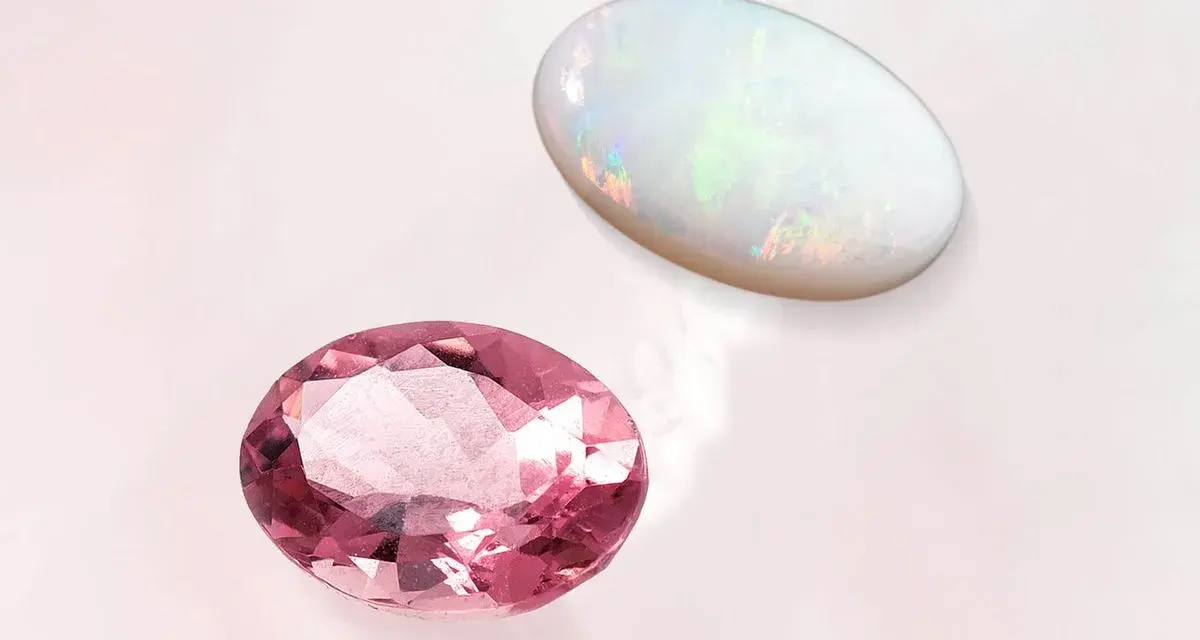
October 27 sits in one of the most jewellery-friendly birthstone months, because October gives you two distinct gemstones instead of one. If I had to answer the October 27 birthstone question in one line, I would say opal is the classic pick and tourmaline is the versatile alternative. The rest comes down to whether you want visual drama, everyday wearability, or a particular colour palette.
October 27 belongs to October’s opal and tourmaline pair
- October 27 falls under October’s birthstones, opal and tourmaline.
- Opal is the classic answer and is known for its shifting play-of-colour.
- Tourmaline is the tougher daily-wear option and comes in pink, green, blue, and more.
- For a ring you plan to wear often, tourmaline usually makes life easier.
- For a one-of-a-kind pendant or special piece, opal is hard to beat.
What the October 27 birthstone is
There is not a separate gemstone assigned only to 27 October; the date inherits October’s birthstones. In practical terms, that means opal is the classic answer, with tourmaline alongside it. If someone wants a single stone for a birthstone pendant or ring, I usually start with opal because it is the most recognisable October gem. If the wearer is practical, colour-led, or hard on their jewellery, I am quick to point them toward tourmaline instead.
That distinction matters because date-based birthstones are less about rigid rules and more about choosing the stone that best fits the wearer. Once you understand that, the rest of the decision becomes much simpler, and the history behind October’s two stones starts to make sense.
Why October has two birthstones
Modern birthstone charts give October two accepted gems, and that is useful rather than confusing. Older charts leaned more heavily on opal, while newer lists added tourmaline as a practical companion rather than a replacement. That is why October can be styled in two very different ways without breaking the tradition.
For me, the real value of the two-stone system is choice. Opal brings mystery and movement; tourmaline brings colour range and wearability. That is why October works so well for gift buying: you can match the stone to the person instead of forcing the person to match the stone. Once that is clear, the difference between the two gems becomes much easier to read.
Opal’s colour, meaning, and best settings
Opal is the stone most people picture first, and for good reason. Its famous play-of-colour, the flashes created when light diffracts inside the stone, can show green, blue, orange, red, and violet as it moves. I also like the fact that no two opals are identical; that irregularity is part of the appeal, not a flaw.
Opal has also carried a layered reputation over time. It has been loved for its colour, but it has also picked up a little superstition along the way, which only adds to the feeling that it is a stone with personality. Black opal can look especially dramatic, while white or light opal gives a softer, more romantic feel.
Most fine opals are cut as cabochons, which means a smooth domed shape rather than a faceted cut. That cut protects the stone and shows the colour play more clearly, especially in rings and pendants. Opal is beautiful, but it is also softer and more delicate than many buyers expect, so I treat it as a stone for thoughtful wear rather than rough use. Its hardness usually falls around 5 to 6.5 on the Mohs scale, which is exactly why the setting matters so much.
Style-wise, opal works best when the setting supports the gem instead of competing with it. Slim metalwork, halo settings, and pendant drops all suit it well, especially in yellow gold or warm rose gold if you want the colour to feel richer. A bezel setting, where the metal wraps around the edge of the stone, can be a smart choice for opal because it adds protection without making the design feel heavy. That softer approach is one reason people often keep opal for special pieces and then look to tourmaline for the everyday version of the same birthstone idea.
Tourmaline as the practical alternative
Tourmaline gives October a very different personality. Instead of shifting flashes inside the stone, you get a clearer body colour, meaning the gem’s main visible colour, often in shades of pink, green, teal, or deep blue. Tourmaline is not a single look so much as a family of related gems, which is why the colour range feels so broad. Pink tourmaline is especially popular for October jewellery because it feels romantic without being predictable.
One of the most memorable versions is watermelon tourmaline, which shows pink and green in the same crystal and gives October jewellery a playful, graphic look. That variety is useful if you want a birthstone piece that feels less formal than opal but still has real character. Tourmaline’s appeal is not just colour, though. It also has the kind of durability that makes people trust it more.
It sits around 7 to 7.5 on the Mohs scale, so it is generally suitable for regular wear, and it handles ring settings better than opal does. That does not make it indestructible, but it does make it far more forgiving if the jewellery will be worn often. I usually recommend tourmaline when the brief is “birthstone, but make it wearable.” It has enough colour to feel personal, enough durability to suit everyday life, and enough variety to work in both classic and modern jewellery. If opal is the poetic choice, tourmaline is the practical one.
How I would choose between opal and tourmaline
When I compare the two stones side by side, I look at how the jewellery will actually be worn. A birthstone should feel meaningful, but it should also survive the wearer’s routine. This is the point where a simple comparison usually clears up the decision quickly.
| Factor | Opal | Tourmaline |
|---|---|---|
| Visual effect | Shifting play-of-colour with flashes that change in the light | Stable body colour with a cleaner, more solid look |
| Durability | More delicate and better suited to careful wear | More durable and easier for regular use |
| Best jewellery types | Pendants, earrings, occasional-wear rings | Rings, bracelets, pendants, daily earrings |
| Style feel | Artful, dreamy, one-of-a-kind | Fresh, versatile, polished |
| Budget | Can range from accessible to collector-level, depending on colour and pattern | Often more flexible for everyday budgets |
| Best for | Someone who values uniqueness and softness in design | Someone who wants colour with fewer care concerns |
For opal, I usually favour a bezel or another protective setting because the stone deserves a little insurance. For tourmaline, a more open setting such as four claws can work beautifully and keep the colour bright. My rule of thumb is simple: choose opal if the jewellery is meant to feel special, choose tourmaline if it needs to work hard. That distinction is especially useful when the piece is a gift, because the recipient’s lifestyle often matters more than the birthstone tradition itself.
How to care for October birthstone jewellery
Care is where many birthstone purchases succeed or fail. Opal needs the gentlest treatment: warm soapy water, a soft cloth, and no steam or ultrasonic cleaning. It can also react badly to sudden temperature changes, so I avoid leaving opal jewellery in very hot cars, near radiators, or in direct heat for long periods. If the opal is a doublet or triplet, meaning an assembled stone made from layers, I would be even stricter about soaking and cleaning.
Tourmaline is easier, but not careless-proof. Warm soapy water and a soft brush are still the safest cleaning method, and I would also avoid ultrasonic or steam cleaners unless a jeweller has confirmed the specific stone and setting can handle them. If you own a ring, store it separately so harder gems do not scratch the surface. Tourmaline is resilient, but it still benefits from a little respect.
| Stone | Safe cleaning | Avoid | Storage tip |
|---|---|---|---|
| Opal | Warm soapy water and a soft cloth | Steam, ultrasonic cleaners, harsh chemicals, sudden heat | Keep it in a soft pouch away from other jewellery |
| Tourmaline | Warm soapy water and a soft brush | Rough knocks, extreme heat, aggressive cleaning methods | Store separately to prevent scratching |
If you remember only one thing, make it this: opal rewards caution, while tourmaline rewards consistency. Clean them gently, store them properly, and they will keep their colour and character for years, which leads naturally to the final question of what makes the best gift.
The gift choice I would make for someone born on 27 October
For a thoughtful October birthday gift, I would match the stone to the wearer rather than to the calendar alone. If they love unique, almost painterly jewellery, opal is the better choice. If they want a piece they can wear often without worrying too much, tourmaline usually makes more sense.
Design also matters. A simple pendant can make opal feel elegant without overstating it, while a tourmaline ring in a clean bezel or classic four-claw setting can feel modern and wearable. In yellow gold, pink tourmaline looks warm and romantic; in white gold or silver, opal often feels cooler and more luminous. Those small choices change the whole mood of the piece, which is why I think October is one of the easiest birthstone months to personalise.
So if you need the shortest practical answer: the October 27 birthday stone is opal first, tourmaline second, and the better gift is the one that fits the person’s style and habits. That is the part of birthstone jewellery that still matters most, and it is what makes a simple gem feel genuinely personal.