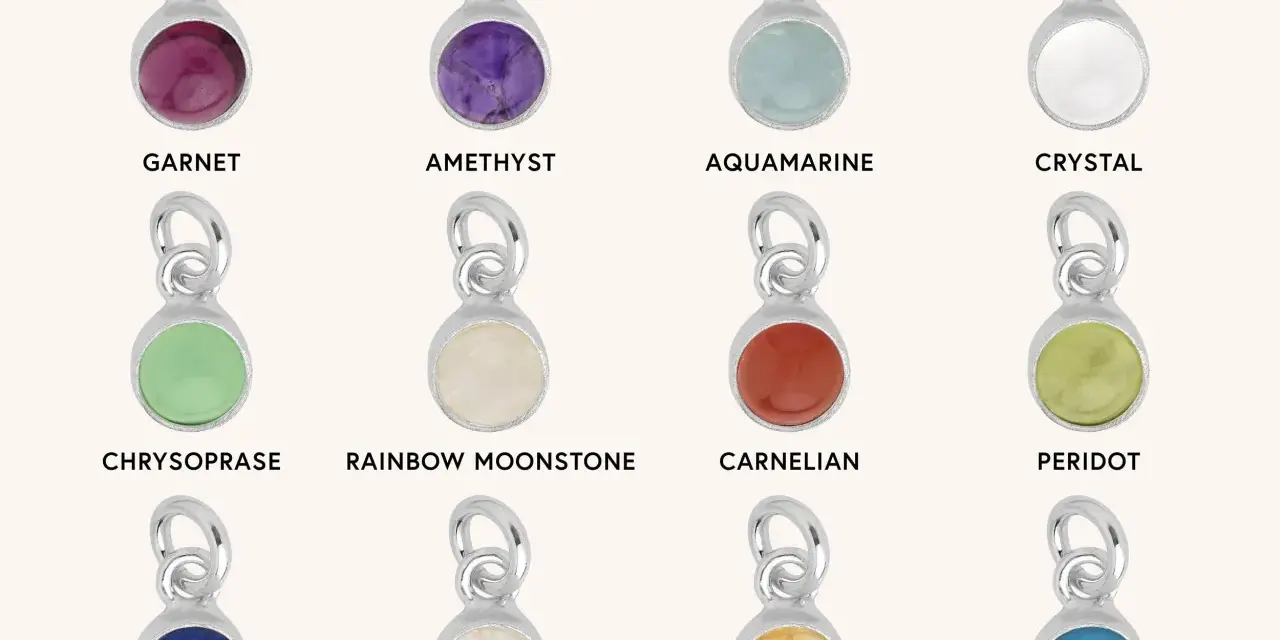
Birthstones can make jewellery feel personal without becoming fussy, and that is exactly why they remain such a strong gift choice. A clear guide to birthstones for months helps when you want a piece that feels meaningful without getting lost in conflicting charts. I’ll keep this practical: the monthly list, the main variations, and the details that matter when you are buying or styling a piece.
What the monthly chart tells you at a glance
- Most months have one headline birthstone, but a few months have accepted alternatives in modern charts.
- The best-known monthly list in UK jewellery is close to the international modern chart, but it is not identical to every older tradition.
- For rings worn every day, harder gems usually make more sense than soft or porous stones.
- Pearls, opals, emeralds and turquoise need more careful handling than sapphire, ruby or diamond.
- Colour, comfort and wearability usually matter more than chasing the rarest option.
How the monthly birthstone chart actually works
The idea behind birthstones is simple: each month is linked with a gemstone that carries a colour, a history and a set of symbolic associations. In practice, the chart has never been completely fixed, which is why different jewellers sometimes show different stones for the same month. I find that helpful rather than confusing, because it means the list can be used as a guide instead of a hard rule.
Modern charts usually keep one main stone per month and then add alternatives where tradition, availability or later updates have made sense. On many current references, six months carry more than one accepted stone: March, June, August, October, November and December. That flexibility is useful when you are shopping, because it lets you choose between a classic look, a better price point or a gem that suits everyday wear more comfortably.
In British jewellery guides, the familiar monthly names are the same ones people usually expect, but some older references still surface if you look beyond current retail pages. That is why I treat the monthly chart as a living tradition rather than a strict rulebook. The next step is the practical one: seeing the month-by-month list clearly before you decide what actually works for a piece of jewellery.
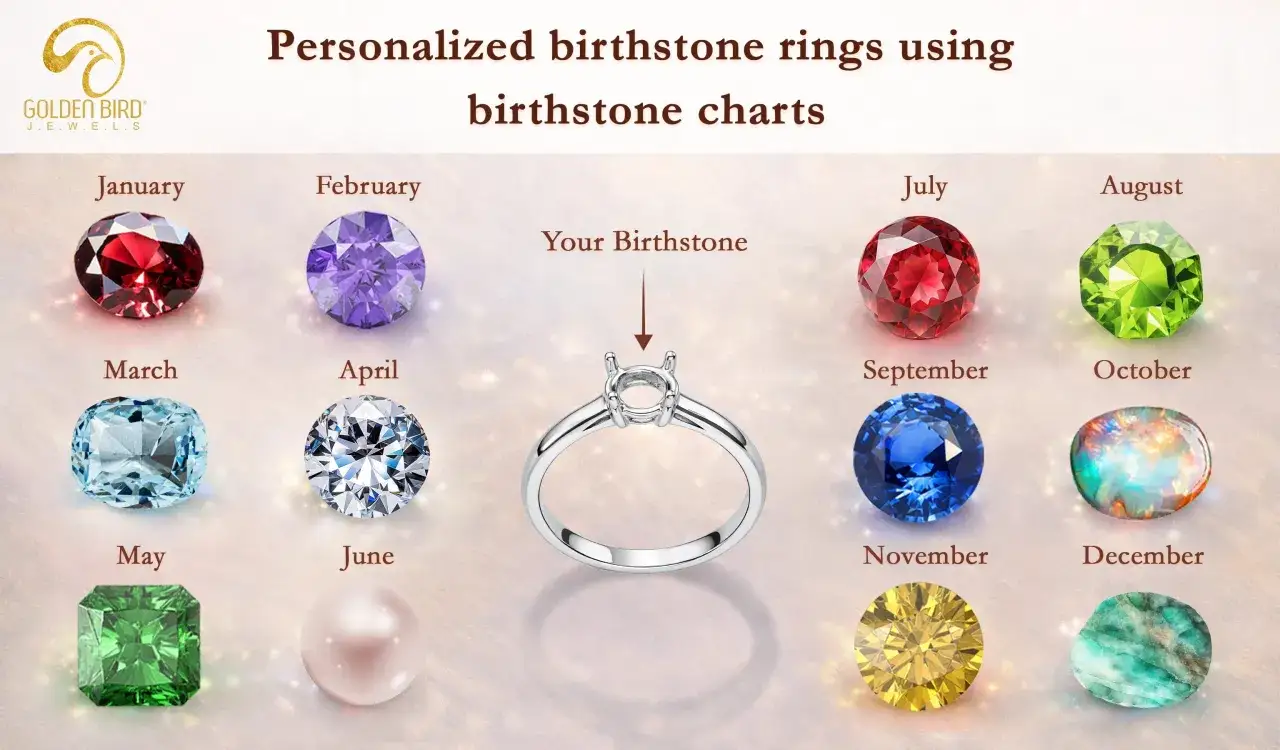
The birthstone for each month at a glance
A quick chart is the easiest way to see the pattern. I’ve kept the main stone first, then noted common alternatives where they are widely used today.
| Month | Main birthstone | Common alternatives | Why it stands out |
|---|---|---|---|
| January | Garnet | — | Deep red, versatile and easy to wear daily. |
| February | Amethyst | — | Rich purple colour with a calm, elegant feel. |
| March | Aquamarine | Bloodstone | Fresh blue-green tones that suit both modern and classic settings. |
| April | Diamond | — | The hardest and most enduring choice on the list. |
| May | Emerald | — | Distinctive green colour with a strong sense of luxury. |
| June | Pearl | Alexandrite, moonstone | Soft lustre and a timeless look that feels quietly elegant. |
| July | Ruby | — | Vivid red and a long-standing favourite for meaningful jewellery. |
| August | Peridot | Spinel, sardonyx | Bright colour and good everyday versatility in modern designs. |
| September | Sapphire | — | Classic, durable and far more varied in colour than many people expect. |
| October | Opal | Tourmaline | Known for its shifting play of colour and expressive look. |
| November | Topaz | Citrine | Warm golden tones that work well in both simple and ornate jewellery. |
| December | Tanzanite | Turquoise, zircon, blue topaz | Cool blue-violet shades that create a strong seasonal feel. |
If you see a different secondary stone on another site, that usually reflects a different modern standard rather than a mistake. The useful question is not “which chart is perfect?”, but “which version gives me the best stone for the wearer and the setting?”. That is where the buying decision becomes more practical.
How to choose a stone that fits real life
When I help people choose birthstone jewellery, I start with the setting and the wearer’s habits, not the calendar. A gem that is perfect on paper can be a poor choice if it will live on a ring hand that never gets a break. The best selection balances meaning, durability and budget in a way that feels honest rather than forced.
- Everyday wear: diamond, sapphire, ruby, spinel and, in many cases, aquamarine are safer bets for rings and bracelets.
- Gentler stones: pearl, opal, turquoise and emerald are beautiful, but I prefer them in pendants, earrings or rings with protective settings.
- Best value: garnet, amethyst, peridot, citrine and many topazes usually offer strong colour without a high price tag.
- Higher-end choices: emerald, ruby, diamond and alexandrite feel more special, but their price and care needs vary a lot with quality.
One technical point matters here: the Mohs scale measures scratch resistance, but it does not tell the whole story. A gem can be hard and still be brittle, which is why emerald and opal deserve more caution than their appearance suggests. If I were buying a ring for daily wear, I would rather choose a well-set sapphire than a softer stone in a flimsy mount. Once the practical side is right, the next question is how to make the piece look polished rather than overly themed.
Styling birthstone jewellery without making it look literal
Birthstone jewellery looks best when the gemstone feels like part of the design, not a label stuck on top of it. I usually prefer one clear colour story, a clean setting and a size that suits the piece rather than a very literal birthday look. The goal is to make the stone feel intentional, not decorative in a rushed way.
- For subtle jewellery: choose a small pendant, stud earrings or a slim bezel-set ring.
- For a family piece: line up several stones in a straight bar or gentle cluster so each gem still reads clearly.
- For a modern look: pair a birthstone with plain gold or silver to keep the design balanced.
- For a gift: match the gem’s tone to the wearer’s usual wardrobe rather than forcing the exact month into the biggest setting available.
In practice, January garnet looks rich in yellow gold, September sapphire often feels crisp in white metal, and June moonstone or pearl reads beautifully in softer, lighter settings. That kind of simple design work does more for the final piece than adding extra stones for the sake of it. After styling, the last thing worth getting right is care, because the most beautiful gem is still a waste if it wears badly.
Caring for common birthstone gems
Different birthstones need different levels of attention, and this is where many owners make avoidable mistakes. Harder stones can usually handle regular use, but softer or more delicate gems need a gentler routine. I always tell people to think about how they wear their jewellery before deciding how they clean it.
| Gem type | Best handling | Avoid |
|---|---|---|
| Pearl, opal, turquoise | Wipe with a soft cloth after wearing; store separately in a lined box | Perfume, hairspray, soaking, ultrasonic cleaners |
| Emerald | Use gentle cleaning only, and check the setting regularly | Steam cleaning, rough knocks, heavy daily abuse |
| Diamond, sapphire, ruby, spinel | Good for everyday wear; clean the underside and prongs as well as the face | Loose settings and hard impacts |
| Aquamarine, garnet, amethyst, citrine, topaz, peridot | Wear carefully and remove before sports or heavy work | Scratching against harder stones |
Two small habits make a real difference: take jewellery off before swimming, cleaning or gym sessions, and check settings once or twice a year if the piece is worn often. That saves more birthstone jewellery than almost any fancy cleaner. With that practical part covered, the final step is knowing how to use the chart without overthinking it.
How I would use the chart when buying a piece
If I were choosing a piece today, I would start with the month, then test the stone against three questions: will it be worn every day, does the colour suit the wearer, and does the setting protect the gem properly? That process keeps the decision simple and avoids the common mistake of choosing a beautiful stone that is wrong for the job. It also makes gifting much easier, because the stone no longer has to do all the work on its own.
That is why I treat birthstones for months as a starting map rather than a fixed script. The chart gives the meaning; the setting, durability and personal taste decide whether the piece will be loved and worn for years. If you are unsure, choose the most wearable version of the month’s stone, keep the design clean, and let the gemstone do the talking.