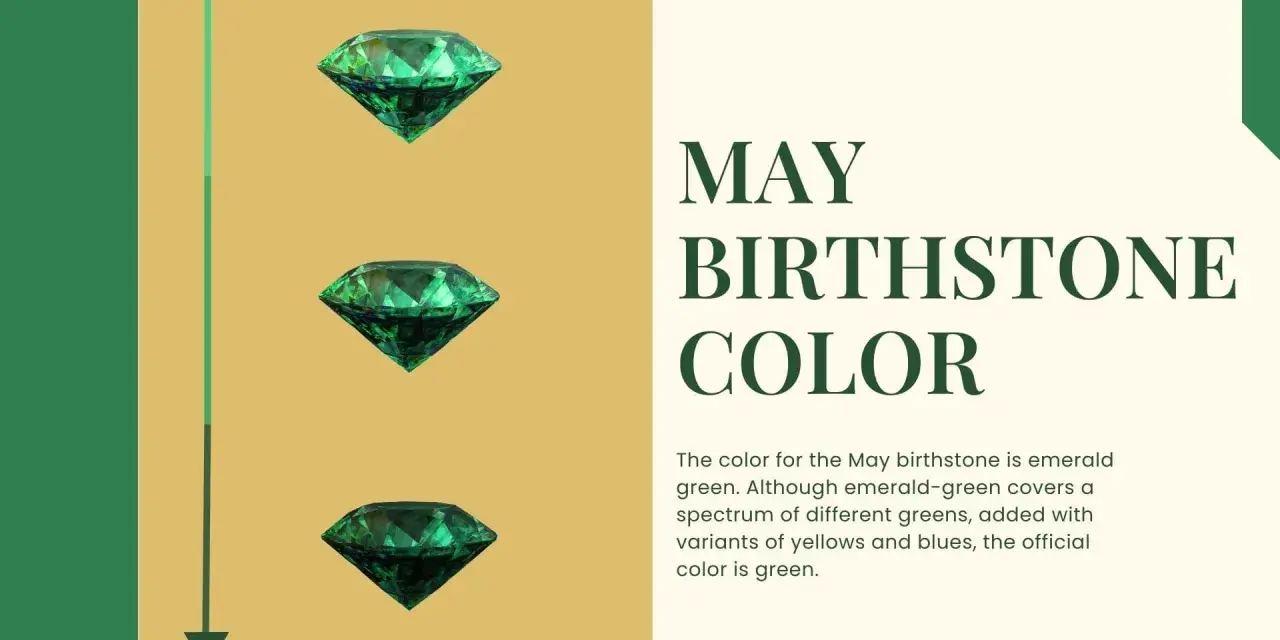
The May 13 birthstone is emerald, and that simple answer opens up a more useful question: what kind of emerald is actually worth buying, wearing, or gifting? In this guide I look at the stone’s meaning, the qualities that matter most when you judge one in person, the jewellery styles that flatter it, and the care routine that keeps it looking refined rather than tired. If you want the short version, this is less about folklore and more about choosing a piece that still feels elegant a decade from now.
Key facts about the 13 May stone
- Emerald is the standard birthstone linked with 13 May.
- The best stones are judged first on colour, then on cut and clarity.
- Visible inclusions are normal in emeralds; a little jardin is expected.
- Most emeralds are treated, so disclosure matters more than the word “natural” on its own.
- For daily wear, protective settings and gentle cleaning make a real difference.
What the birthstone for 13 May actually is
For a birthday on 13 May, the answer is straightforward: the birthstone is emerald. There is not a separate mainstream gemstone just for that date, so the practical choice follows the month rather than the exact day. If you have seen another chart, it is usually a niche zodiac or alternative system, not the standard jewellery reference most buyers use in the UK.
Emerald is the green variety of beryl, coloured by trace elements such as chromium and sometimes vanadium. That is why its appeal is so immediate: the stone is judged less by sparkle than by the depth and life of its green. Once that foundation is clear, the interesting part is why emerald still feels so right for May.
Why emerald fits a May birthday
Emerald works because it carries the visual language of spring without feeling childish. Its colour suggests new leaves, fresh growth, and a kind of quiet luxury that never needs shouting. I think that is why it has stayed popular for centuries: it looks alive, but also composed.
Symbolically, emerald has long been linked with renewal, loyalty, love, and wisdom. Those meanings make it a strong choice for a birthday gift with emotional weight, especially when you want the piece to feel personal rather than simply expensive. Historically, emeralds have also been prized in royal and ceremonial jewellery, which adds another layer of depth without making the stone feel old-fashioned. That history matters, but when you are buying one, the stone’s appearance and condition matter more.
Once the symbolism is in place, the real question becomes what makes one emerald genuinely worth owning and another merely pretty in a shop window.
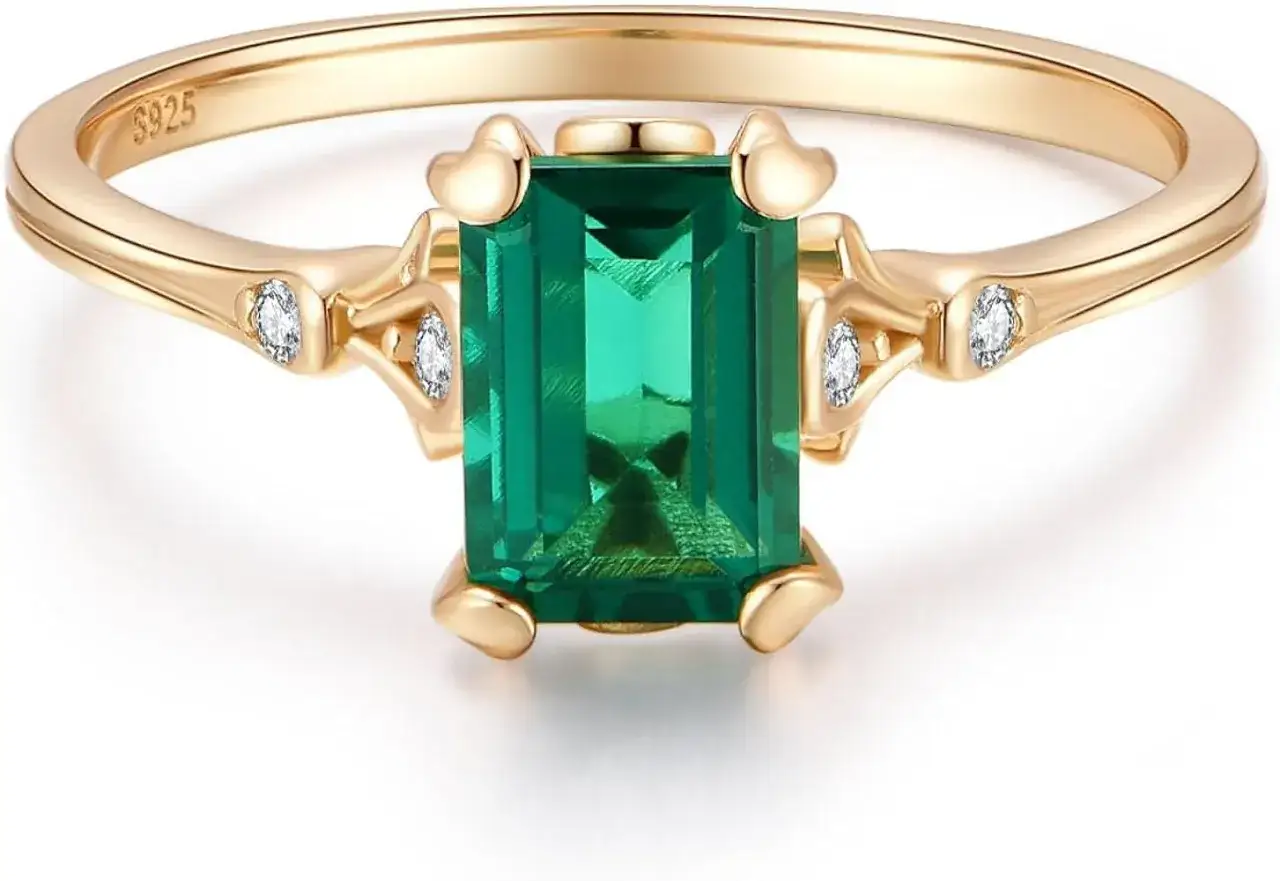
How I would choose an emerald that looks good in real life
Emerald is one of those gems where the usual rules need a slight adjustment. Colour comes first, clarity is more forgiving than it would be in a diamond, and the setting matters because the stone is beautiful but not indestructible. When I evaluate one, I look at the stone the way it will actually be seen: in natural light, on skin, and in a setting that will have to survive everyday use.
| What matters most | What to look for | What I avoid |
|---|---|---|
| Colour | A vivid, evenly saturated green with enough brightness to stay alive in daylight | Stones that look muddy, overly dark, or washed out under normal light |
| Clarity | Some visible jardin is normal; inclusions are acceptable if they do not dominate the face-up look | Claims of near-perfect clarity at a bargain price |
| Cut | A shape that keeps the colour strong and avoids a glassy “window” in the centre | Shallow cuts that make the stone look pale from above |
| Treatment | Clear disclosure of oiling, resin filling, or other clarity enhancement | Vague descriptions that leave treatment status unclear |
| Setting | Protective prongs, a low profile, or a bezel for rings worn often | Tall, exposed mounts that invite knocks |
Emerald sits at about 7.5 to 8 on the Mohs scale, which sounds reassuring until you remember that hardness is only part of the story. Its internal fractures and common clarity treatments mean it can be more vulnerable than that number suggests. If a seller is promising an untreated, flawless emerald at an unusually low price, I would be cautious. A well-disclosed, beautifully coloured stone is usually the smarter buy.
That buying logic leads naturally into the next decision: which jewellery form will show the stone off without making it hard to live with.
Which jewellery styles make emerald easiest to wear
Emerald can look elegant in almost any category, but some pieces are simply more forgiving than others. In practice, I like to match the stone to the wearer’s habits before I match it to a style trend. A piece that is worn often should not feel precious in the fragile sense.
| Style | Why it works | Best for |
|---|---|---|
| Pendant | Protected from knocks and easy to wear every day | Someone who wants the colour without the maintenance burden of a ring |
| Earrings | Shows emerald close to the face, where the green reads beautifully | A polished gift that feels special but not overcomplicated |
| Ring | Most personal and symbolic, especially in a low-profile setting | Wearers who will treat it as a fine piece rather than a hard-use ring |
| Bracelet | Can look very refined, but takes more impact from daily movement | Occasional wear or dressier occasions |
Metal choice changes the mood more than many people expect. Yellow gold gives emerald warmth and a classic feel; white gold or platinum sharpens the contrast and can make the green look colder and more modern; rose gold softens the stone and feels slightly more unexpected. For a birthday piece, I usually prefer a setting that lets the colour lead rather than one that competes with it. That said, the most beautiful style still needs sensible care if you want it to last.
How to care for emerald jewellery without overthinking it
Emerald does not need pampering, but it does need a lighter touch than many buyers assume. Because clarity treatments are common and natural fractures are part of the stone’s character, heat, impact, and aggressive cleaning methods can do real damage. The care routine is simple once you treat emerald as a beautiful but slightly sensitive gem rather than a tough everyday workhorse.
- Clean it with lukewarm water, a drop of mild soap, and a very soft brush.
- Dry it with a lint-free cloth straight after cleaning.
- Avoid ultrasonic cleaners and steam cleaners.
- Take it off before gardening, gym sessions, heavy housework, or any activity with knocks.
- Store it separately so harder stones do not scratch the surface.
- Have the setting checked every 6 to 12 months if you wear it often.
When I clean emerald at home, I keep it boring on purpose: gentle soap, short contact with water, no soaking if the piece looks heavily treated, and no shortcuts. If a piece needs deeper cleaning, I would rather let a jeweller handle it than gamble with heat or pressure. That level of caution also explains why some people choose a different green stone altogether.
Greener alternatives when emerald is not the practical answer
Not every birthday gift has to be the strict traditional choice. If you love the idea of a green stone but want something sturdier, more affordable, or simply easier to wear daily, a few alternatives make sense. The best substitute depends on whether you are chasing colour, durability, or budget.
| Alternative | Mohs hardness | Why choose it | Main trade-off |
|---|---|---|---|
| Green sapphire | 9 | Excellent for daily-wear rings and low-maintenance jewellery | Less tied to May’s traditional symbolism |
| Green tourmaline | 7 to 7.5 | Rich green colour with a strong value-for-money feel | Colour can vary more from stone to stone |
| Tsavorite garnet | 7 to 7.5 | Bright, lively green with a refined sparkle | Usually less common and often pricier than tourmaline |
| Peridot | 6.5 to 7 | Fresh, bright green that feels lighter and more playful | Softer than the others, so it scratches more easily |
If the piece is meant to be worn every day and the wearer is hard on jewellery, green sapphire is the practical winner. If the goal is to stay closest to the traditional birthstone, emerald still has the strongest identity. That final choice usually comes down to the person, the budget, and how often the jewellery is likely to be worn.
What I would check before buying a 13 May emerald piece
Before I buy emerald jewellery, I make a short checklist and stick to it. The stone should look alive in natural light, the treatment should be explained clearly, and the setting should suit the wearer’s routine rather than a showroom display. A beautiful birthstone piece should feel easy to own, not merely impressive to look at.
- Does the green still look rich outside harsh shop lighting?
- Is any oiling, resin filling, or other treatment disclosed clearly?
- Does the setting protect the edges and corners of the stone?
- Is the piece realistic for the wearer’s daily habits?
- Does the seller give enough detail for a confident purchase?
If I had to reduce the whole topic to one rule, it would be this: prioritise colour, honesty, and wearability over the fantasy of a perfect emerald. That is the difference between a birthday jewel that looks good for a week and one that feels genuinely worth keeping.