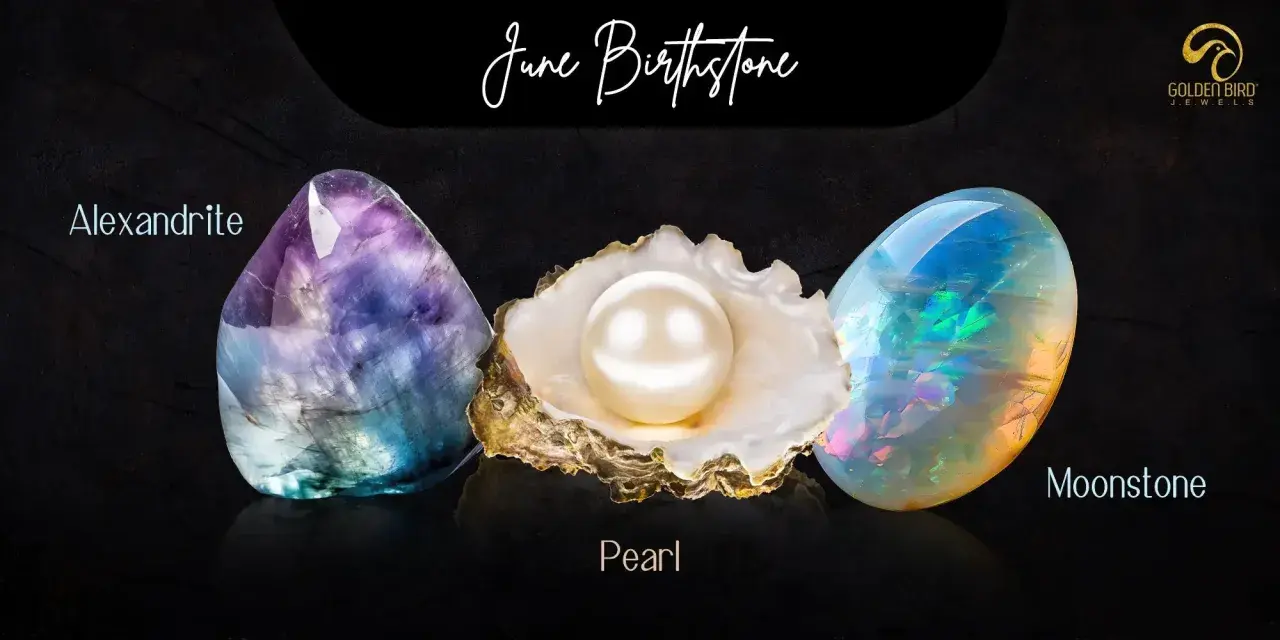
The quick answer for a June 3 birthday
- Pearl is the traditional June birthstone and the most common first answer for 3 June.
- Moonstone and alexandrite are also recognised June birthstones, so June birthdays have a rare three-stone choice.
- Pearl is the softest option at about 2.5-3.0 Mohs, so it needs the most careful wear.
- Moonstone sits around 6.0-6.5 Mohs and works best in protected settings.
- Alexandrite is the toughest of the three at about 8.5 Mohs, which makes it the best candidate for regular wear.
- If you want the safest traditional gift in the UK, I would start with pearl.
What the June 3 birthstone usually refers to
There is no separate gemstone assigned to the third day of June, so the answer comes from the month rather than the date itself. In practice, that means the birthday stone for 3 June is usually handled as a June birthstone, and the most traditional choice is pearl. That association has stayed strong because pearls have long stood for quiet elegance, wisdom and a kind of polished restraint that never feels dated.For a June birthday, I think pearl works especially well when the goal is a piece that feels timeless rather than trendy. It suits everyday wear, but it also looks right in more formal settings, which is why it remains such a reliable birthday or anniversary gift. That said, June is not a one-stone month, and that is where the story becomes more interesting.
Why June has three birthstones
The Gemological Institute of America lists pearl, moonstone and alexandrite as June’s birthstones, and that trio gives June one of the broadest ranges of options in the calendar. The reason matters: each gem solves a different need. Pearl is the classic and accessible choice, moonstone brings a softer luminous effect, and alexandrite offers rarity plus a dramatic colour shift.That variety is useful, because people do not buy birthstone jewellery for the same reason every time. Some want a piece that feels traditional. Some want a stone that looks unusual without being flashy. Others want something durable enough for daily wear. June is one of the few months where the “right” stone really depends on the wearer, not just the birthday.
Once you see the trio as a set of different personalities rather than a competition, the choice becomes much clearer. The next step is comparing them on the things that actually affect how a piece looks, wears and lasts.
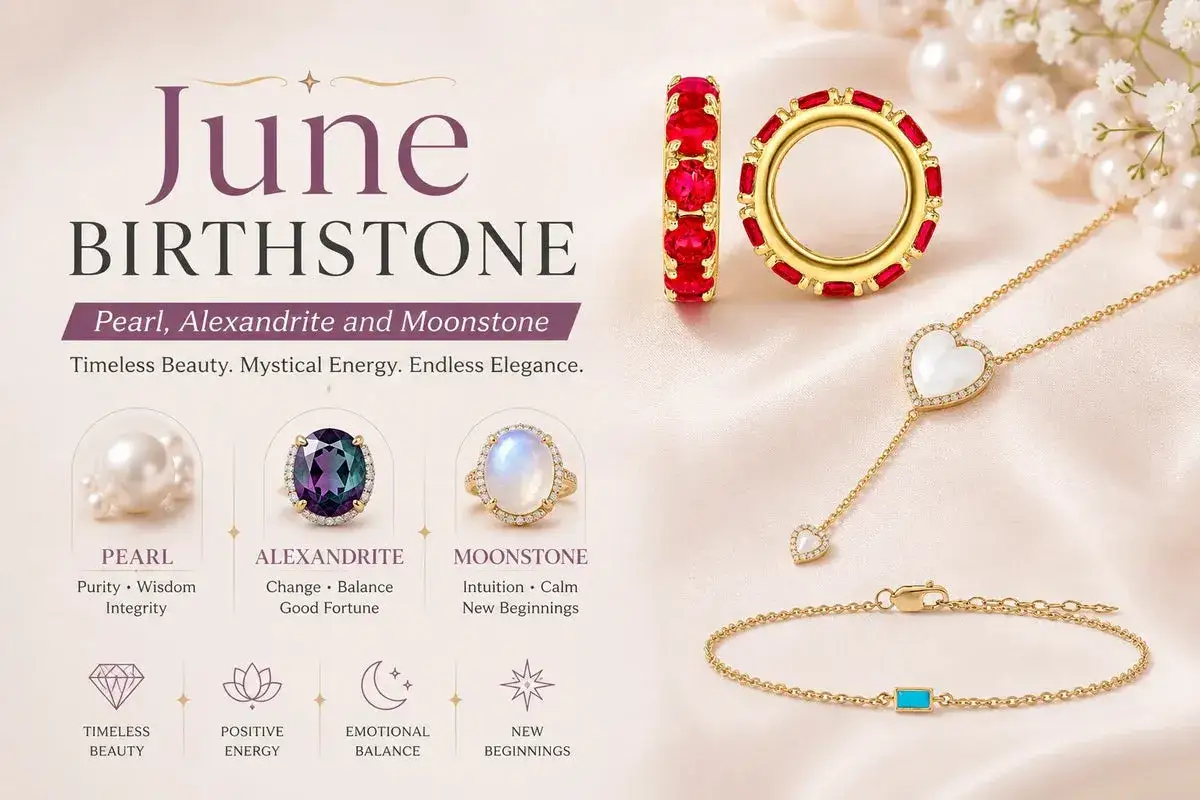
How pearl, moonstone and alexandrite compare in real life
When I compare June’s three stones, I always start with appearance, durability and how the piece will be worn. Using the standard gemological hardness figures, the spread is wide enough to matter in day-to-day jewellery decisions.
| Gem | Look | Mohs hardness | Best used for | Practical note |
|---|---|---|---|---|
| Pearl | Soft lustre, creamy glow, organic surface | 2.5-3.0 | Necklaces, studs, bridal pieces, heirlooms | Beautiful, but vulnerable to scratches, perfume and hard knocks |
| Moonstone | Milky shimmer with adularescence, the floating light effect under the surface | 6.0-6.5 | Pendants, earrings, occasional rings | More durable than pearl, but still prone to chipping if struck |
| Alexandrite | Colour change, often green in daylight and red under warm light | 8.5 | Rings, everyday jewellery, investment pieces | Rare, durable and usually the most expensive of the three |
What this tells me is simple: pearl wins on tradition, moonstone wins on atmosphere, and alexandrite wins on toughness. If you are choosing a gift for a June birthday, that table is often more helpful than any symbolic description because it shows how the stone will behave once it leaves the box.
How to choose the right June birthstone jewellery
When I narrow the choice down, I think in terms of wearing habits first and aesthetic second. A gemstone can look beautiful in a display case and still be the wrong choice for the person who has to live with it.
- Choose pearl if you want the most traditional and versatile answer, especially for classic British style, bridal gifts or milestone birthdays.
- Choose moonstone if you want something softer, more romantic and slightly less expected than pearl.
- Choose alexandrite if you want rarity, durability and a gem that feels genuinely special rather than merely pretty.
- Prefer earrings or pendants for pearl and moonstone if the wearer is active or rough on jewellery.
- Prefer rings when alexandrite is the centre stone, because its hardness makes it much better suited to regular wear.
- Think about metal tone as well: yellow gold warms pearl and moonstone, while white gold or platinum can sharpen alexandrite’s colour shift.
My practical rule is this: if the piece will be worn often, durability should influence the final choice more than symbolism alone. That leads directly into care, because even the right gem can be damaged quickly if it is treated like a harder stone.
How to care for the one you choose
Care is where many buyers underestimate the differences between June’s three stones. They may sit in the same birthstone month, but they do not ask the same things from their owner.
Pearl needs the most protection
Pearls are organic and relatively soft, so I would treat them gently. Put them on after perfume, hairspray and moisturiser, not before. Wipe them with a soft cloth after wearing, and store them away from harder gems so they do not rub against each other. I would also avoid ultrasonic or steam cleaning for pearl jewellery entirely.
Moonstone needs protection from impact
Moonstone is harder than pearl but still not a carefree stone. Its cleavage makes it more vulnerable to chipping if it is struck, which is why it often works best in pendants, earrings or well-protected ring settings. Warm water, mild soap and a soft brush are usually enough for routine cleaning.
Read Also: Amethyst - February's Birthstone: Your Guide to Choosing & Care
Alexandrite is the easiest to live with
Alexandrite is the most practical of the three for daily wear. It is hard, tough and stable under normal conditions, so it handles rings better than pearl or moonstone. I would still avoid wearing it during heavy manual work, but in ordinary use it is the least demanding June birthstone to maintain.
If you remember only one thing, make it this: the softer the stone, the more the setting and the wearing habits matter. That is why the same June birthday can justify very different jewellery choices depending on how the piece will be used.
The choice I would make for a June 3 birthday
If I had to choose without any other context, I would start with pearl because it is the most recognisable June stone and the safest traditional gift. If the person likes softer, dreamier jewellery, I would move to moonstone. If they want something rarer, more durable and a little more unexpected, alexandrite is the strongest long-term choice.
For a June 3 birthday, the best stone is not the one with the loudest story. It is the one that matches the wearer’s style, routine and expectations. If that balance is right, the jewellery feels considered instead of generic, and that is what makes a birthstone gift worth keeping.