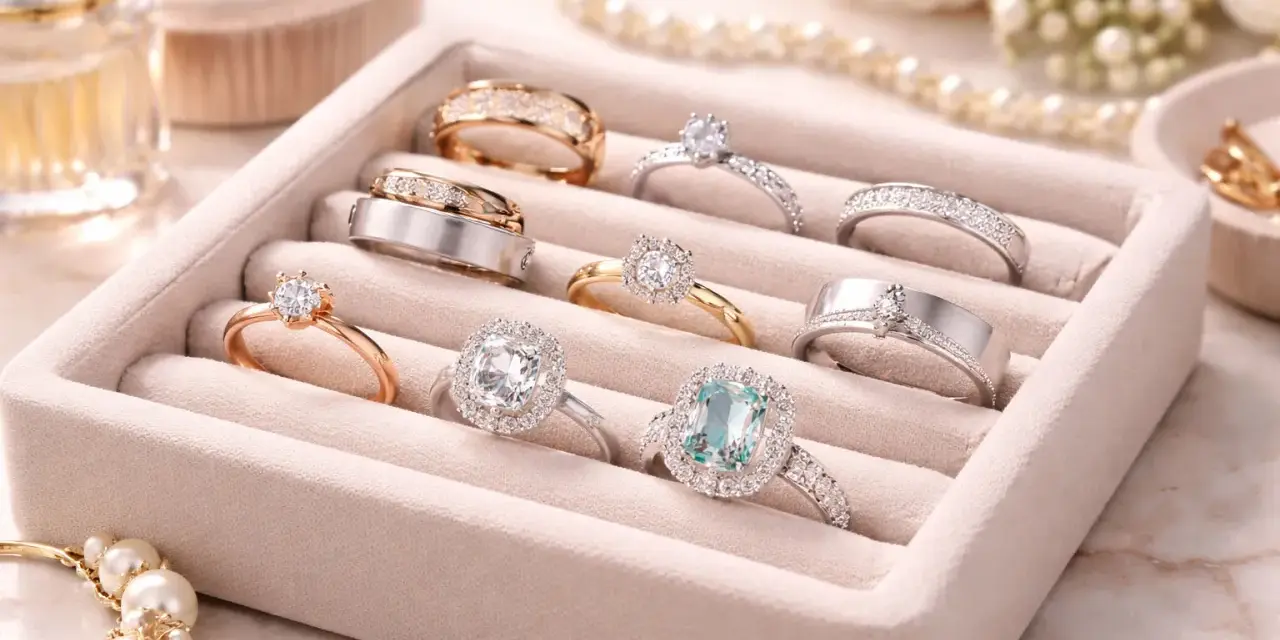
Choosing an engagement ring becomes much easier once I separate the decision into three parts: the overall design, the setting, and the stone shape. That is where the real differences in look, comfort, maintenance, and wedding-band compatibility show up. In this guide, I break down the styles of engagement rings that matter most, what each one does well, and where the trade-offs usually are.
The essentials at a glance
- Style is the full visual idea of the ring; setting, stone shape, and metal all change the result.
- Solitaires, halos, three-stone rings, pavé bands, and vintage-inspired designs are the most common starting points.
- Low-profile and bezel settings are usually the most practical for daily wear.
- Diamond shape affects everything, from sparkle and finger coverage to how easily the ring pairs with a wedding band.
- UK hallmarks matter; gold and platinum rings should carry the correct fineness marks.
- The best ring is not the flashiest one, but the one that fits the wearer’s life and the wedding band beside it.
What a ring style actually includes
When I talk about ring style, I am not talking about one single detail. I mean the full combination of the centre stone, the setting, the band shape, the metal, and the way the ring sits on the finger. A solitaire in platinum can feel crisp and modern, while the same stone in yellow gold with a cathedral setting can suddenly look warmer and more romantic.
That distinction matters because people often compare rings by name alone and miss the real differences. Two rings can both be called “classic” and still wear very differently if one sits high, uses claw prongs, and has a slim band while the other uses a bezel and a heavier shank. Once those layers are clear, the actual design names become much easier to compare. That takes us to the styles people usually look at first.
The main designs most buyers compare first
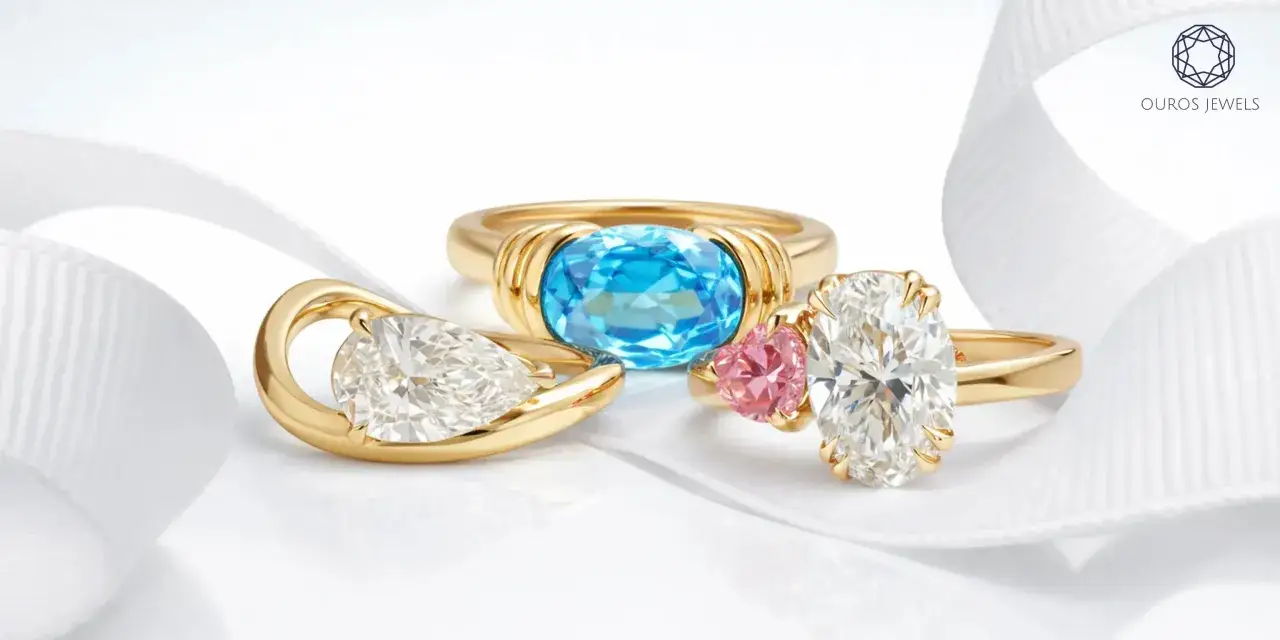
In practice, most ring conversations start with a small group of proven designs. Some are timeless, some lean more decorative, and some sit in the middle. I usually think of them as different answers to the same question: do you want the centre stone to lead, or do you want the whole ring to create the impact?
| Design | What it looks like | Why people choose it | Trade-off to watch |
|---|---|---|---|
| Solitaire | One centre stone with a clean band | Timeless, versatile, easy to pair with a wedding band | Relies heavily on stone quality and setting proportions |
| Halo | A centre stone surrounded by smaller stones | Makes the centre stone look larger and adds strong sparkle | More detail to clean and more visual complexity |
| Three-stone | One centre stone with two side stones | Balanced, meaningful, and good for extra finger coverage | Can be harder to match neatly with a straight wedding band |
| Pavé band | Small stones set along the band | Creates a refined, glittering look without needing a huge centre stone | Tiny stones need more care over time |
| Vintage-inspired | Milgrain, engraving, filigree, or decorative shoulders | Has character and a more detailed, heirloom feel | Busy details can overwhelm a small stone |
| Toi et moi or cluster | Two stones, or several stones grouped together | More distinctive and less traditional | Less symmetrical, so fitting a wedding band may take more planning |
If I had to narrow this down fast, I would say solitaire is the safest classic choice, halo is for maximum presence, and three-stone is the best middle ground when you want more personality without losing balance. A hidden halo is also worth knowing about: from above it can read like a clean solitaire, but from the side it gives extra sparkle without shouting for attention. That difference leads directly into the settings that change how the ring wears day to day.
Settings that change comfort and sparkle
The setting is the part that holds the stone, and in my experience it does more work than most buyers realise. It changes how much light reaches the diamond, how secure the stone feels, how likely the ring is to catch on knitwear, and whether it feels tall or easy to live with.
Here is the practical version of the main setting types:
| Setting | What it does well | Why it may not suit everyone |
|---|---|---|
| Prong or claw | Shows off the stone and lets in a lot of light | More exposed edges and slightly more chance of snagging |
| Bezel | Wraps metal around the stone for a very secure feel | Shows a little less of the diamond edge, so the look is cleaner but less open |
| Cathedral | Lifts the centre stone and gives the ring an elegant profile | The height can make it feel more dramatic, but also more exposed |
| Channel set | Holds side stones neatly between metal walls | Less flexible if you later want an easy resize |
| Flush or gypsy | Sits low and is usually comfortable for daily wear | Less visibly airy, so it looks more understated |
My rule of thumb is simple: the more active the wearer’s hands are, the more I lean towards lower-profile or more protective settings. A six-prong head usually gives a slightly more reassuring hold than a four-prong one, while a bezel is the obvious choice when snagging is the bigger concern. If sparkle is the priority, a pavé band or halo adds presence, but it also adds more tiny points that need occasional attention. That technical layer is easiest to judge when you look at stone shape next.
Which diamond shape works best with each design
Shape changes the personality of the ring more than many people expect. A round brilliant is classic and versatile, but an oval, emerald, pear, or marquise can make the hand look longer and feel more fashion-led. I always ask whether the shape should blend in or become the main character.
| Shape | What it tends to do visually | Best pairing idea |
|---|---|---|
| Round | Most traditional and balanced | Works with almost any setting, especially solitaires and halos |
| Oval | Elongates the finger and feels elegant | Looks good in solitaire, hidden halo, or east-west variations |
| Emerald | Clean lines and a more architectural look | Pairs well with minimalist settings that do not fight the shape |
| Cushion | Soft corners and a romantic feel | Strong choice for vintage-inspired or halo designs |
| Princess | Sharp corners and a bright, modern look | Often suits four-prong or protective corner settings |
| Pear | Directional and elegant, with one pointed end | Needs careful prong work at the tip and can look striking east-west |
| Marquise | Strong lengthening effect and lots of presence | Benefits from a setting that protects both points |
There are a few useful pairings I keep coming back to. Round and cushion stones are easy to place in almost any setting. Emerald cuts reward clean lines and a calm design. Pear and marquise shapes need more protection, especially at the points, so I would not force them into a setting that exposes them too much. If you want a modern twist, an east-west orientation can make an oval or emerald cut feel sharper and more contemporary. Once the shape is right, the metal becomes the final decision that ties the whole look together.
The UK metal choices and hallmark details to check
Metal changes the tone of the ring immediately. Platinum feels crisp and substantial, white gold looks bright but usually needs more upkeep, yellow gold brings warmth, and rose gold gives a softer colour that reads more romantic and a little more vintage. In the UK, the purity marks also matter: 375 means 9ct gold, 585 means 14ct gold, 750 means 18ct gold, and 950 is the common platinum fineness mark. Sheffield Assay Office makes the point clearly that precious-metal jewellery sold in the UK must be hallmarked above the exemption weight, so those tiny marks inside the ring are not decoration; they are part of the buying check.
| Metal | Look | Strengths | Trade-offs |
|---|---|---|---|
| Platinum | Bright white and naturally cool-toned | Very durable, dense, and ideal for daily wear | Usually more expensive than gold and can develop a soft patina |
| White gold | Similar to platinum when newly finished | Clean, modern look at a lower entry cost | Often needs occasional replating to stay bright white |
| Yellow gold | Warm and traditional | Pairs beautifully with vintage and classic settings | Shows contrast more strongly with very white stones |
| Rose gold | Soft pink-copper tone | Feels distinctive and flattering on many skin tones | Less traditional if you want a strictly classic bridal look |
For budgeting, I would treat ring style and metal as part of the cost, not an afterthought. A 77 Diamonds survey cited by the company found that 60% of UK engagement rings cost between GBP 1,000 and GBP 3,000, which is a useful working band before you start adding bigger centre stones or more complex settings. That is exactly why the metal and setting should be decided alongside the shape rather than after it. The last design test is whether the engagement ring can live comfortably next to a wedding band.
How the engagement ring needs to work with the wedding band
For me, this is where good ring design becomes practical design. An engagement ring does not live alone for long, so I always think about how the wedding band will sit beside it. A straight solitaire usually gives the easiest match. A ring with a tall basket, a dramatic halo, or a three-stone layout may need a contoured, notched, or shaped wedding band so the two rings sit together without an awkward gap.
- Choose a straight band if you want the simplest stack and the cleanest look.
- Consider a contoured or shaped band if the engagement ring has a low basket, halo, or large centre stone.
- Match the metal deliberately if you want a seamless bridal set, or mix metals if you want contrast.
- Watch the height if you want both rings to sit close to the finger without rocking against each other.
- Try the pair together before buying if possible, because a ring that looks perfect alone can behave very differently in a stack.
I also like to check how much sparkle is happening on both rings at once. Pavé on both pieces can look luxurious, but too much detail can feel busy if the profile is already ornate. A cleaner engagement ring often gives you more freedom with the wedding band later, which is why I tend to favour restraint when the couple has not made that second purchase yet. If you get that pairing right, the ring usually stays practical long after the proposal moment.
The last checks I would never skip before buying
Before I choose a ring, I look at the less glamorous questions. Can it be resized later? Will the prongs need regular tightening? Is the profile low enough for everyday wear? Does the finish and hallmarked metal match what was promised? These are the details that decide whether the ring still feels right after the excitement settles.
My final checklist is straightforward: I want a setting that suits the stone shape, a metal that suits the wearer’s routine, and a wedding-band shape that does not fight the engagement ring. I would also plan for basic care, because even the best-made ring benefits from an annual check, a careful clean, and a little storage discipline when it is not on the hand. The smartest choice is usually the one that feels effortless in daily life, not the one that looks busiest in the display case.