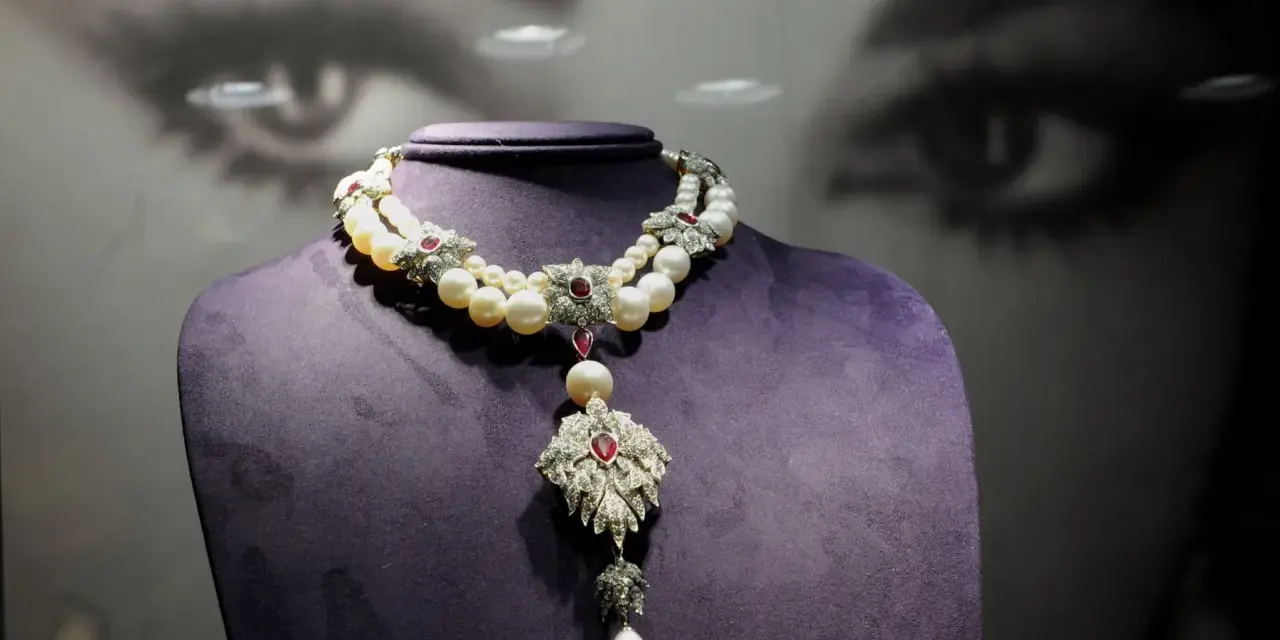
Few historic jewels carry a paper trail as rich as this one. La Peregrina is not just a large pearl; it is a natural gem that moved from the Pearl Islands off Panama into Spanish royal portraits, then into the hands of Richard Burton and Elizabeth Taylor. In this article I trace the pearl’s journey, explain why portraiture mattered so much, and show what collectors can still learn from it.
The essentials behind one of history’s most famous pearls
- It is a pear-shaped natural pearl weighing about 50.56 carats, which is large even by historic standards.
- Its earliest documented story begins in the Spanish imperial world and the jewellery culture of the court.
- Paintings helped turn it from a jewel into a symbol of dynasty, status, and continuity.
- Richard Burton bought it for Elizabeth Taylor in 1969, and Cartier later transformed it into a modern showpiece.
- Its value comes from more than rarity: provenance, condition, and cultural visibility all matter.
What makes this pearl so unusual
What sets this pearl apart is not only its size but its combination of shape, rarity, and survival. It is a natural pearl, not a cultured one, so its formation was entirely accidental and depended on the slow, unpredictable work of nature inside an oyster. I find that distinction important, because in jewellery history the word “natural” does a lot of heavy lifting: it means scarcity, but it also means no human can fully reproduce the result.
Its pear shape is another reason it became memorable. A well-balanced teardrop pearl reads differently from a round pearl because it has movement and a visible directional line, which makes it ideal for pendants and court settings. Gemmologists also talk about orient, the soft inner glow created by layers of nacre; without that depth of sheen, a large pearl can look heavy rather than luminous.
The pearl’s fame, then, comes from a rare combination: exceptional size, elegant shape, and a surface that still looks alive under light. That is the kind of jewel that stops being “just” precious and starts becoming historical, which leads directly to its Spanish beginnings.
How it travelled from Panama to the Spanish court
The earliest story places the pearl in the 16th-century world of the Pearl Islands off Panama, then under Spanish control. The exact discovery date is often retold differently in popular accounts, so I prefer the safer historical framing: it emerged in the Spanish colonial era and soon entered the orbit of imperial power. From there it was brought to Spain and became part of the royal treasury, which is where its long public life really begins.
That move matters because court jewels were not private accessories in the modern sense. They were political objects, worn in portraits, ceremonies, and diplomatic display. Once the pearl was absorbed into the Spanish crown’s jewellery culture, it was no longer just a remarkable natural object; it became a visible marker of sovereignty.
| Period | What happened | Why it matters |
|---|---|---|
| 16th century | Discovered in the Pearl Islands region of Panama and brought into Spanish hands | Gives the pearl its colonial and imperial origin story |
| Spanish royal court | Passed into the crown jewel collection and worn by queens in formal portraiture | Turns the pearl into a dynastic emblem rather than a loose gem |
| Napoleonic era | Left the Spanish crown and entered private aristocratic ownership | Explains how the jewel moved out of royal inventories |
| 1969 onward | Returned to global fame through Burton, Taylor, and Cartier | Introduces the modern celebrity chapter |
If I were tracing the value of a historic jewel, I would treat that chain of ownership as part of the object itself. In this case, the story is not decorative background; it is the reason the pearl is culturally legible at all. That is exactly why the portraits matter so much.
Why royal portraits made it a symbol of power
Portraits were the social media of the court world: they broadcasted status, alliances, and legitimacy. The pearl appears in Spanish royal portraiture, and that visual record did what inventories alone could never do. It gave the jewel a face, a setting, and a repeated role in the public image of power.
One of the most useful details for readers is that museum records, including the Prado, connect the pearl to the Spanish Habsburg court rather than to a single romantic legend. That distinction matters, because jewellery myths often travel faster than documentation. Some popular retellings attach it to other queens, but the strongest historical trail runs through Spanish royal portraiture and crown inventories.
In practical terms, the portraits show how a jewel becomes iconic: not by being worn once, but by being seen again and again in a stable visual language. The same pearl, repeatedly framed in paint, became part of how a dynasty presented itself. Once that happens, a jewel gains memory, and memory is often more durable than metal or silk.
How Elizabeth Taylor and Cartier reshaped the legend
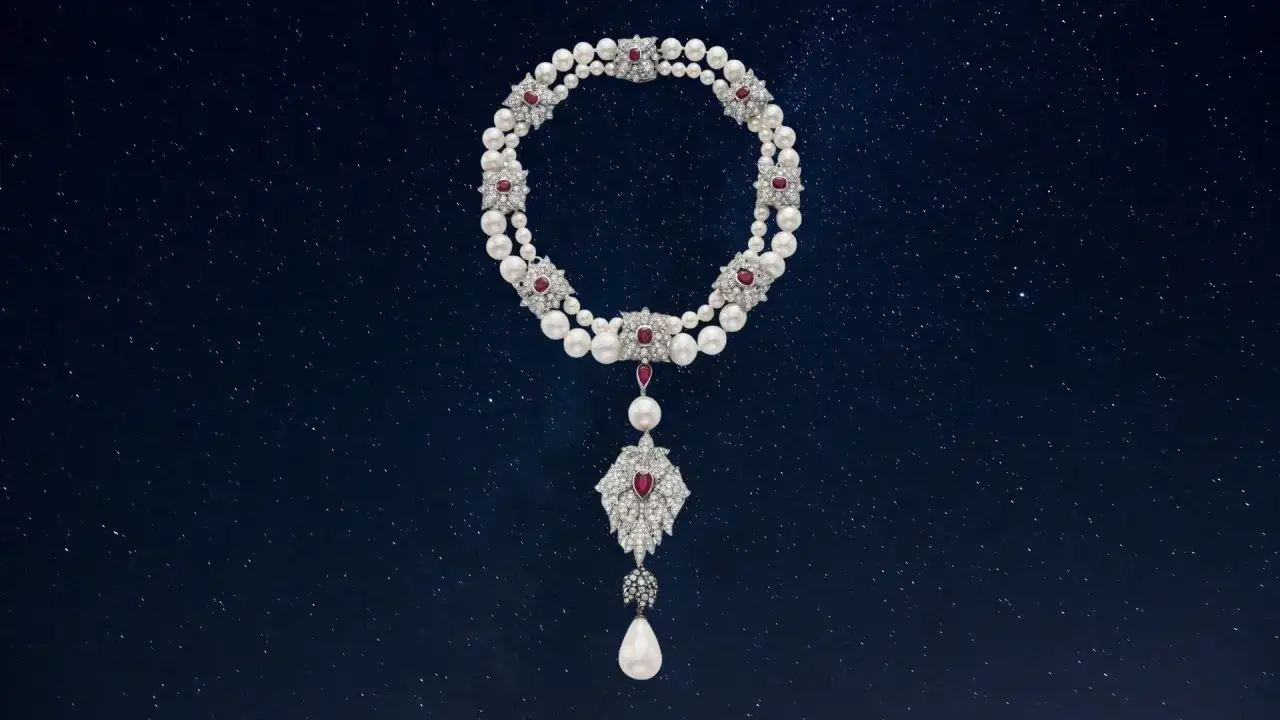
The modern chapter begins when Richard Burton bought the pearl at auction in London in 1969 for $37,000 and gave it to Elizabeth Taylor as a Valentine’s Day gift. That purchase is one of those jewellery-history moments where the object changes scale overnight: from aristocratic treasure to global celebrity obsession. Taylor later had Cartier remount it in a necklace with pearls, diamonds, and rubies, and the effect was deliberate. The historic drop remained the star, but the setting gave it theatre.
That remounting is worth studying because it shows how design can reinterpret history without erasing it. Cartier did not try to make the pearl look modern in a generic sense; instead, the house built a frame that amplified the jewel’s drama and kept the eye moving toward the central drop. The result was a piece that looked both ancient and unmistakably star-ready.
When Taylor’s jewellery was sold after her death, Christie’s placed the necklace at $11,842,500 in 2011, setting a record for a pearl at auction. That figure reflects more than gem quality. It reflects a story that had already crossed continents, courts, and generations of collectors.
What collectors can learn from its history
The pearl is a useful case study because it shows how historic jewellery is valued in layers. A pearl may be beautiful on its own, but once provenance enters the picture, the price logic changes. If I were evaluating a similar piece for a client, I would ask five questions first.
| What to check | Why it matters | What strong evidence looks like |
|---|---|---|
| Provenance | Ownership history can transform an ordinary jewel into a museum-level object | Clear transfers, auction records, portraits, or archival references |
| Condition | Large natural pearls are vulnerable to wear, drilling, and mounting stress | Stable nacre, minimal surface damage, and careful conservation |
| Setting | The mount affects both wearability and historical interpretation | An original or well-documented remount with known dates |
| Material rarity | Natural pearls are far scarcer than cultured ones | Independent gemological description and measurements |
| Cultural visibility | Public recognition can materially affect desirability | Portraits, exhibitions, and reputable auction appearances |
That framework is useful beyond this single pearl. It is how I would approach any historic jewel that claims both beauty and importance. A good story can inflate a price, but a well-documented story with real visual proof is what gives the price staying power. The pearl’s history is persuasive precisely because the evidence keeps showing up in paintings, auctions, and the jewellery itself.
Why this pearl still matters in 2026
The enduring appeal of this pearl is that it sits at the meeting point of three worlds: royal history, design history, and celebrity culture. Most jewels belong mainly to one of those categories. This one moves through all three, which is why people keep returning to it even when they are not pearl specialists.
For readers in the UK and beyond, the lesson is simple: when you look at a famous jewel, do not stop at sparkle. Ask who wore it, how it was mounted, what records exist, and why it was worth recording in the first place. That is where jewellery history becomes interesting to me, because the object stops being a luxury item and starts acting like a witness.
La Peregrina remains compelling because it has both aesthetic force and documentary weight, and that combination is rare. If you remember only one thing, make it this: a great historic jewel is not only valued for what it is, but for the life it has lived.