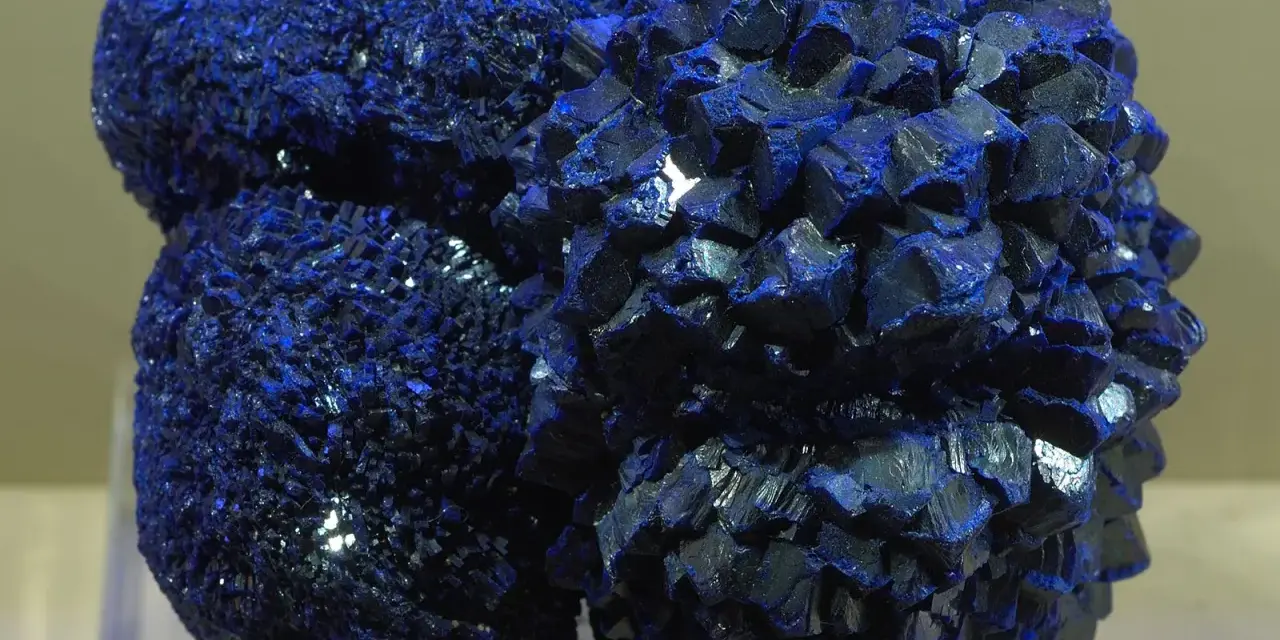
Blue azurite is one of the most striking mineral blues in jewellery and collecting, and its appeal is not just visual. The stone’s colour, softness, and habit all shape how it is cut, worn, and cared for, which makes it far more interesting than a simple “blue gem” label suggests. In this article, I look at what creates that intense colour, why specimens vary so much, how it compares with other blue stones, and how to handle it sensibly in jewellery.
The essentials at a glance
- Azurite is a copper mineral with a deep, saturated blue that can range from bright azure to almost inky navy.
- Its colour is strong, but the stone is soft, with a Mohs hardness of about 3.5 to 4, so it suits careful wear rather than daily rough use.
- It is often found with malachite, which is why blue-green mixed pieces are so common.
- In jewellery, it usually works best as a cabochon, bead, pendant, or collector’s piece rather than a high-impact ring stone.
- Simple care matters: avoid soaking, harsh chemicals, ultrasonic cleaners, and unnecessary knocks.
What gives azurite its vivid blue
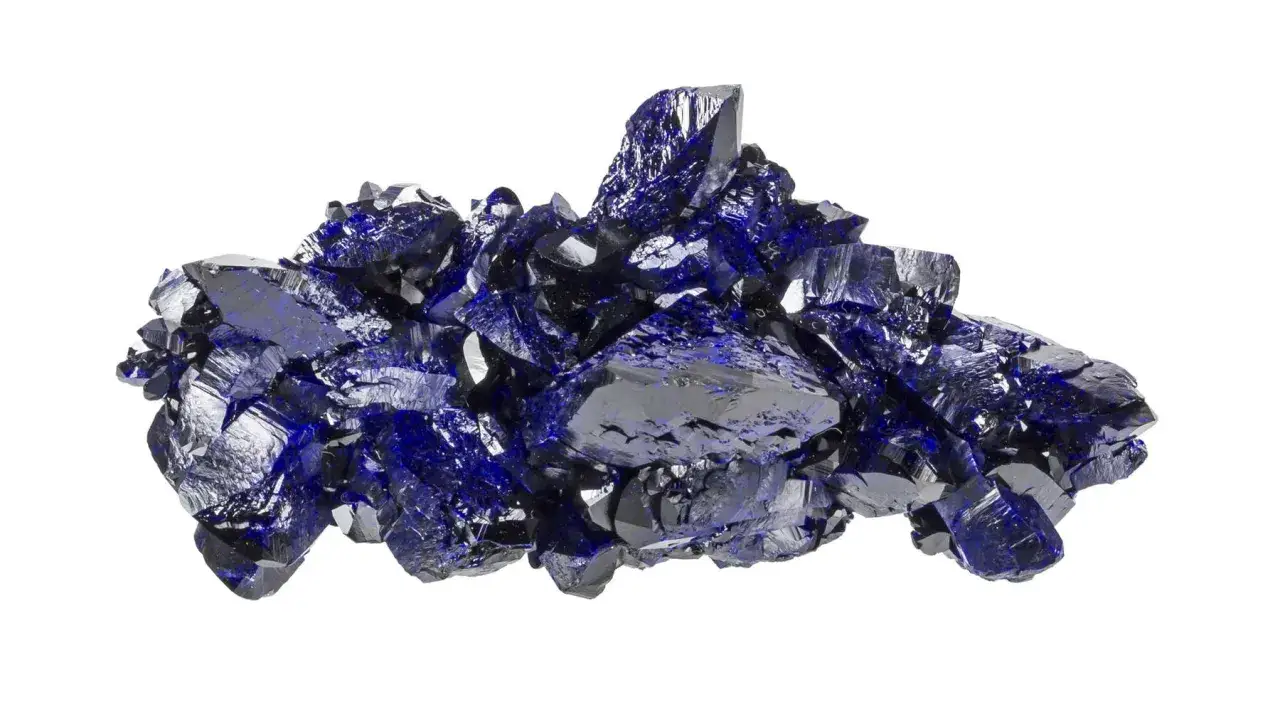
Azurite gets its colour from copper in its crystal structure, and that matters more than most people realise. GIA notes that blue mineral pigments are rare, which is part of why this mineral has always stood out: the colour is not only beautiful, it is unusual. I find that the best azurite has a clean, saturated blue with a depth that feels almost velvety rather than bright or sugary.
In gem terms, the colour is usually described by three ideas: hue, tone, and saturation. Hue is the basic colour family, tone is how light or dark it appears, and saturation is how strong or pure the colour looks. Azurite typically scores very well on saturation, even when the tone is dark, which is why it can read as rich and dramatic instead of washed out. That combination is exactly what makes it so memorable, and it leads naturally into the question of why not every specimen looks the same.
Why one specimen looks electric and another looks almost black
Azurite is visually variable because crystal size, surface condition, associated minerals, and lighting all affect how the colour reaches your eye. Mindat describes specimens ranging from light blue to blue-black, and that spread is easy to recognise in hand samples. A compact, lustrous crystal cluster can look much darker than a porous or earthy mass, even when both are the same mineral.
There is also a practical reason collectors love mixed material: azurite often occurs with malachite. That pairing can produce blue-green seams, mottled surfaces, or sharp colour contrast. In many cases, the contrast is what gives the piece character. A pure, intense blue specimen feels formal and strong, while a blue-green one feels more organic and geological. I usually tell readers to look at the colour in daylight if they can, because warm indoor light can flatten the distinction and make the stone seem duller than it really is.
That colour behaviour is also the reason azurite invites comparison with other blue minerals, and those comparisons are where many buyers make their first mistake.
How it compares with other blue stones
When people talk about gemstone colours, azurite is often grouped with lapis lazuli, turquoise, and lazulite, but the differences are more useful than the similarities. Lapis lazuli is a rock rather than a single mineral, turquoise is usually lighter and more opaque in a softer robin’s-egg range, and lazulite tends to read cleaner and brighter but is far less familiar to most jewellery buyers. Azurite sits in a darker, more mineral and more saturated lane.
| Material | Colour character | Durability | Best use |
|---|---|---|---|
| Azurite | Deep azure to blue-black, often very saturated | Soft and delicate; about 3.5 to 4 Mohs | Cabochons, pendants, earrings, collector’s pieces |
| Lapis lazuli | Royal to violetish blue, often with pyrite flecks | Moderate; harder than azurite | Beads, carvings, broader jewellery use |
| Turquoise | Sky blue to greenish blue, usually lighter and more even | Variable; often treated | Cabochons, inlay, classic silver jewellery |
| Lazulite | Blue to sky-blue, usually less common in jewellery | Harder than azurite | Collector’s material and occasional gems |
| Malachite | Bright green companion mineral | Soft and sensitive | Often paired with azurite for contrast |
For me, the useful distinction is simple: if you want a blue stone for daily jewellery, azurite is rarely the first choice. If you want a mineral with unusually strong colour and a more collected, curated feel, it is much more interesting than the usual suspects. That difference becomes even clearer when you look at how the stone behaves in actual jewellery design.
Where azurite works best in jewellery
Azurite is usually cut or mounted with caution, and that caution should shape the design. Because it is soft and brittle, it is most often used as a cabochon, bead, or polished specimen rather than a faceted stone. I prefer it in settings that protect the surface: bezels, pendants, brooches, or earrings are safer than low-set rings that will take regular knocks.
Stylistically, the stone works especially well with silver, oxidised silver, and clean, understated metals. In a UK context, that means it often sits nicely in a restrained, modern look rather than an ornate one. Charcoal knitwear, navy coats, white shirts, and simple black dresses all let the colour breathe. Gold can work too, but I think it needs the right proportion: too much warmth can overpower the mineral’s cool tone, while a fine gold frame can make the blue feel sharper and more luxurious.
There is also a reason designers often leave the stone slightly raw or textured. Imperfection suits azurite. A piece with natural matrix, a little crystal definition, or a mixed blue-green surface can feel more authentic than an overpolished cabochon. That said, beauty alone is not enough, because this is a stone that rewards gentle handling more than ambition.
How to care for it without flattening the colour
If I had to reduce azurite care to one principle, it would be this: treat it like a collector’s mineral, not a hardwearing jewel. Its softness means it scratches more easily than sapphire or quartz, and its chemistry means it does not enjoy harsh treatment. Heat, chemicals, and rough cleaning can all do more harm than a bit of simple dust.
- Wipe it with a soft, dry cloth after wear.
- Store it separately in a pouch or lined box so it does not rub against harder stones or metal edges.
- Avoid ultrasonic cleaners and steam cleaning.
- Keep it away from bleach, ammonia, acids, and strong household cleaners.
- Do not soak it unless a specialist has confirmed that the specific mounted piece can tolerate it.
- Wear it after perfume, hairspray, and skincare have dried.
I would also avoid using it in jewellery that gets knocked about constantly, such as a ring worn every day at work. Pendants and earrings are far more forgiving. Once you accept those limits, the stone becomes easier to enjoy, and that brings us to the final practical question: what actually makes a good piece worth choosing.
What I would look for in a strong azurite piece
When I judge azurite, I look first at colour, then at structure, and only then at size. A smaller piece with a rich, even blue will usually be more satisfying than a larger one that has gone chalky, overly dark, or visibly crumbly. Clear crystal definition, stable edges, and a surface that still reflects light cleanly are all good signs.
- Colour depth matters more than size.
- Surface condition should look stable, not powdery or worn.
- Contrast with malachite or matrix can add interest, but it should feel deliberate rather than messy.
- Setting style should protect the stone instead of exposing it to daily impact.
- Overall balance is better than extreme polish; this mineral looks best when it still feels natural.
Azurite is not the easiest blue stone to own, and that is part of its appeal. The colour is intense, the texture is geological, and the care requirements are real, but those limits are exactly what give it character. If you want a blue mineral that feels vivid, historic, and unmistakably different from standard jewellery stones, this is one of the most rewarding choices to learn to read properly.