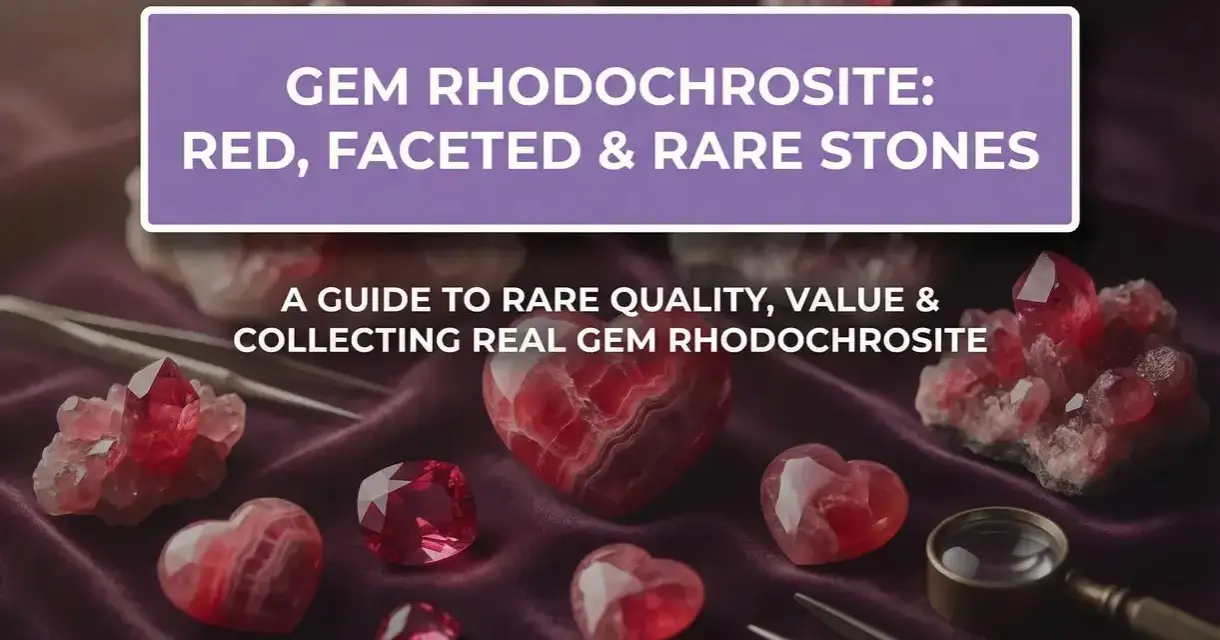
A rhodochrosite crystal is one of the most distinctive pink minerals used in jewellery, because the colour can shift from soft rose to deep cherry red and often carries white banding through the stone. In this article I look at what creates that colour, which shades are most prized, how it compares with other pink gemstones, and how to wear and care for it without damaging the piece.
The main things to know before you choose one
- Rhodochrosite is a manganese carbonate mineral, and its colour usually runs from blush pink to red.
- Deeper reds are generally more desirable, but the best choice depends on whether you want a collector’s specimen or jewellery.
- Banded stones are common and often more visually striking than flat, uniform material.
- It is a soft gemstone, so earrings and pendants are safer than rings or bracelets.
- Clean it gently with mild soap, lukewarm water, and a soft cloth; avoid ultrasonic and steam cleaners.
What gives rhodochrosite its pink-to-red colour
The colour comes from the mineral’s chemistry rather than from surface treatment or polish. Rhodochrosite is a manganese carbonate, and the strongest pinks and reds usually appear when the material is relatively rich in manganese and low in iron. In practice, that means the stone can look delicate in one specimen and intensely saturated in another, even when both are natural.
I find the colour most interesting when it is not perfectly even. Layering during growth often creates banding, which is simply the record of changing conditions as the crystal formed. Those pale and dark layers are not a flaw in the stone; in many pieces, they are exactly what gives it character. Once you understand that colour and structure are linked, the next step is to look at the shades side by side.
The shades and patterns you are most likely to see
Rhodochrosite is not a single pink. It can read as pastel, saturated, translucent, or boldly patterned, and the visual effect changes a lot between rough crystal material and finished jewellery. I usually separate the stone by colour and pattern first, because that tells you more than a simple yes-or-no judgement ever will.
| Colour or pattern | What it looks like | How I read it |
|---|---|---|
| Pale rose | Soft pink with a gentle, airy tone | Lovely for subtle jewellery, but less dramatic than stronger material |
| Vivid pink | Bright, saturated pink with a lively surface glow | Often the sweet spot for people who want colour without darkness |
| Cherry red | Deep red-pink with a richer, more intense look | Usually the most sought-after colour range when the stone is clean |
| Pink with white banding | Layered stripes or concentric zones of pink and white | Classic rhodochrosite; especially attractive in cabochons and slices |
| Brownish or greyish pink | Muted colour with lower saturation | Less prized for fine jewellery, though still useful in rustic or collector pieces |
The cleanest, most vivid material often reads better under daylight than under warm indoor lighting, which can flatten the pink or push it towards a salmon tone. That is why the pattern matters as much as the shade itself. If you are comparing pink stones rather than buying a specimen blindly, the next question is how rhodochrosite stands apart from the better-known alternatives.
How it compares with other pink gemstones
Pink gemstones are easy to mix up at first glance, especially if you are looking at photos rather than stones in hand. The fastest way to separate them is to compare colour, texture, and durability together. Rhodochrosite is the stone with the richest banding and the softest wear profile, which makes it distinctive but not always the most practical choice for daily use.
| Gemstone | Colour character | Durability | Best use |
|---|---|---|---|
| Rhodochrosite | Rose to red, often banded or layered | Soft, around 3.5 to 4 on the Mohs scale | Statement jewellery, cabochons, beads, collector stones |
| Rhodonite | Pink with black manganese veins or patches | Harder and more wearable, usually around 5.5 to 6.5 | More practical for everyday jewellery |
| Rose quartz | Soft, cloudy pink with a gentler overall look | Harder, around 7, so it handles wear better | Large jewellery pieces and durable fashion designs |
If your priority is depth of colour and pattern, rhodochrosite usually wins. If your priority is everyday wear, the harder pink stones are easier to live with. That trade-off matters most when the gem moves from a tray to a setting, which is where jewellery design becomes the real test.
Where it works best in jewellery
Because the stone is soft and cleaves easily, I would not treat it like an all-purpose ring gem. A hard knock can chip it, and even ordinary desk wear can wear down edges over time. For that reason, I think of rhodochrosite as a stone that shines when the setting protects it, not when it is exposed to constant impact.
| Jewellery type | How suitable it is | Why it works or fails |
|---|---|---|
| Earrings | Excellent | They are protected from knocks and let the colour sit near the face |
| Pendants | Excellent | Low contact wear and good visibility make them a strong choice |
| Brooches | Good | They are usually safer than rings because they do not take constant abrasion |
| Rings | Occasional use only | Great for special wear, but risky for daily use |
| Bracelets | Poor | They get bumped, rubbed, and knocked far too often |
I also prefer cabochons for most banded material. A cabochon is a smooth, domed cut without facets, and it suits this stone because the layered colour can be seen clearly across the surface. Faceted rhodochrosite exists, but it is rare and tends to be chosen more for its collector appeal than for everyday practicality. Once you know where the stone belongs in jewellery, the final piece of the puzzle is how to keep it looking fresh.
How to care for it without dulling the colour
Rhodochrosite needs gentle handling, and I mean genuinely gentle. Its low hardness means that dust, grit, and neighbouring stones can leave marks if you are careless. The safest routine is simple enough to remember, which is usually a good sign that the advice is sound.
- Wipe the stone with a soft cloth after wearing it.
- Clean it with lukewarm water and a small amount of mild soap if needed.
- Rinse briefly and dry it straight away.
- Store it separately in a soft pouch or lined box.
- Remove it before exercise, gardening, housework, or anything that can hit the setting.
- Avoid ultrasonic cleaners, steam cleaners, bleach, strong acids, and long soaking.
I would be especially cautious with rings and bracelets, because they are the first pieces to pick up knocks from sinks, countertops, door handles, and other hard surfaces. If a stone has visible fractures or sits in a delicate mount, I treat it as a dress piece rather than a daily habit. Care becomes easier when you buy well in the first place, and that is where a good eye saves you money and disappointment.
How I would choose a good piece in the UK market
When I shop for this stone in the UK, I look for honest colour under neutral light first and decorative appeal second. A beautiful photo under warm studio lighting can make the pink look richer than it really is, so I prefer sellers who show the stone from more than one angle and in daylight. That is especially important with rhodochrosite, because its translucency and banding change the mood of the piece as the light shifts.
- Choose the strongest colour you can see without the stone turning muddy or brownish.
- Prefer clean banding or clear patterning over random patchiness.
- Inspect edges, drill holes, and corners for chips or soft abrasion.
- Ask whether the piece is cabochon, bead, or faceted, because the cut affects both look and durability.
- For regular wear, favour protective settings that shield the stone from impact.
- If you want a single standout piece, I would lean towards a pendant, because it shows the colour well without asking the stone to survive ring-level abuse.
The most satisfying rhodochrosite pieces are the ones that balance colour, pattern, and restraint. When those three things line up, the stone feels warm rather than sugary, vivid rather than loud, and that is exactly what makes it such a rewarding gemstone to understand and wear.