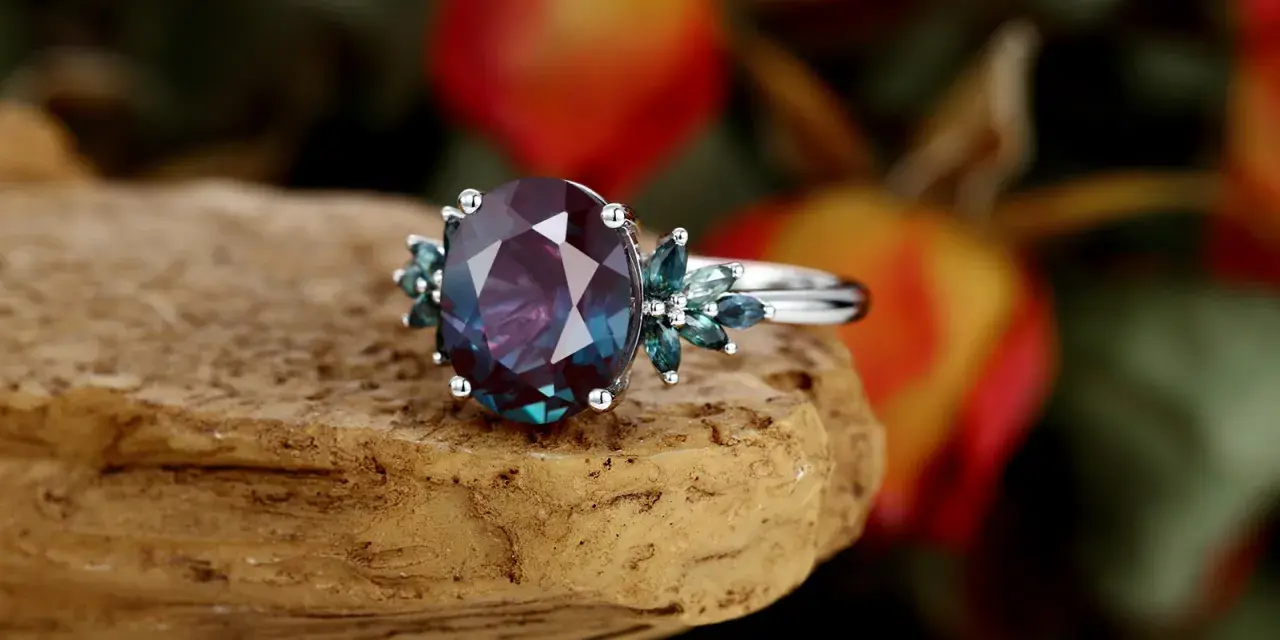
The alexandrite stone meaning sits at the point where symbolism and gemmology meet: transformation, balance, and a kind of quiet luxury that feels personal rather than loud. In practice, that makes it one of the most interesting stones to choose for a ring, pendant, or milestone gift because its message is built into the gem itself. It is also a practical stone to understand, since its colour change, durability, and rarity all affect how it should be worn and valued.
What matters most when you read alexandrite well
- Alexandrite is usually associated with change, duality, balance, and good fortune.
- Its meaning comes largely from its colour shift, not just from tradition.
- It is a June birthstone and also linked with the 55th wedding anniversary.
- At 8.5 on the Mohs scale, it is durable enough for rings and regular wear.
- The best pieces are chosen for visible colour change, not just size or price.
- Natural and lab-grown stones can both be beautiful, but they tell slightly different stories.
What alexandrite means in jewellery symbolism
When I read alexandrite in jewellery, I see a stone that carries two ideas at once. It stands for adaptability without loss of identity, which is a more interesting message than simple “change”. That is why it often gets linked with transition moments, inner strength, intuition, and the ability to move between different roles with grace.
The stone also carries a sense of rarity that matters symbolically. GIA traces its modern reputation back to the Russian Ural Mountains in 1830, where its red-and-green palette echoed imperial colours and gave the gem a royal aura. That history still shapes how people respond to it: not as a soft, decorative gem, but as something unusual, memorable, and slightly ceremonial.
| Symbolic theme | What it suggests | Why alexandrite fits |
|---|---|---|
| Duality | Two truths, two moods, two sides of one personality | The gem visibly changes character under different light |
| Transformation | Growth, reinvention, moving through change well | Its colour shift makes change feel elegant rather than abrupt |
| Balance | Calm and passion existing together | Green and red tones create a natural visual tension |
| Good fortune | An auspicious, meaningful, luck-bringing gift | Its rarity has long made it feel special and fortunate |
| Commitment | Staying true while still evolving | It works well for pieces that mark long relationships or milestones |
That symbolic range is why alexandrite rarely feels generic. It does not ask to be read as one fixed thing, and that is exactly the point. The stone makes more sense once you look at how light changes it, which is where the story becomes vivid.
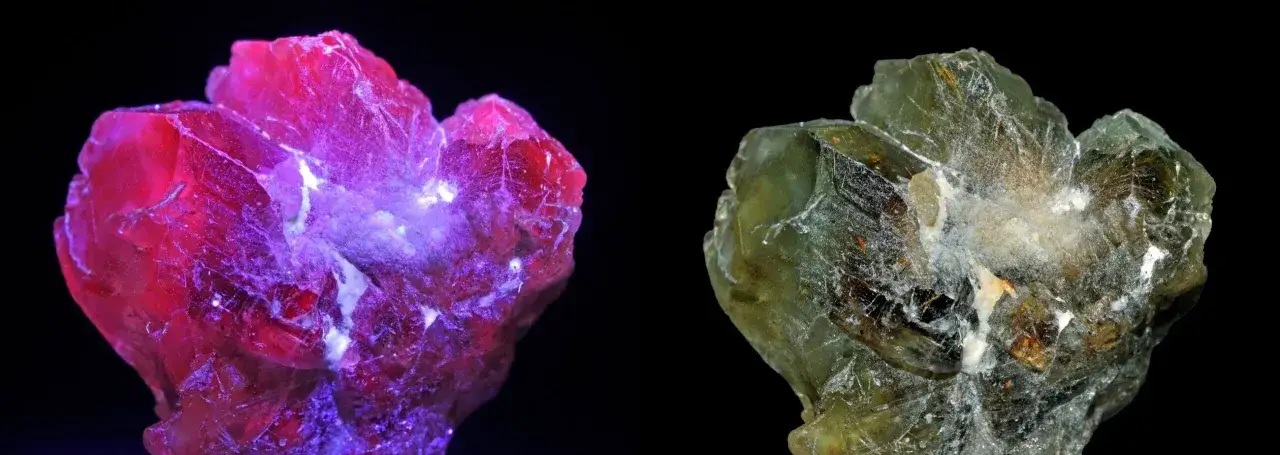
Why its colour shift does so much of the storytelling
Alexandrite is famous for moving between green or bluish green in daylight and red or purplish red under incandescent light. GIA calls this the alexandrite effect, and it is the reason the gem is so closely tied to symbolism. The change is not a gimmick; it is the stone’s defining character, and it gives the jewellery a kind of built-in narrative.
To me, that shift suggests something more subtle than “two faces”. It suggests adaptability with continuity. The stone changes, but it does not become something else entirely. That is a useful idea for anyone choosing jewellery to mark a life stage, a relationship, or a personal milestone.
| Lighting | Typical appearance | What it tends to communicate |
|---|---|---|
| Daylight or fluorescent light | Green to bluish green | Clarity, growth, calm, freshness |
| Warm indoor light | Red, raspberry, or purplish red | Warmth, intimacy, passion, depth |
| Mixed lighting | A softer transition between tones | Flexibility, nuance, personality |
I would not dismiss a stone if the colour change is less dramatic than expected, but I would read it differently. A strong change feels theatrical and memorable; a gentler one feels quieter and more understated. The symbolism is still there, but the mood changes, and that matters when the jewellery is meant to say something specific.
When alexandrite makes the most thoughtful gift
Alexandrite is especially strong when the occasion already carries a sense of change. That is why it works so well for June birthdays, 55th wedding anniversaries, and pieces that celebrate a major life shift. It is a gift with a story built in, which makes it feel more considered than a stone chosen only for colour or sparkle.
| Occasion | Why alexandrite fits | When another June stone may suit better |
|---|---|---|
| June birthday | It gives the recipient a birthstone with rarity and personality | Choose pearl for a softer, more classic feel |
| 55th anniversary | It symbolises endurance, change, and a relationship that has matured well | Choose moonstone if you want something more delicate and romantic |
| Engagement or commitment gift | It suits couples who want a less expected stone with deeper symbolism | Choose sapphire or diamond if tradition is the priority |
| Career change or personal milestone | It reflects reinvention and resilience without feeling flashy | Choose a simpler gemstone if the recipient prefers understatement |
For a UK audience, I think alexandrite is most compelling when the gift is meant to feel distinctive rather than conventional. That does not mean it has to be dramatic. It just means the recipient should feel that the piece was chosen with intent, not pulled from a generic list of birthstones.
How to choose a piece that reflects the stone's meaning
If the symbolism matters, I would start with the stone’s behaviour, not the setting. Visible colour change is the first thing to look for, because that is what gives alexandrite its emotional impact. A larger stone with a weak change is usually less satisfying than a smaller one that moves clearly between green and red.
- Check the stone in both daylight and warm indoor light, not just in one showroom lamp.
- Ask for video if you are buying online, because still photos rarely show the shift properly.
- Choose a simple solitaire if you want the stone’s duality to lead the design.
- Choose a halo or accent stones only if you are happy for them to share attention.
- Think about metal colour: white gold or platinum tends to sharpen the cooler side, while yellow or rose gold warms the overall look.
- Decide whether natural or lab-grown matters to the story you want to tell.
| Design choice | Visual effect | Best for |
|---|---|---|
| Platinum or white gold | Crisp, cool, modern | Emphasising the daylight green |
| Yellow gold | Warmer and more traditional | Balancing the red tones and creating a richer feel |
| Rose gold | Soft, romantic, slightly vintage | Pieces meant for sentimental gifting |
| Solitaire | Minimal distraction | Letting the stone do the storytelling |
| Halo setting | More sparkle, more presence | When you want a bolder, dressier look |
Natural stones carry the stronger rarity story, while lab-grown stones can still capture the visual symbolism at a more approachable price point. I would not treat either as “less meaningful” by default; they just carry different kinds of value. Natural alexandrite leans into provenance and scarcity, while lab-grown material leans into accessible colour and design.
How to wear and care for it without dulling the effect
Alexandrite is one of the more practical coloured gemstones to wear. It is 8.5 on the Mohs scale, which makes it suitable for rings and other pieces that see regular use. GIA also notes that it is stable under normal wearing conditions and that warm, soapy water is always safe for cleaning; ultrasonic and steam cleaners are usually safe for intact stones as well.
- Clean it with warm water, mild soap, and a soft brush.
- Store it separately from harder stones so it does not get scratched or nicked.
- Check ring prongs and settings regularly, especially on everyday pieces.
- Avoid harsh knocks, because the setting can be damaged even when the stone itself is tough.
- If the gem has fractures or special treatment notes, stick to the gentlest cleaning method.
The important thing is to keep the stone looking lively. Alexandrite loses part of its appeal when grime, worn settings, or poor polishing flatten the contrast between its colours. That contrast is not just aesthetic; it is the whole reason the gem feels meaningful in the first place.
What to check before you buy or gift one
Before I would call an alexandrite piece truly right, I would ask three questions: does the colour change read clearly, does the setting suit regular wear, and does the design match the story I want to tell? If the answer is yes, the piece usually has more staying power than something chosen only because it is rare or expensive. The best alexandrite jewellery feels deliberate in daylight and even more interesting after the lights change.
That is the real alexandrite stone meaning in jewellery: a stone that makes change feel intentional, balanced, and worth wearing every day. If you choose it for its character rather than for novelty alone, it stays compelling long after the first glance.