Topaz is one of those gemstones whose meaning changes depending on the story around it: the colour, the era, and the way it is set all matter. In jewellery, it is usually read as a stone of strength, clarity, calm, and quiet loyalty, but that is only the starting point. That is why the question what does topaz represent matters more than it first appears, especially if you want the stone to feel deliberate rather than decorative.
Topaz usually stands for strength, clarity, and a calm kind of confidence
- Topaz is most often linked with strength, protection, wisdom, and clarity.
- Its symbolism changes across cultures, from ancient Greek strength to Indian ideas of long life and beauty.
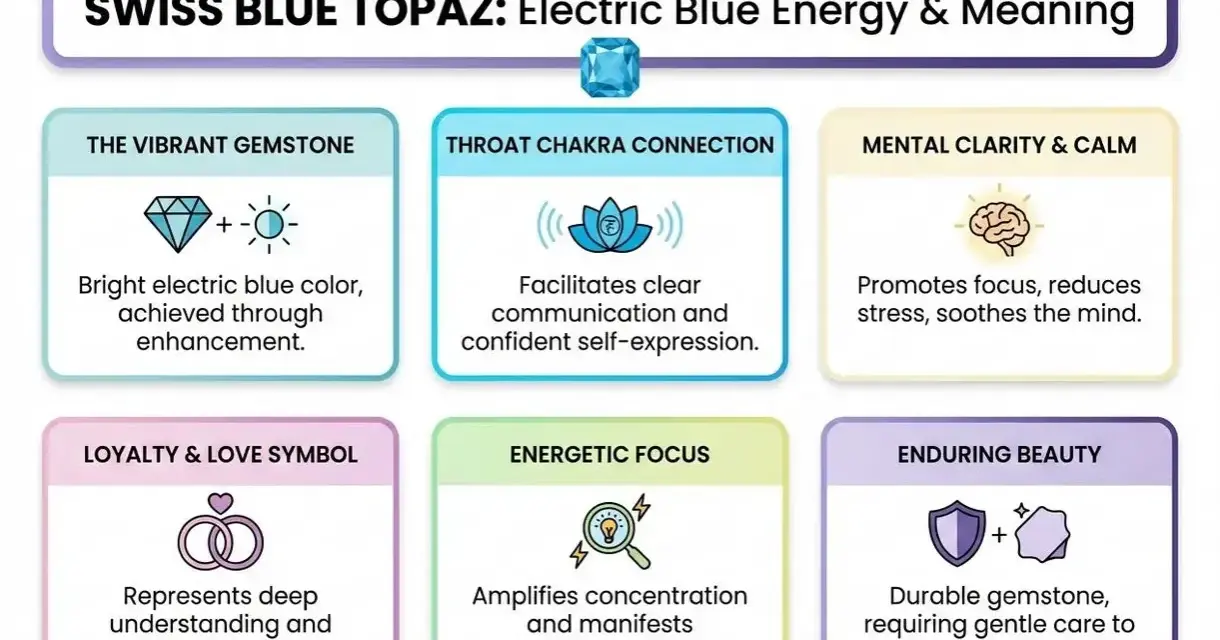
- Colour matters: blue, golden, white, pink, and imperial topaz each carry a slightly different mood.
- It is a strong choice for birthstone jewellery, anniversary gifts, and everyday pieces with meaning.
- The setting and wearability matter as much as the stone itself if you want the symbolism to feel believable.
The core meanings topaz carries in jewellery
If I had to reduce topaz to one line, I would call it a stone of steady strength with a clear mind. It does not usually feel aggressive or overly dramatic; instead, it reads as composed, luminous, and self-possessed. That is part of its charm in jewellery. Topaz can carry meaning without looking solemn, which makes it easy to wear in pieces that still feel elegant.
In modern jewellery, I most often see topaz associated with honesty, calm communication, protection, and a kind of inner resilience. Warmer stones can lean toward confidence and abundance, while cooler blues often suggest serenity and trust. The overall effect is practical as much as symbolic: topaz feels like a gemstone for people who want something meaningful, but not heavy-handed. That balance makes more sense once you look at the long history behind it.
How history gave topaz its reputation
Topaz has never carried just one symbolic load. Ancient Greek writers linked it with strength, while Renaissance Europe treated it almost like a moral tool, believing it could break spells and ease anger. In India, topaz worn above the heart was thought to support long life, beauty, and intelligence, which tells you a lot about how differently people read the same stone.
I find that diversity useful, because it shows topaz has long been understood as a stone that works on character rather than spectacle. The name itself is tangled in history too: many authorities connect it to an old Greek island name, while others trace it to a Sanskrit root associated with fire. That mix of cool lore and heat fits topaz surprisingly well. It also explains why the gemstone can feel both refined and emotionally warm.
Imperial topaz pushed that sense of prestige even further. The rich orange-pink material associated with Russian royalty gave topaz a more luxurious identity, so the stone started to carry not just symbolism, but status. That matters today because it is one reason topaz can still feel special without being overused.
Colour changes the message of topaz
Colour is where topaz becomes most specific. The mineral can appear in a wide range of shades, but in jewellery the colour you choose usually does most of the symbolic work. I read the colour first, then the setting, because that combination tells me whether a piece is meant to feel restful, luxurious, or quietly expressive.
| Topaz colour | Common symbolic reading | Best jewellery mood |
|---|---|---|
| Blue topaz | Calm, communication, trust, clarity | Clean, modern, everyday wear |
| Golden or yellow topaz | Warmth, optimism, confidence, abundance | Autumnal, uplifting, easy to pair with yellow gold |
| Imperial topaz | Rarity, prestige, personal power, creativity | Statement pieces and heirloom-style jewellery |
| White topaz | Clarity, simplicity, purity, understatement | Minimalist looks and diamond alternatives |
| Pink or red topaz | Affection, individuality, romance, energy | More expressive, intimate, or gift-led pieces |
One practical nuance: blue topaz is usually treated to achieve its colour, so I think of it as a colour story rather than a rarity story. That does not make it less attractive; it simply shifts the symbolism toward mood, not exclusivity.
Once colour is part of the conversation, the next question becomes when topaz actually makes sense as a gift.
Why topaz works so well as a birthstone and gift
Topaz is especially good when the gift needs meaning without becoming overly sentimental. In modern birthstone lists it is strongly associated with November, and it also appears in anniversary jewellery, including the 4th and 23rd anniversaries in common gemstone traditions. That gives the stone an easy symbolic job: it can mark a date, but it still feels stylish enough to wear often.
For a British audience, that versatility is a real advantage. Topaz looks thoughtful without feeling overdone, and it fits neatly into gifts that need to work in real life as well as in the moment of giving. A topaz pendant says "I chose this for you" better than a generic trend piece, especially when the colour matches the wearer’s style.
- Choose blue topaz for a clean, versatile birthday gift.
- Choose imperial topaz when you want the present to feel rare and memorable.
- Choose white topaz if the wearer prefers minimal, understated jewellery.
- Choose golden topaz for warmth, gratitude, or autumnal colour.
If you are buying for yourself, the piece itself matters just as much as the date attached to it. That is where design choices start doing real symbolic work.
How I would choose a topaz piece
When I match topaz to a person, I start with the tone they already wear well, not with the gemstone lore. Cool metals make blue and white topaz feel crisp; yellow gold gives golden and imperial topaz more depth; and a bezel or low-profile setting makes the piece easier to wear every day. The wrong setting can flatten the message, even if the stone itself is beautiful.
- For calm and clarity, choose blue topaz in silver, white gold, or platinum.
- For warmth and optimism, choose yellow or imperial topaz in yellow gold.
- For a romantic look, choose pink topaz with softer lines and smaller side stones.
- For a stronger statement, choose imperial topaz in a ring or drop earring where the colour can lead.
The best topaz jewellery does not repeat the same symbolic message in a louder way; it frames the stone so the meaning feels believable. That is what separates a well-chosen piece from one that looks nice but says very little. Before I finish, there is one practical detail that keeps the symbolism honest: how topaz actually wears.
The small details that decide what topaz really says
Topaz is beautiful, but it is not a throw-it-in-a-drawer gem. It ranks 8 on the Mohs scale, yet it has cleavage, which means a hard knock can still split it more easily than the hardness number suggests. In practical terms, that makes setting choice and care part of the symbolism: a stone associated with clarity and protection should be protected in real life too.
I would avoid steam and ultrasound cleaning, use warm soapy water instead, and think twice before putting a topaz ring into heavy-duty daily use without a secure setting. In 2026, that mix of symbolism and practicality is exactly why topaz still works so well: it can stand for calm confidence without demanding that the wearer treat it like a museum piece. The small details decide what topaz really says, and when the colour, cut, and setting line up, the message feels natural rather than forced.