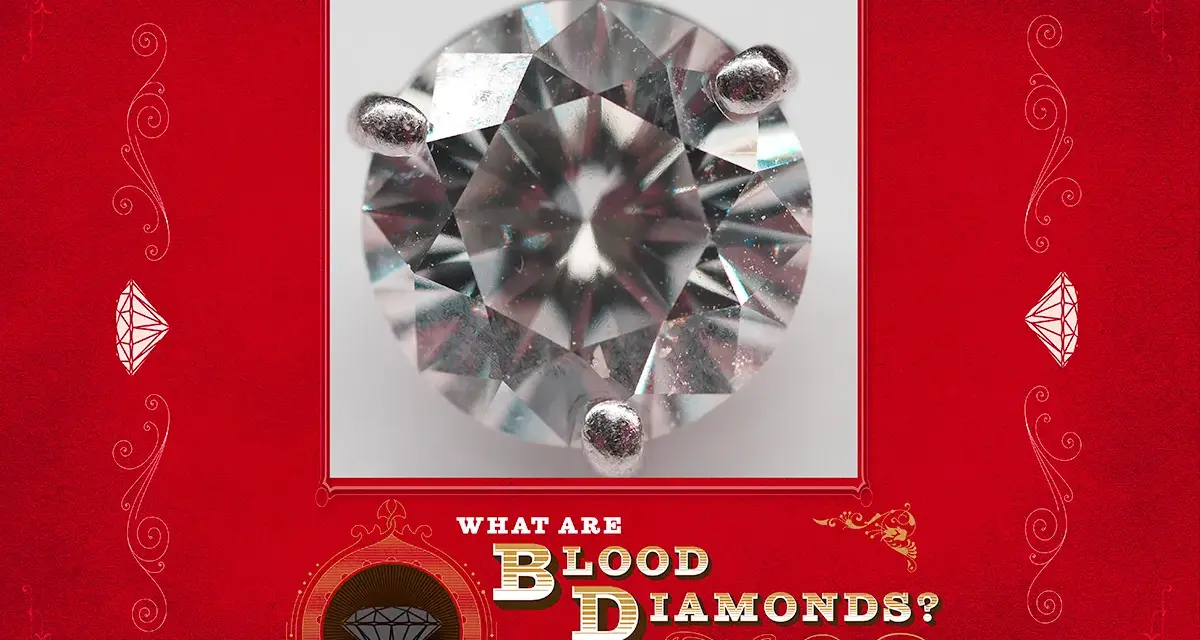
Diamonds have always carried ideas of love, permanence, and status, but that symbolism changes once you look at where a stone came from. The meaning behind blood diamonds is tied to diamonds linked to armed conflict, exploitation, and illicit trade, which is why the subject still matters to anyone buying, gifting, or inheriting jewellery. In this article, I break down the term, explain the political and ethical stakes, and show what a careful buyer in the UK should ask for before trusting a sourcing claim.
What matters most about conflict diamonds
- Blood diamonds is the popular term; conflict diamonds is the more precise policy term.
- The issue is not only moral. It has helped finance violence, corruption, and instability in producing regions.
- The Kimberley Process reduces risk in the rough diamond trade, but it is not a complete ethical audit.
- In jewellery symbolism, provenance now shapes meaning as much as cut, clarity, or carat.
- UK buyers should ask for written sourcing details, not just vague claims like “ethical” or “clean”.
What people mean when they talk about blood diamonds
In everyday language, the phrase usually refers to diamonds whose sale has helped finance violence, especially when stones are mined in or moved through conflict zones. The more precise policy term is conflict diamonds, which the Kimberley Process defines as rough diamonds used by rebel movements or their allies to fund conflict against legitimate governments. That definition matters because it is narrower than the way shoppers often use the phrase.
The distinction is easy to miss, and it changes how you read retail claims. Some people use blood diamonds for any stone with an ugly supply chain, while the official definition focuses on rebel financing, rough stones, and armed conflict. I find that difference useful because it stops the conversation from becoming fuzzy. Once the terminology is clear, the ethical and political stakes are easier to see.
| Term | Common use | What it means in practice |
|---|---|---|
| Blood diamonds | Emotive public term | Diamonds associated with violence, smuggling, or abusive trade |
| Conflict diamonds | Official policy term | Rough diamonds used to finance armed conflict against legitimate governments |
| Conflict-free diamonds | Retail claim | Usually means no known conflict link under a particular standard |
| Ethically sourced diamonds | Broader marketing claim | May include labour, environment, and transparency concerns, but needs specifics |
That terminology matters because a buyer who understands it is much less likely to be misled by a polished-sounding label. And once the language is clear, the real-world consequences become harder to ignore.
Why the issue is ethical and political, not just commercial
What makes conflict diamonds so disturbing is that the damage goes far beyond the stone itself. When diamonds finance armed groups, the trade can prolong war, weaken legitimate governments, and feed networks of smuggling and corruption. In other words, the problem is not only about a luxury product; it is about who controls resources, who profits from them, and who pays the human cost.
I think that is why this subject has such lasting force. A diamond mine is not just a workplace; it can become a political asset, a source of tax revenue, a border-control issue, and, in the wrong hands, a war chest. The ethical questions are therefore inseparable from the political ones.
- Financing violence is the most obvious harm, because diamond revenue can keep armed groups in business.
- Corruption and smuggling often grow around the trade, which makes regulation harder and weakens trust.
- Local communities can be trapped between armed actors, illegal operators, and weak state oversight.
- Consumer confidence suffers when buyers start to wonder whether beauty has been built on harm.
That tension is exactly what pushed the industry toward certification systems, and it also explains why those systems are still debated today.
How conflict diamonds changed diamond symbolism
Before the controversy became widely discussed, a diamond was mostly read as a symbol of endurance, romance, and social arrival. After that, it picked up a second layer: provenance became part of the meaning. A diamond can still stand for commitment, but the source now affects whether the symbolism feels complete or compromised.
For jewellery, that is a major shift. An engagement ring no longer reads only as a promise between two people; for many buyers, it also says something about the kind of world they want their purchase to support. I would call that a quieter form of symbolism, but not a weaker one. In some cases it matters more than the carat weight, because it shapes how the piece will be remembered.This is especially true for gift pieces and heirlooms. A diamond passed down in a family carries emotional weight, but a newly bought diamond also carries a moral story, and buyers are increasingly aware that both stories travel together. That is where certification enters the picture, although certification has clear limits.
Where the Kimberley Process helps and where it stops
According to the Kimberley Process, the system brings together governments, industry, and civil society to reduce the flow of conflict diamonds. As of 2026, it covers 86 countries and nearly all global rough diamond production, and UK Government guidance says rough diamonds traded in or out of the UK must comply with those rules. That makes it a serious supply-chain control, not a symbolic gesture.
| What it helps with | Why that matters | What it does not solve |
|---|---|---|
| Certificates for rough diamond shipments | Creates traceability at border level | Does not guarantee every stone is fully ethical |
| International participation | Makes illicit trade harder to move at scale | Does not catch every bad actor or informal route |
| Official import and export controls | Protects legitimate trade and customs oversight | Does not replace retailer due diligence |
| Conflict-focused definition | Keeps the system targeted and enforceable | Leaves out some labour, environmental, and broader human-rights concerns |
That last limitation is the key one. A stone can be Kimberley-compliant and still raise questions about labour conditions, environmental damage, or local governance. I see that as a reminder that compliance and ethics are related, but they are not identical. If a seller uses the phrase “conflict-free” without explaining the standard behind it, the claim is too thin to trust.
How to check a diamond’s sourcing in the UK
For a buyer, the useful question is not “Is it ethical?” in the abstract, but “What proof sits behind that claim?” If you are buying from a UK jeweller, I would ask for the stone’s origin story in plain English: where it was mined, where it was cut, whether it is mined or lab-grown, and what system backs the sourcing claim.
- Ask whether the diamond is mined or lab-grown, because those are different supply chains with different implications.
- Ask what the seller means by conflict-free, and whether that refers to Kimberley Process compliance or something broader.
- Ask for written provenance or chain-of-custody documentation, not just a verbal assurance.
- Ask which part of the journey is actually traceable: mine, cutting centre, setting, or final retail sale.
- Keep the invoice and paperwork together if the piece may become an heirloom or be resold later.
One practical point is easy to overlook: the Kimberley certificate is designed for rough diamonds in trade, so at retail level the better question is what documentation the seller can show you now. A good jeweller should be able to explain the difference without getting defensive. If the answer sounds like a slogan, I would treat that as a warning sign.
Blood diamonds, conflict-free diamonds and ethical claims compared
Once you start comparing labels, marketing language becomes part of the issue. I have seen buyers assume that every reassuring phrase means the same thing, when in fact the scope can be very different. This is where a simple comparison helps.
| Label | What it usually suggests | What to ask next |
|---|---|---|
| Blood diamonds / conflict diamonds | A diamond linked to conflict, abuse, or illicit trade | Is the claim about a legal definition, a historic supply chain, or a broader ethical concern? |
| Conflict-free | No known conflict link under a given standard | Which standard is being used, and does it cover only conflict or more than that? |
| Ethically sourced | A broader values-based claim | Does it cover labour, environment, and community impact, and is it independently verified? |
| Lab-grown | A diamond created without mining | How does the seller address energy use, certification, and long-term value? |
If your main concern is mining-related conflict, lab-grown stones sidestep that specific problem. If your concern is broader sustainability, the question becomes more nuanced, because you still have to weigh energy use, manufacturing impact, and personal preference. I prefer that kind of honesty over a perfect-sounding promise that cannot be checked.
What I would keep in mind before buying or gifting a diamond
For me, the cleanest way to read diamond symbolism today is to treat origin as part of the design. A beautiful stone can still be meaningful, but the meaning becomes stronger when the source matches the story you want the piece to tell.
- Choose specific evidence over broad claims.
- Keep provenance documents with the jewellery, especially for engagement rings and heirlooms.
- If you want to avoid mining-linked conflict risk entirely, consider lab-grown stones and ask the same questions about quality and certification.
- If you are buying a mined diamond, look for transparent sourcing rather than a vague “ethical” label.
That is the practical answer in 2026: a diamond’s symbolism is no longer just about sparkle or sentiment, but also about the path it took to reach your hand. The more clearly you can explain that path, the more defensible the piece becomes as both jewellery and meaning.