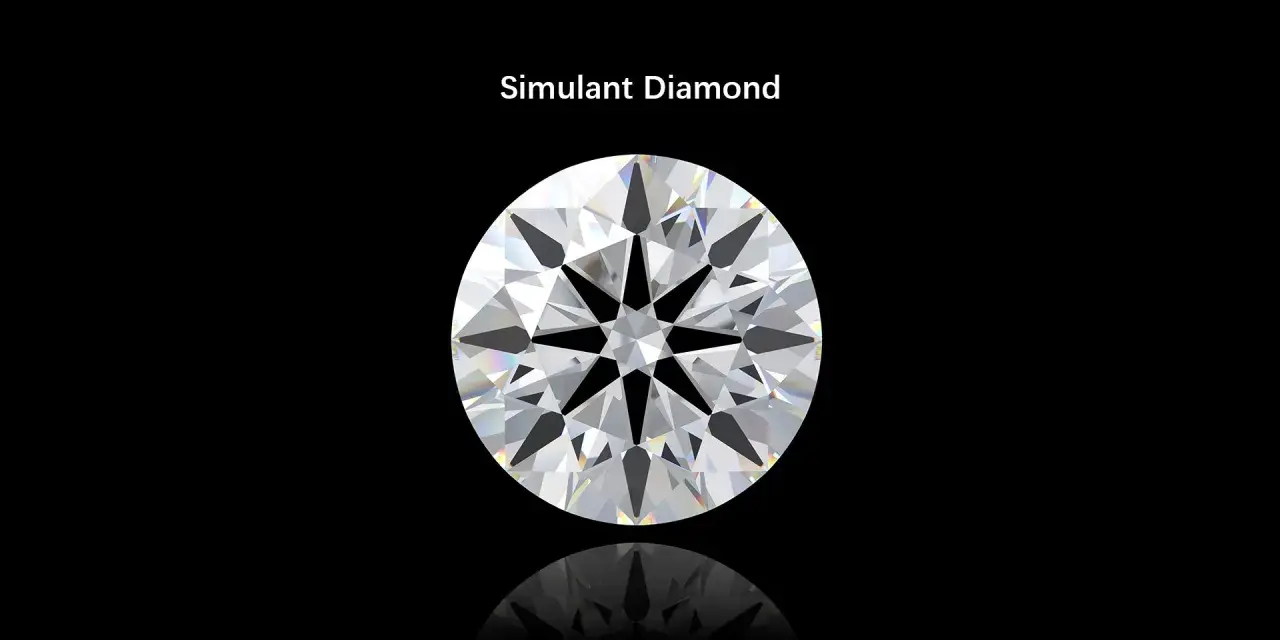
The simulated diamond meaning is simple once the jargon is stripped away: it is a stone made to resemble a diamond without sharing diamond’s mineral identity. That distinction matters because it changes the price, the wear profile, and the story the jewellery tells. In this article, I explain what counts as a simulant, how it differs from a real or lab-grown diamond, and what that choice says in rings, pendants and everyday pieces.
The essentials before you choose a stone
- A diamond simulant copies the look of diamond, but not its chemistry, structure or physical behaviour.
- Lab-grown diamonds are not simulants; they are real diamonds with a different origin.
- The symbolism is usually about style, practicality and intention rather than rarity or investment value.
- Cubic zirconia, moissanite and white sapphire are the most common modern options.
- Durability varies a lot, so the best choice depends on whether the piece is for daily wear or occasional use.
- In the UK, clear labelling matters, so the exact stone name should always be stated plainly.
What a simulated diamond actually is
I use diamond simulant for any natural or man-made material that imitates the look of a diamond without being one. GIA describes these stones as lookalikes that do not share diamond’s chemical, physical or optical properties, and that is the key line to keep in mind. Common examples include cubic zirconia, moissanite, white sapphire, glass and older paste stones used in vintage jewellery.
That broad category matters because not every simulant behaves the same way. Some are designed for maximum sparkle, some for affordability, and some for a softer, more traditional look. In the UK market, the National Association of Jewellers keeps this terminology separate from synthetic diamonds, which helps avoid a lot of confusion before a purchase is even made.
One practical rule helps here: if the stone is lab-grown, it is still diamond; if it is a simulant, it only imitates diamond. That difference is where many buyers get tripped up, so I always separate the two before talking about style or value. Once that is clear, the comparison becomes much easier to read.
That distinction sets up the next question naturally: how does a simulant behave in real life compared with a natural or lab-grown diamond?
How it differs from a natural or lab-grown diamond
The easiest way to understand the difference is to look at the stone in layers: what it is made of, how hard it is, how it returns light, and what that means for everyday wear. Fire is the rainbow-like flash of light inside a stone, while brilliance is the bright white return of light from its surface and facets. Those two qualities are often where simulants and diamonds start to separate.
| Aspect | Simulated diamond | Natural or lab-grown diamond |
|---|---|---|
| Composition | Different material entirely, such as cubic zirconia or moissanite | Pure carbon crystal in the diamond structure |
| Hardness | Varies by material, and is usually lower than diamond | Diamond sits at 10 on the Mohs scale |
| Sparkle style | Can be more fiery, flatter, or less balanced depending on the stone | Known for a balanced mix of brilliance and fire |
| Daily wear | Some are durable, but others scratch or cloud more easily | Excellent long-term wear resistance |
| Value story | Usually bought for appearance, budget or design freedom | More closely tied to rarity and tradition |
The important caveat is that lab-grown diamonds are not simulants. They are chemically and physically the same as mined diamonds; the difference is where they formed. That is why I treat “simulated” and “synthetic diamond” as two separate conversations, even though shoppers often lump them together.
In practice, you may not spot the difference from across a room, but you often will once the light hits the stone or the setting is worn for a while. That is why the symbolism of the piece depends so much on the material behind the sparkle.
What it symbolises in jewellery
For me, this is where the subject stops being technical and becomes personal. A simulant often symbolises resourcefulness, design-first thinking and freedom from the assumption that a ring has to be expensive to feel special. In rings, it can signal commitment; in pendants and earrings, it often signals glamour without financial strain.
It also changes the emotional reading of the jewellery. A mined diamond usually carries the language of rarity, permanence and legacy. A simulant can still carry love and intention, but it tends to speak more clearly about choice than status. That can be a strength, not a weakness.
- Accessibility - the wearer values the look and sentiment without chasing a premium price.
- Practicality - the piece is meant to be worn, enjoyed and replaced less painfully if life gets messy.
- Style confidence - the sparkle matters, but the label does not need to carry prestige.
- Modern taste - many buyers prefer to put design, setting and personal meaning first.
Historically, paste stones, rhinestones and other diamond lookalikes have also had their own charm in costume and vintage jewellery. In those pieces, the simulant is not pretending to be a heirloom diamond; it is part of a fashion language of its own. That history matters, because it shows that imitation can still have genuine cultural value.
Once you look at symbolism this way, the material choices behind the look start to matter even more.
The most common materials behind the look
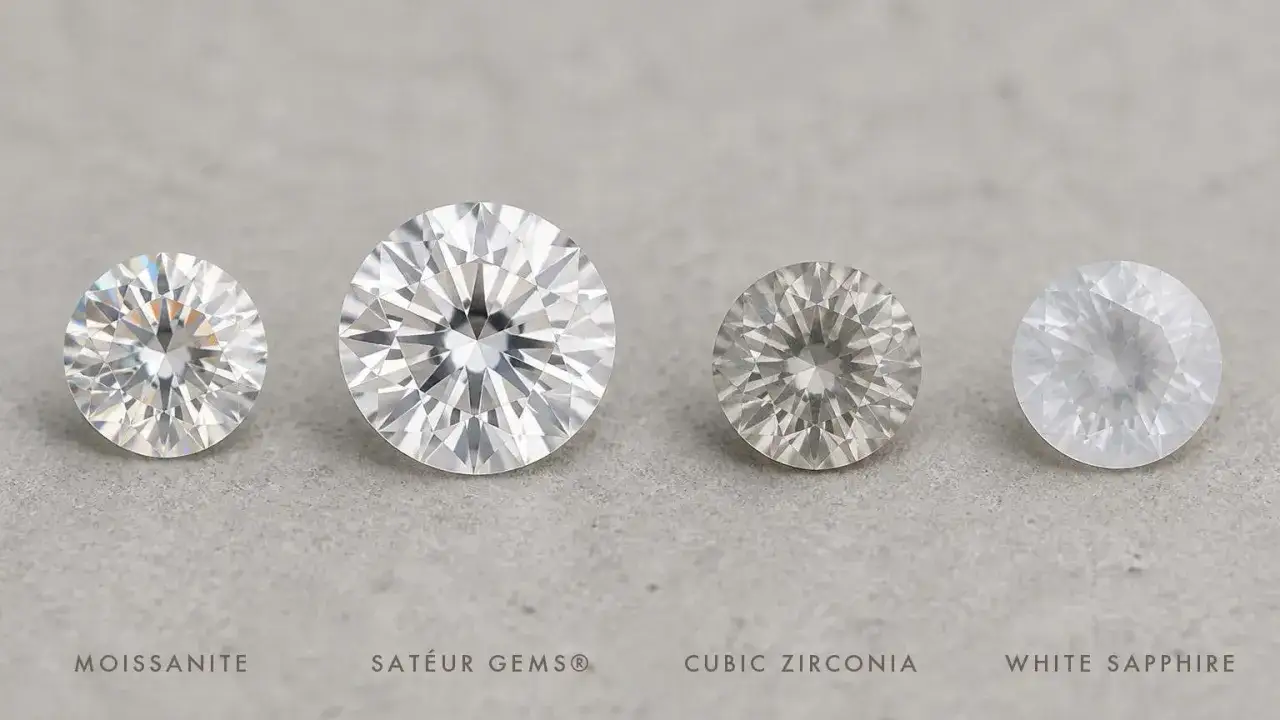
If you only remember a few names, remember cubic zirconia, moissanite and white sapphire. Those three cover most of the modern market, and each one carries a different balance of sparkle, durability and price sensitivity. I find this section useful because buyers often compare them as if they were interchangeable, when they really are not.
| Material | What it offers | What to watch for | Best for |
|---|---|---|---|
| Cubic zirconia | Very bright, very affordable and widely available | Scratches more easily and can yellow over time | Fashion pieces and occasional wear |
| Moissanite | Highly durable, strong sparkle and a lively fire | Can look a little too intense for people who want a quieter diamond look | Daily-wear rings and bold settings |
| White sapphire | Hard, understated and classic | Less brilliance than diamond and often a softer visual effect | Minimalist, vintage-inspired or low-key jewellery |
| Glass and paste stones | Cheap, historic and useful for costume jewellery | Soft, easier to scratch and usually less convincing up close | Costume pieces, antique styles and short-term wear |
Moissanite is often the bridge option for people who want longevity as well as sparkle. Cubic zirconia is the obvious budget pick when the priority is appearance over durability. White sapphire suits someone who wants restraint rather than drama. That simple split covers most buying decisions without making the process more complicated than it needs to be.
The next step is to match the material to the job the jewellery has to do.
How to choose one without disappointment
I always start with the purpose of the piece. A ring for everyday wear has different needs from a necklace worn a few times a year, and a simulant that looks perfect in a showroom can age differently once it starts living on a hand, in sunlight and against fabric. The best choice is not the flashiest one; it is the one that matches the real use case.
- Decide how often it will be worn. Daily wear calls for better hardness and a protective setting, while occasional jewellery can be softer and more decorative.
- Ask for the exact material name. “Diamond look” is not enough. I want to know whether I am looking at CZ, moissanite, white sapphire, glass or something else.
- Check the cut and setting together. A tall, open setting shows more light but leaves the stone more exposed. A bezel or lower profile can protect a softer simulant much better.
- Match the sparkle to your taste. Some people love moissanite’s more dramatic fire. Others want the quieter, more diamond-like feel of white sapphire or a good CZ.
- Read the care guidance before you buy. If the stone cannot handle steam, ultrasonic cleaning or rough handling, that matters more than the marketing copy.
If a retailer cannot tell you exactly what the stone is, I treat that as a warning sign. Good jewellery should come with straightforward wording, not vague phrases that leave you guessing later. That leads directly to the last practical issue: care, value and what the label should actually say.
What I would check on the label before I buy in the UK
The label tells you more than the sparkle does. In the UK, clear terminology is especially important, because trade guidance expects the stone to be described honestly and specifically. That is good for the buyer, because it removes guesswork before money changes hands.
- Exact stone type - look for cubic zirconia, moissanite, white sapphire or another specific material rather than a vague description.
- Whether it is coated or treated - coatings can affect both appearance and how you clean the piece.
- Daily-wear suitability - some simulants are fine for regular use, while others are better kept for occasional wear.
- Cleaning method - warm water and mild soap are safe starting points for most pieces, but ultrasonic or steam cleaning should only be used when the maker says it is fine.
- Value expectation - simulants are usually bought for enjoyment and style, not for strong resale value.
That is the part many people miss: the meaning of a simulant is not just visual, it is practical. If you want the diamond story without the diamond price, a simulant can be a smart and honest choice. If you want the permanence and rarity narrative of a mined stone, it will never fully replace that experience. Knowing which of those you are buying is what turns a pretty stone into the right one.