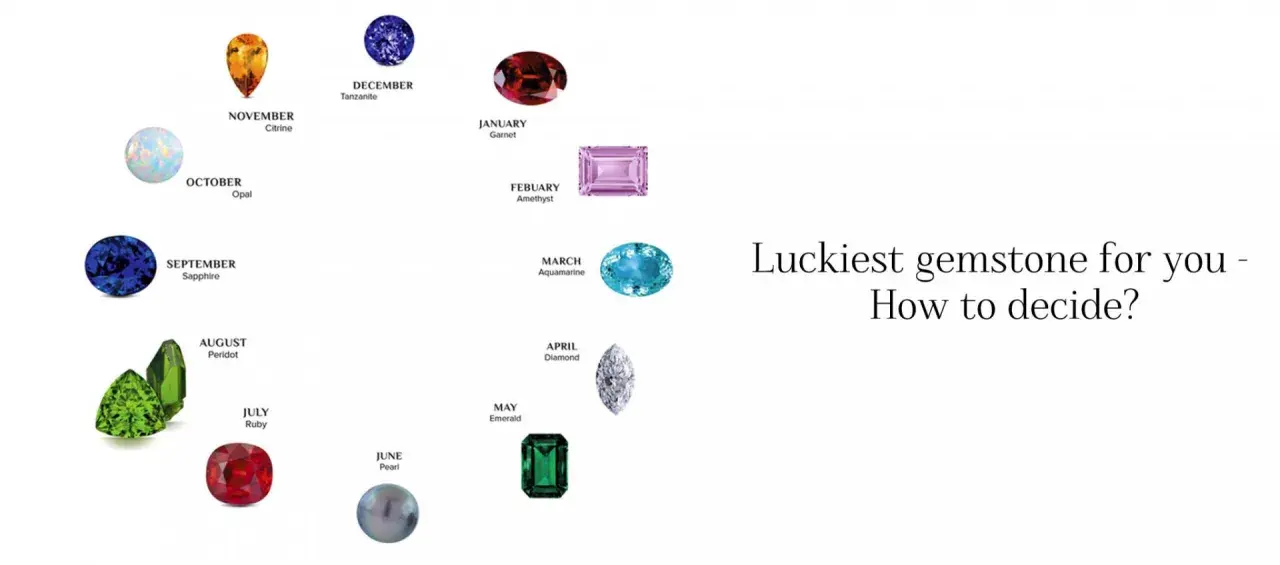
Jewellery that stands for luck is never just decoration. The best pieces carry a story: a colour, a tradition, a memory, or a promise you make to yourself. When people talk about gemstones for good luck, they are usually choosing a stone that feels meaningful enough to wear often, not something they expect to work like a spell. This guide looks at the stones most often linked with good fortune, how they differ, and how to choose one that suits both your style and your life in the UK.
What matters most before you choose a lucky stone
- Symbolism matters, but wearability matters more. A stone that stays in a drawer will not feel lucky for long.
- Jade, citrine, peridot, garnet, sapphire, turquoise and amethyst are the most common choices for good-fortune jewellery.
- Harder stones suit rings and daily wear. Softer gems are usually better in pendants, earrings or protected settings.
- Colour tells a big part of the story. Green reads as growth, blue as calm and protection, yellow as optimism, and red as energy or courage.
- In the UK, construction matters as much as legend. Check the setting, the finish and the hallmark on the metal before you focus on the folklore.
What makes a gemstone feel lucky
Luck and jewellery have been linked for centuries. GIA has written about gem-set jewellery as a talisman, and that is the right word to keep in mind: an object worn for comfort, protection or intention. An amulet is usually about warding something off, while a talisman is closer to attracting what you want. In practice, the line is blurred, which is why the same stone can mean prosperity to one wearer, courage to another and calm to a third.
I think that is why gemstone symbolism still works. It gives a piece of jewellery a job beyond looking polished. The V&A’s collections of amulets and charms show how old this habit is, but the appeal is still familiar today. One person calls it luck, another calls it intention, and a third simply wants a reminder of an important moment.
That is the useful part: once you understand the symbolism, you can choose a stone that supports a real purpose rather than a vague notion of fortune. From there, the question becomes which gems carry the clearest meanings.
The stones people usually choose for good fortune
Some gems keep appearing in lucky jewellery because their stories are clear, their colours are recognisable and they wear well in real life. I would treat the table below as a practical guide, not a rulebook. If a stone has the right symbolism but the wrong durability for your lifestyle, it will not be the right choice.
| Gemstone | Common symbolic link | Best used as | Wearability notes |
|---|---|---|---|
| Jade | Prosperity, harmony, protection | Pendants, rings in protected settings, heirloom pieces | Moderate hardness; choose careful settings and avoid rough treatment |
| Citrine | Confidence, success, abundance | Rings, earrings, stackable pieces | Good everyday option; bright colour makes it feel upbeat without being flashy |
| Peridot | Renewal, optimism, protection | Pendants, earrings, light-duty rings | Lovely colour, but less forgiving than the hardest gems |
| Garnet | Strength, devotion, safe travel | Rings, lockets, signet-style jewellery | Solid choice for frequent wear and rich, darker colour palettes |
| Sapphire | Wisdom, loyalty, protection, success | Rings, fine pendants, lifelong pieces | One of the best stones for daily jewellery because it is very hard-wearing |
| Turquoise | Good fortune, health, protection | Pendants, earrings, vintage-inspired pieces | More delicate and often porous; keep it away from harsh chemicals and excess moisture |
| Amethyst | Calm, clarity, spiritual protection | Pendants, bracelets, everyday accents | Versatile and accessible, with a colour range that works in many wardrobes |
| Bloodstone | Courage, resilience, stamina | Menswear-inspired jewellery, pendants, vintage styles | Historic and less common, which gives it a more distinctive symbolic feel |
If I were narrowing the list quickly, I would start with sapphire or garnet for a daily ring, jade or turquoise for a more symbolic pendant, and amethyst or citrine when I wanted colour and meaning without pushing the budget too hard. That balance of symbolism, durability and price is often more useful than chasing the rarest stone.
How to choose the right stone for your intention
The best choice depends on what you want the piece to do in your wardrobe and in your mind. For a promotion or a new venture, I usually lean towards citrine or jade because their symbolism reads as growth and movement. For resilience or travel, garnet and turquoise have stronger protective stories. For clarity and steadiness, sapphire and amethyst feel more grounded. If you are buying for someone else, birthstones and anniversary stones are the safest route because the symbolism is personal without being too specific.
- For everyday wear: sapphire, garnet and amethyst are the easiest stones to live with.
- For a softer, symbolic pendant: jade, turquoise and peridot give strong meaning without needing constant contact.
- For a gift with an obvious message: citrine suggests confidence, garnet suggests devotion, and jade suggests prosperity.
- For a ring or bracelet you will wear often: choose a stone with a hardness of 7 or above, or use a protective setting.
Hardness matters because jewellery is not a display case. A 9 on the Mohs scale, such as sapphire, shrugs off more everyday friction than a 5 or 6 stone like turquoise. That does not make softer stones less beautiful, but it does change where I would place them. If you are buying in the UK, I would also check the hallmark and the security of the setting before getting lost in the symbolism.
How to wear it so it feels personal, not theatrical
The easiest way to make a symbolic piece look like part of your style is to keep the design honest. A small pendant with a clean bezel setting feels quieter than an oversized costume-style cluster; a slim ring reads as deliberate rather than theatrical. In Britain, I often find yellow gold gives luck jewellery a warmer, more traditional mood, while silver or white gold makes the stone feel cooler and more contemporary.
- Pendants are the most forgiving option for softer stones and private meanings.
- Rings work best when the stone is hard enough for daily knocks and you want the symbol visible to you.
- Earrings are subtle and practical when you want the idea without constant handling.
- Bracelets look beautiful, but they take the most contact, so they suit tougher stones or protected settings.
If you want the piece to feel genuinely lucky, wear it at moments that matter: interviews, travel days, family milestones or simply when you need a steadier head. That habit matters more than the label on the stone, and it leads directly into care, because symbolic jewellery only stays meaningful if it stays wearable.
How to care for lucky gemstone jewellery
Caring for lucky gemstone jewellery is mostly about avoiding preventable damage. Warm water, a drop of mild soap and a soft cloth are enough for most stones, but turquoise, jade and other porous or more delicate gems need extra restraint. I would keep them away from perfume, hairspray, chlorine and ultrasonic cleaners unless the maker explicitly says otherwise.
A bezel setting is often the best choice for softer stones; it is a metal rim that wraps around the gem and protects the edges better than exposed claws. For rings, that extra protection is not cosmetic detail, it is what keeps the piece in circulation long enough to matter. Store each item separately, especially if the collection includes harder stones like sapphire alongside softer ones like turquoise or peridot, because scratches usually happen in storage, not while you are wearing the piece.
That practical care is part of the symbolism too: a well-kept stone feels intentional, not disposable.
Common mistakes that weaken the symbolism
The biggest mistake is to treat every lucky stone as if it works for every person. Symbolism is cultural, not universal, and even within the same culture people attach different meanings to the same gem. A second mistake is buying a soft stone for a ring simply because the story is appealing. If the piece spends its life in a drawer because it is too fragile, the symbolism is wasted. I also see people ignore scale: a stone can be meaningful and still be the wrong size or colour for the clothes they actually wear.
- Choosing by legend alone and ignoring durability.
- Buying a setting that looks pretty but offers little protection.
- Forgetting that colour needs to suit the wearer’s usual wardrobe.
- Assuming a pricey gem is automatically more meaningful than a well-chosen modest one.
The cleanest solution is to ask what the piece is supposed to do: be worn daily, mark a milestone or sit as a keepsake. Once you answer that, the final choice becomes much easier.
The best lucky piece is the one you will actually keep on
I would keep the decision simple. Pick one stone, one reason and one way of wearing it. If you need courage, reach for garnet or sapphire. If you want prosperity or growth, jade and citrine are the clearest symbolic choices. If you want a quieter talisman, amethyst and peridot give you colour without shouting.
- Start with the life moment, not the gemstone trend.
- Choose a stone you can wear often, not only admire in a box.
- Match the setting to the stone’s hardness.
- Let the piece carry a real memory, milestone or intention.
That is the version of lucky jewellery I trust most: not a promise of fate, but a well-made piece that helps you feel more focused, more grounded and more like yourself.