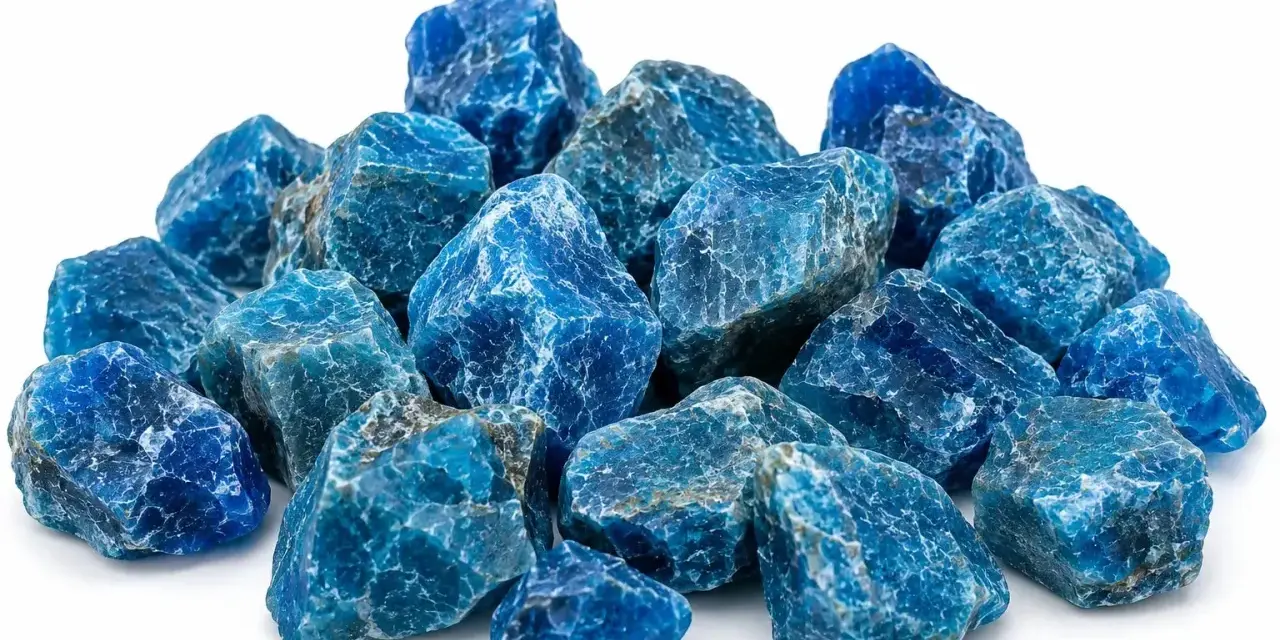
What apatite usually says in jewellery
- Apatite is most often associated with clarity, honest communication and forward movement.
- Blue stones tend to feel the most expressive, while green and yellow apatite shift the mood toward growth or confidence.
- Because apatite sits around 5 on the Mohs scale, it is better for pendants and earrings than for hard-wearing rings.
- Warm soapy water is the safest way to clean it, and ultrasonic or steam cleaning is best avoided.
- Its symbolism is strongest when the colour, metal and setting all support the same message.
What apatite means in jewellery
When I think about apatite in jewellery, I think of energy that is active rather than quiet. It is not a stone people usually choose for heaviness, tradition or formality. They choose it for colour, movement and the feeling that something is opening up. That is why apatite often appears in pieces meant to mark a new chapter, such as a career shift, a creative project or a period of personal reset.
In symbolic jewellery language, apatite often reads as a stone for people who want to speak more clearly, think more cleanly and move with more intention. It is also one of those gems that feels modern even when the design is simple. A clean-cut blue apatite in silver can look almost architectural, while the same stone in yellow gold feels warmer and more personal. That flexibility is a big part of its appeal.
There is also a practical layer here. Apatite is attractive enough to stand on its own, but it is rarely so expensive or formal that it becomes intimidating. For many buyers, that balance matters just as much as the symbolism. It lets the stone feel expressive without becoming precious in the wrong way. From there, the next question is obvious: what exactly are people saying when they call apatite meaningful?
The symbolic themes people usually attach to apatite
Apatite carries a small cluster of ideas that show up again and again in jewellery and crystal traditions. I would not treat those meanings as scientific claims, but I do think they explain why the stone resonates so strongly with certain wearers.
Clarity is probably the most consistent theme. Apatite is often linked to mental focus, clearer thinking and the ability to cut through noise. That makes sense visually, because many good stones are crisp in colour and lively in appearance rather than muddy or sleepy.
Communication is another major theme, especially with blue stones. People often associate apatite with speaking honestly, finding the right words and expressing themselves without hesitation. For jewellery symbolism, that is powerful because a necklace or pair of earrings can become a quiet reminder to say what matters.
Motivation and momentum are also part of the story. Apatite is not usually described as a passive or soothing stone. It tends to be framed as a push forward, a nudge into action, a way of turning intention into movement. That is why it is often chosen for goal-setting, exam periods or a fresh start after a stagnant spell.
Creativity and learning round out the picture. I often see apatite chosen by writers, students and makers because it feels mentally awake. It has the tone of a stone that does not want you to sit still for too long.
One thing I think is easy to miss is that apatite symbolism is not only about what the stone is said to do. It is also about how it feels to wear something so bright and self-possessed. That feeling changes again once you look at colour, which is where apatite becomes much more nuanced.
How colour changes the message
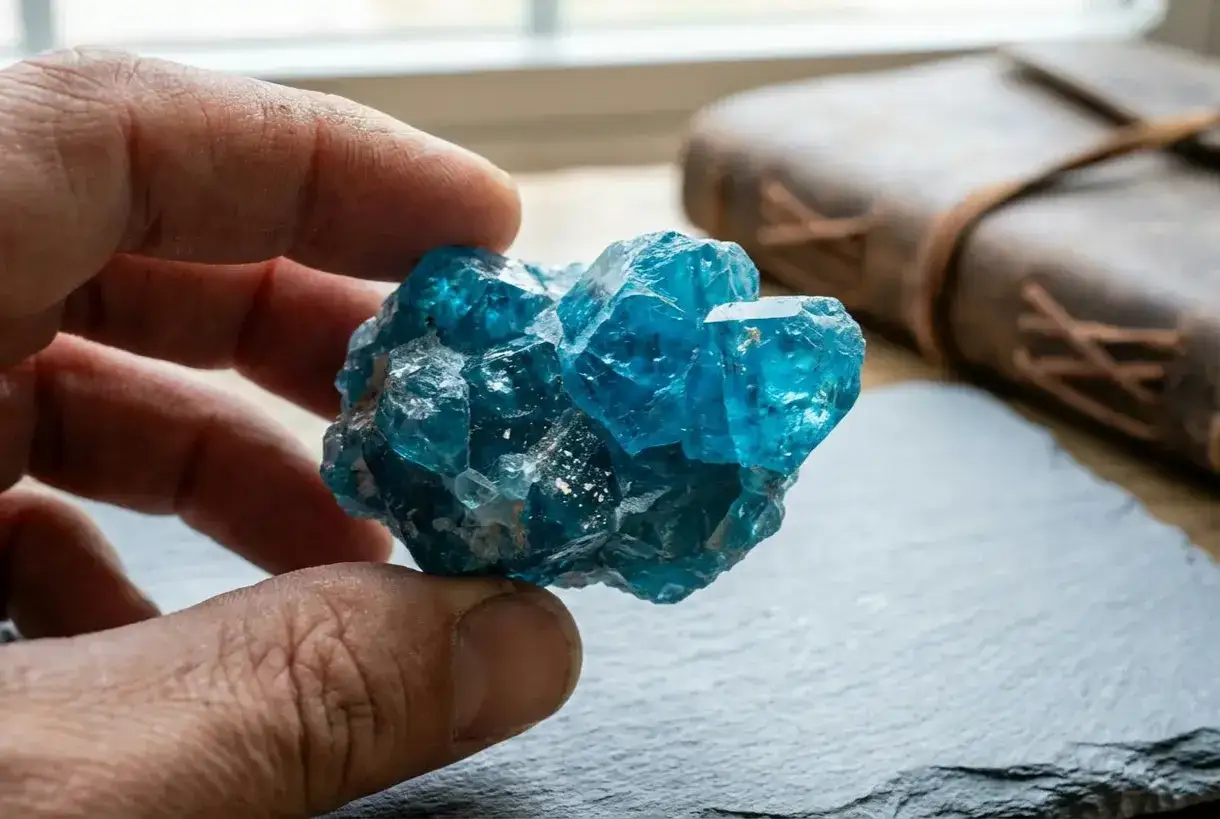
Apatite is not one fixed symbol. Its colour shifts the tone quite dramatically, and that is one reason it works so well in jewellery. The same mineral can feel crisp, leafy, sunny or almost electric depending on the shade.
| Colour | Common symbolic reading | How it feels in jewellery |
|---|---|---|
| Blue apatite | Communication, clarity, truth, focused thinking | Clean, contemporary and slightly intellectual |
| Green apatite | Growth, renewal, balance and a fresh start | Calmer and more organic, especially in gold settings |
| Yellow apatite | Confidence, optimism, willpower and forward energy | Brighter and more cheerful, with a stronger statement feel |
| Colourless or pale apatite | Clarity, simplicity and a stripped-back look | Subtle, minimal and useful when you want the setting to lead |
In practice, the stronger the saturation, the stronger the emotional impression. A vivid blue stone can feel almost electric, while a softer pastel version reads as more reflective. I also think metal choice matters here. Silver and white gold reinforce the cooler, sharper side of apatite, while yellow gold makes green and yellow stones feel fuller and more romantic.
That colour-based reading is useful because it helps you choose the right piece, not just the right gem. Once you know the message you want, styling becomes much easier.
How I would style apatite jewellery
If I were styling apatite for actual wear, I would start with the body area that gets the least abuse. That usually means earrings, pendants and occasional bracelets before rings. Apatite can look exceptional in all three, but the most convincing pieces are the ones that protect the stone while still letting the colour do the talking.
| Jewellery type | Best for | My view |
|---|---|---|
| Earrings | Colour near the face, everyday symbolism, low wear risk | One of the strongest choices for apatite |
| Pendant or necklace | Clear statement pieces and gift jewellery | Excellent if you want the stone to feel intentional but wearable |
| Bezel-set ring | Occasional wear, careful owners, protected settings | Possible, but I would not treat it as a rough daily ring |
| Bracelet | Fashion-led looks and layered styling | Beautiful, but more exposed to knocks and contact |
For metal pairings, I tend to keep things simple. A blue apatite stone usually looks sharpest against silver, platinum or white gold. Green apatite often benefits from warm yellow gold, which gives it a richer and slightly vintage feel. If the stone is very bright, I like to keep the rest of the design restrained. Tiny diamonds, a plain bezel or a fine chain can be enough. The stone already has enough personality.
There is a second styling rule I would not ignore: apatite is better when the design respects its fragility. A delicate halo can be useful because it protects the centre stone while adding light. A high-prong ring worn daily is a different story, and usually a poor match. That leads straight into the part many buyers underestimate, which is durability.
Why wearability matters more than symbolism here
Apatite sits at around 5 on the Mohs scale, which means it is noticeably softer than quartz and far less forgiving than sapphire. In plain terms, it can scratch more easily than many jewellery buyers expect. That does not make it a bad gemstone. It just means the setting, the placement and the wearer’s habits matter more than they would for a harder stone.
For me, the biggest mistake is treating apatite like an everyday ring stone. It can work in a ring, but only if the design protects it and the owner accepts that the piece is for careful wear rather than constant wear. Pendants and earrings are much easier to recommend because they avoid most of the contact that causes surface damage.
Cleaning should stay gentle. Warm water, a little mild soap and a soft brush are enough for routine care. I would avoid ultrasonic cleaners, steam cleaners and harsh chemicals. I would also store apatite separately, because softer gems can pick up scratches from harder stones, metal edges or even the abrasion of loose pieces rubbing together in a box.
These care rules are not glamorous, but they matter. A meaningful stone loses some of its charm if it starts looking tired after a few months, so the right maintenance is part of preserving the symbolism, not just the shine. Once that is clear, the final decision becomes less about the stone in the abstract and more about the person who will wear it.
What I would check before choosing apatite for a piece you will actually wear
Before I buy or gift apatite jewellery, I look at three things: the colour I want, the setting I trust and the kind of wear the piece will get. If those three line up, apatite makes a much stronger choice than its softer reputation suggests.
- Choose the colour first. Blue for clarity and communication, green for renewal, yellow for confidence.
- Inspect the stone closely. Look for chips at facet edges, because those are the first places softer gems tend to show wear.
- Prefer protective settings. Bezel and halo designs usually make more sense than tall prong settings.
- Match the piece to the lifestyle. Earrings and pendants suit daily wear better than rings and bracelets.
- Keep the message specific. Apatite is especially thoughtful for someone starting something new, learning a skill or stepping into a more visible role.
That is the practical side of apatite in jewellery: a gemstone with a bright, forward-looking message, best chosen with the same care you would give any softer coloured stone. If you respect the setting and let the colour lead, apatite feels less like a decorative extra and more like a deliberate statement.