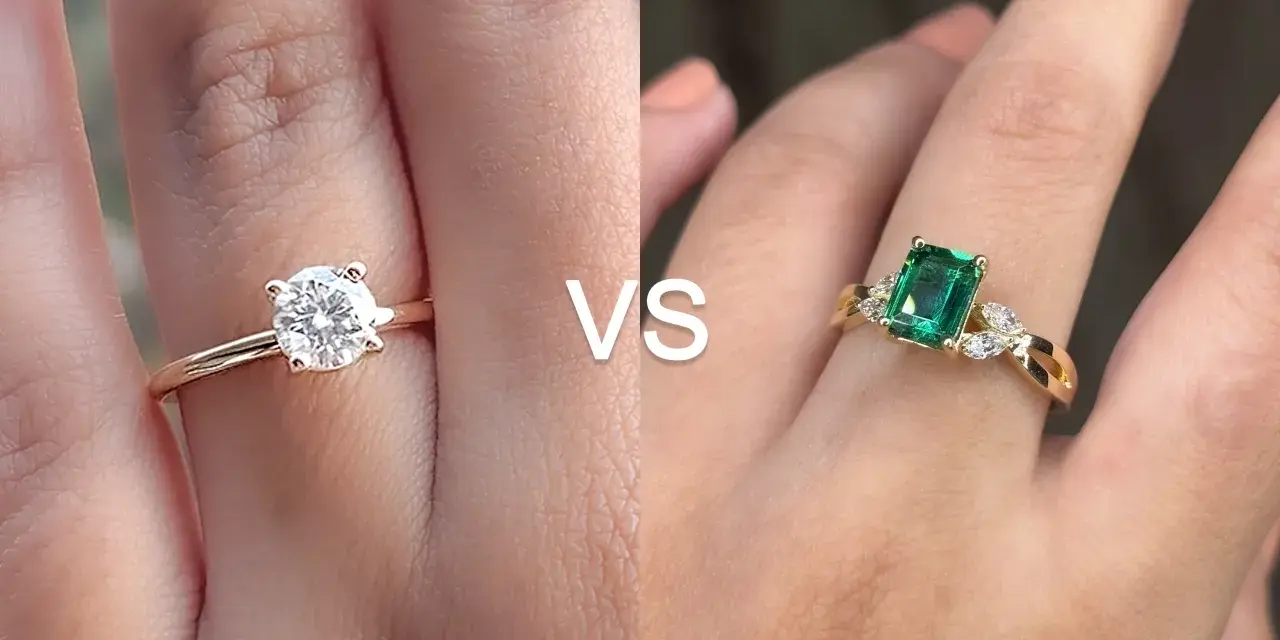
A solitaire engagement ring puts a single centre stone at the centre of the story, and that restraint is exactly why it feels so powerful. The solitaire engagement ring meaning is tied to focus, commitment, and the idea that one relationship does not need extra decoration to feel complete. In this article, I break down what that symbolism really says, how the style compares with halo and three-stone rings, and which design details change the message.
What a solitaire ring usually says at first glance
- One stone signals singular focus, clarity, and a relationship that stands on its own.
- A diamond adds the long-held associations of permanence, strength, and endurance.
- The clean setting makes the design feel intentional rather than crowded.
- Small choices in cut, metal, and setting height can change the tone from classic to modern.
- A solitaire is often chosen by people who want elegance without visual noise.
What a single stone symbolises
When I look at a solitaire, I read it as a deliberate statement: one centre stone, one clear focus, one promise. That simplicity is the heart of its symbolism. It suggests exclusivity without being loud about it, which is part of why the style has stayed emotionally relevant for so long.
Diamonds strengthen that message because they have long been associated with durability and permanence. In jewellery language, they are often linked with ideas like resilience, clarity, and lasting value. A single diamond does not just sit on the finger; it draws attention to the relationship itself, not to the surrounding design.
That is also why a solitaire can feel more intimate than a more elaborate ring. It leaves less room for distraction and more room for meaning. From here, the interesting question is not whether the style is symbolic, but how that symbolism changes when you compare it with other popular settings.
Why the style still feels modern
The solitaire has never depended on ornament to feel special, and that is exactly why it still looks current. Minimal jewellery has a strong place in contemporary style, but this ring was doing that work long before minimalism became a trend. Its strength is that it can look restrained on Monday and formally elegant on Saturday without changing a thing.
I also think the solitaire reads as confident. It does not try to prove anything through extra stones or heavy embellishment. For many people, that is the appeal: the ring feels clean, decisive, and quietly assured rather than overly styled.
This is where the meaning becomes broader than romance alone. A solitaire can suggest taste, self-possession, and a preference for clarity over excess. That nuance becomes easier to see once you compare it with other settings that frame the centre stone differently.
How it differs from halo and three-stone settings
Not every engagement ring communicates the same thing, even when the centre stone is a diamond. A solitaire is the most direct version of the message, while halo and three-stone designs create a more layered visual story. The differences are not just aesthetic; they shape what the ring appears to say.
| Style | Typical impression | What it tends to communicate | Who often prefers it |
|---|---|---|---|
| Solitaire | Clean, focused, timeless | One clear commitment, understated confidence | People who want a classic ring with minimal distraction |
| Halo | Brighter, fuller, more decorative | Extra sparkle, glamour, visual abundance | People who want the centre stone to look larger and more dramatic |
| Three-stone | Balanced, meaningful, slightly narrative | Often read as past, present, and future | People who like symbolism with a more sculptural look |
| Pavé band | Shimmery, refined, ornate | Attention to detail, sparkle across the band | People who want more visual texture without changing the centre stone |
The key point is that a solitaire does not compete with the diamond for attention. Everything else is there to support the stone, not compete with it. If you want the symbolism to feel direct and uncluttered, that is where the solitaire does its best work.
Which design details change the message
A solitaire is not a fixed personality. The stone shape, metal colour, and setting style all shift the tone, sometimes more than people expect. This is where the ring stops being a generic symbol and becomes something specific to the wearer.
The cut
A round brilliant diamond usually feels the most traditional because its sparkle is instantly recognisable. An oval can look softer and more elongating, while an emerald cut feels calmer and more architectural. Even though the setting is still a solitaire, the shape can move the ring towards romantic, elegant, modern, or quietly dramatic.
The metal
Platinum gives a crisp, cool frame that suits a clean, refined look. Yellow gold brings warmth and a slightly more vintage feel, while white gold tends to read as sleek and contemporary. Rose gold softens the whole design and adds a more intimate, slightly less formal mood.
The setting height and security
A prong setting, which uses small claws of metal to hold the diamond, keeps the stone visually open and lets in more light. A higher setting can feel more classic and show the diamond off, but it is also more exposed to knocks. A lower setting reads as practical and grounded, which matters if the ring will be worn every day.
Read Also: Promise Ring Meaning: What It Is & How to Choose One in the UK
The stone’s origin
In 2026, many buyers are also thinking about whether the diamond is natural or lab-grown. The symbolism of commitment remains the same either way, but the story behind the stone changes the ring’s personal meaning. For some couples, rarity matters most; for others, value, traceability, or a larger centre stone for the budget is more important.
These details are why two solitaire rings can feel completely different in person. The style gives you the framework, but the specifics decide whether the result feels traditional, editorial, soft, or bold. Once you know that, the next question is practical: who is a solitaire actually best for?
When a solitaire is the right choice
In practice, I see solitaire rings make the most sense for people who want the diamond to remain the focal point. If the wearer likes clean lines, easy styling, and a ring that works with almost any wedding band, this style is hard to beat. It is also a strong choice for anyone who prefers a ring that feels elegant without looking busy.
- You want the budget to go mainly towards the centre stone rather than extra side stones.
- You like a ring that pairs easily with a plain band or a shaped wedding ring.
- You prefer a look that stays visually calm across different outfits and settings.
- You want a design that can feel both classic and modern without changing the setting.
- You are happy to prioritise the diamond’s cut and quality, because the stone will be highly visible.
That said, a solitaire is not automatically the best choice for everyone. If you love intricate detail, maximum sparkle from every angle, or a ring that tells a more layered story, a halo or three-stone design may suit you better. The meaning is not weaker there; it is simply expressed differently.
Common misconceptions that flatten the meaning
People sometimes talk about solitaire rings as if they are the “safe” option, but that is an oversimplification. The style can be restrained, yes, but restrained is not the same as dull. In the right proportion, a solitaire can look far more elegant than a heavily decorated ring.
- “Simple means boring.” Not true. Simple just means the design is disciplined enough to let the stone lead.
- “One stone means less romance.” Usually the opposite. The symbolism is concentrated rather than spread across extra elements.
- “A solitaire must be a diamond.” Most people picture a diamond, but a solitaire can also feature another single gemstone if the couple wants a different story.
- “Minimal always means cheaper.” A larger or better-quality centre diamond can cost more than a more elaborate ring with smaller stones.
- “All solitaires look the same.” The band, prongs, cut, and metal can change the mood completely.
I think this is where many buyers underestimate the style. The solitaire is not a lack of design; it is a design choice with clear discipline. Once you see it that way, the final step is making sure the ring feels personal in real life, not just meaningful in theory.
What I would check before buying one
If I were choosing a solitaire for daily wear, I would look beyond the stone itself and check how the ring behaves on the hand. A beautiful design can still be frustrating if it catches on knitwear, sits too high for an active lifestyle, or fights with the wedding band you plan to wear later. Practicality matters because an engagement ring is not a display piece; it has to live with you.
- Check whether the band sits flush with a future wedding ring or leaves a visible gap.
- Decide whether a high or low setting fits the wearer’s routine.
- Make sure the prongs feel secure enough for daily use.
- Choose a metal that matches both skin tone and long-term wear preferences.
- Ask how the ring should be cleaned and how often it should be inspected.
My own rule of thumb is simple: a solitaire should feel effortless to wear, not merely beautiful in the box. If the proportions are right, the ring will keep its clarity every time it is seen from across a room or up close in daylight. That is what gives the style its staying power.
Why the style keeps its impact over time
The solitaire works because it is disciplined. It leaves space around the diamond, and that space gives the stone room to speak. The meaning is therefore not hidden in ornament; it is built into the structure of the ring itself.
For that reason, the style rarely feels dated when it is well made. It can be traditional, contemporary, or quietly luxurious depending on the details, but the core message stays intact: one stone, one focus, one commitment. In care terms, I would also have the setting checked about once a year if the ring is worn daily, because a simple design makes the stone easy to admire and easy to lose if the prongs wear down.
That is the real solitaire engagement ring meaning: a deliberate focus on one stone, one promise, and one clear visual message. If you keep the symbolism and the practical details in view together, the ring becomes much more than a classic style; it becomes a precise expression of the relationship it represents.