What matters most before you choose rhodochrosite jewellery
- It is a soft manganese carbonate stone, usually around 3.5-4 on the Mohs scale, so setting choice matters more than with harder gems.
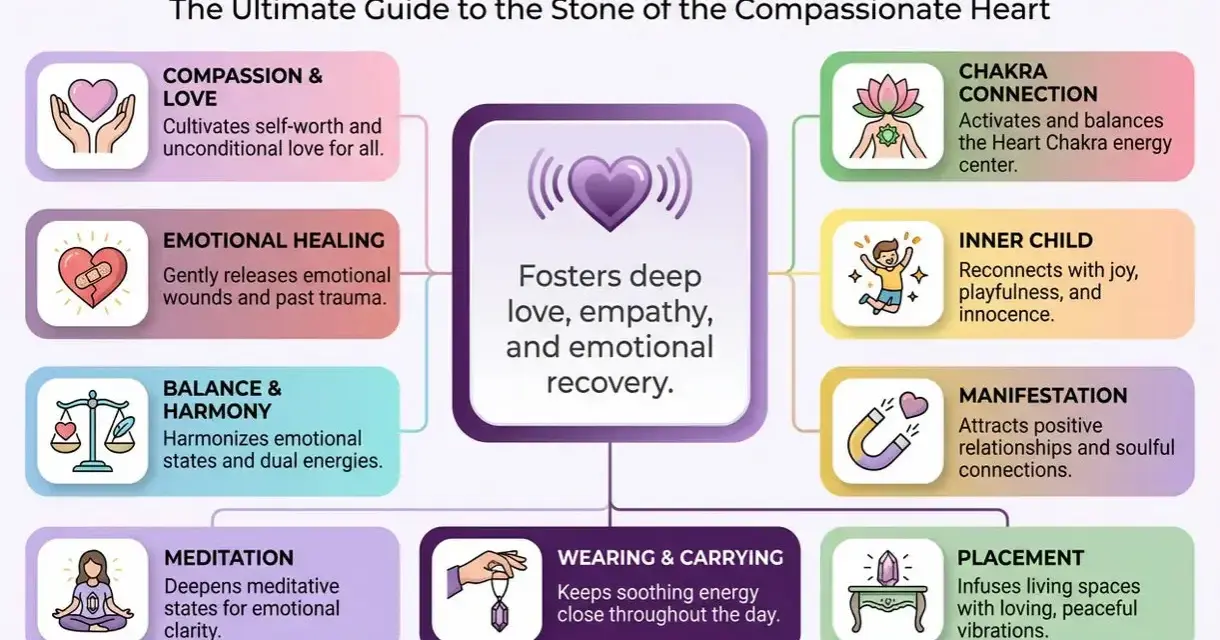
- The emotional claims are symbolic rather than scientific, but the stone’s colour gives it a strong reputation for tenderness and self-kindness.
- In jewellery, it often reads as love, compassion, healing after strain, and gentle confidence.
- Pendants, earrings, and brooches are usually safer than rings or bracelets.
- Cleaning should stay simple: room-temperature soapy water, a soft cloth, and no ultrasonic or steam cleaners.
What rhodochrosite is and why it has such a distinctive presence
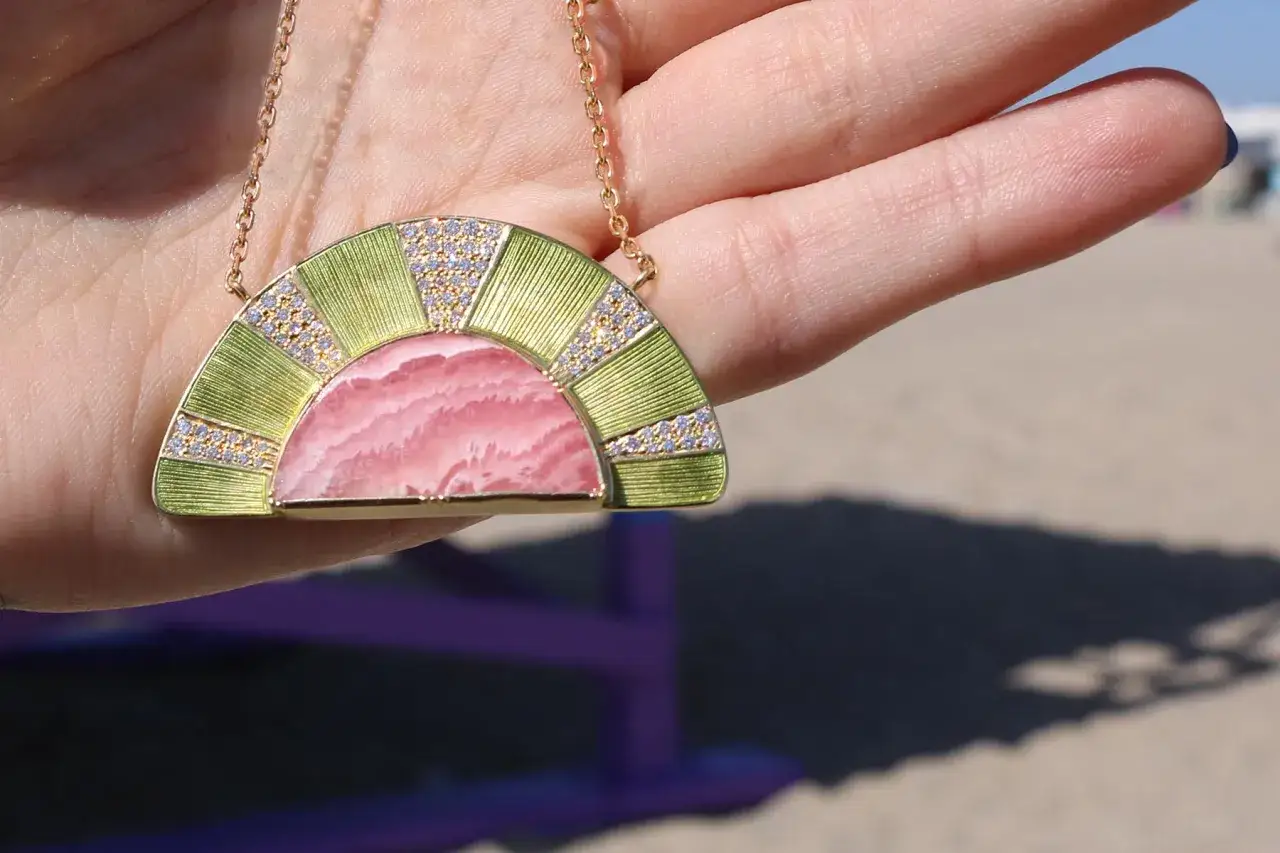
Rhodochrosite is a manganese carbonate mineral, and that matters because its structure gives it both its beauty and its limits. The stone is best known for its rose-pink to raspberry-red colour, often in banded layers that look almost painted by hand. That visual softness is a big part of its appeal: it feels warm, intimate, and slightly nostalgic in a way that many brighter gems do not.
I also think its rarity plays a role in the fascination around it. Opaque material is commonly cut into beads, cabochons, and carvings, while transparent gem-quality pieces are much less common and tend to be handled carefully. Because it is relatively soft and has perfect cleavage, rhodochrosite is not a carefree everyday stone. It is more of a considered, story-led gem than a rugged one, which is exactly why people attach so much meaning to it. That physical character explains why the emotional side of the stone feels so compelling.
What people usually mean by its emotional benefits
When people talk about the emotional side of rhodochrosite, they are usually describing a set of symbolic associations rather than something clinically proven. I would treat those associations as a language of intention: the stone is used as a reminder, a comfort object, or a visual cue to slow down and be kinder to oneself.
The qualities most often linked with it are consistent across crystal traditions:
- Self-worth - it is often chosen when someone wants to soften harsh self-talk and rebuild confidence.
- Emotional release - many people reach for it during periods of grief, disappointment, or change because the colour feels consoling.
- Compassion - it is associated with a more generous, less defensive emotional state.
- Optimism - the pink and red tones naturally suggest warmth, energy, and renewal.
- Heart-centred focus - in symbolic systems, it is linked with love, openness, and emotional balance.
What rhodochrosite symbolises in jewellery
In jewellery, rhodochrosite tends to symbolise a very specific kind of love. It is rarely loud or theatrical. Instead, it feels tender, thoughtful, and personal, which is why it works so well when the gift or the piece is meant to say something more intimate than simple glamour.
| Occasion | What it can symbolise | Best form |
|---|---|---|
| Romantic gift | Affection, warmth, emotional openness | Pendant or earrings |
| Self-gift after a difficult period | Recovery, self-respect, gentleness | Pendant or brooch |
| Milestone birthday or new chapter | Fresh starts, optimism, emotional renewal | Cabochon ring or pendant |
| Vintage-inspired styling | Individuality, collectability, craft | Brooch or statement necklace |
For a UK audience, I find that rhodochrosite works especially well when the look needs to stay elegant rather than sugary. It has enough colour to feel romantic, but not so much intensity that it overwhelms a restrained outfit. That balance is what makes it useful in jewellery symbolism: it can suggest emotion without shouting about it. The next question is practical, because a symbolic stone still has to survive real wear.
How I would wear and care for it in real life
If I were choosing rhodochrosite for actual wear, I would think in terms of protection first and styling second. Its hardness is low enough that scratches, knocks, and harsh cleaning can become a problem quickly. That does not make it unusable; it just means the best designs respect the stone instead of exposing it.
| Jewellery type | Why it works | My caution |
|---|---|---|
| Pendant | Low abrasion, easy to showcase colour, close to the heart in a symbolic sense | Still avoid snagging chains or heavy pendants that swing into hard surfaces |
| Earrings | Minimal contact and excellent for smaller stones | Choose secure fittings so the stone is not dropped during wear |
| Brooch | Very protective and ideal for larger banded pieces | Pin placement matters; avoid thin fabrics that can distort the setting |
| Bracelet | Can look striking in bead form | High impact from desks, doors, and daily movement makes this a less forgiving choice |
| Ring | Visually strong and emotionally direct | I would only choose this for occasional wear, ideally with a protective bezel or low profile |
For cleaning, I keep the advice simple: room-temperature soapy water, a very soft cloth, and no ultrasonic or steam cleaners. Avoid acids, harsh chemicals, and mechanical cleaning methods. Store the piece separately so it does not rub against harder stones, and take it off before exercise, gardening, showering, or anything that exposes it to knocks. I would treat rhodochrosite as a jewellery piece that wants care, not convenience. With the practical side covered, choosing the right piece becomes much easier.
How to choose a piece that feels intentional rather than generic
Rhodochrosite rewards a careful eye. Colour is the first thing I look at, but it is not the only thing that matters. A stone can be pale and delicate, deep and saturated, or strongly banded, and each version creates a different mood. If you want a more romantic, polished look, I would lean towards a cleaner pink tone. If you want character, the banded material gives you more visual texture and a stronger sense of origin.
- Colour - look for even, lively pinks or rich raspberry tones rather than flat, chalky colour.
- Pattern - banding adds personality and often looks most interesting in cabochons or carved pieces.
- Cut - cabochons and beads suit most rhodochrosite; faceted stones are rarer and usually more delicate.
- Setting - a bezel, halo, or other protective mount is usually smarter than an exposed high-set design.
- Metal choice - sterling silver feels fresh and cool, yellow gold warms the pink, and rose gold creates a softer, more cohesive palette.
In Britain, I think smaller pendant drops and vintage-style brooches are especially easy to wear because they feel elegant without demanding too much attention. If you are buying for yourself or as a gift, ask one simple question: does the piece look chosen, or just purchased? Rhodochrosite is at its best when the answer is clearly chosen. That leads to the bigger point about where it really belongs in a collection.
Where rhodochrosite earns its place in a jewellery box
The strongest case for rhodochrosite is not that it is the toughest gem or the most versatile one. It is that it carries a recognisable emotional tone. When I see it in jewellery, I read it as a stone of affection, softness, and personal meaning. That makes it ideal for gifts, keepsakes, and pieces that are meant to mark a transition rather than survive every possible activity.
- Choose it if you want a gem with symbolism built into its colour.
- Choose it if you like jewellery that feels personal, tactile, and a little uncommon.
- Choose it if you are happy to wear a beautiful stone with care rather than without thought.
- Skip it if you want a ring or bracelet you can wear hard and forget about.
If I had to reduce the whole subject to one practical idea, it would be this: rhodochrosite is most valuable when meaning matters as much as durability. The stone works beautifully as a symbol of tenderness and renewal, but its real strength is how clearly it carries that message in a piece you can actually wear.