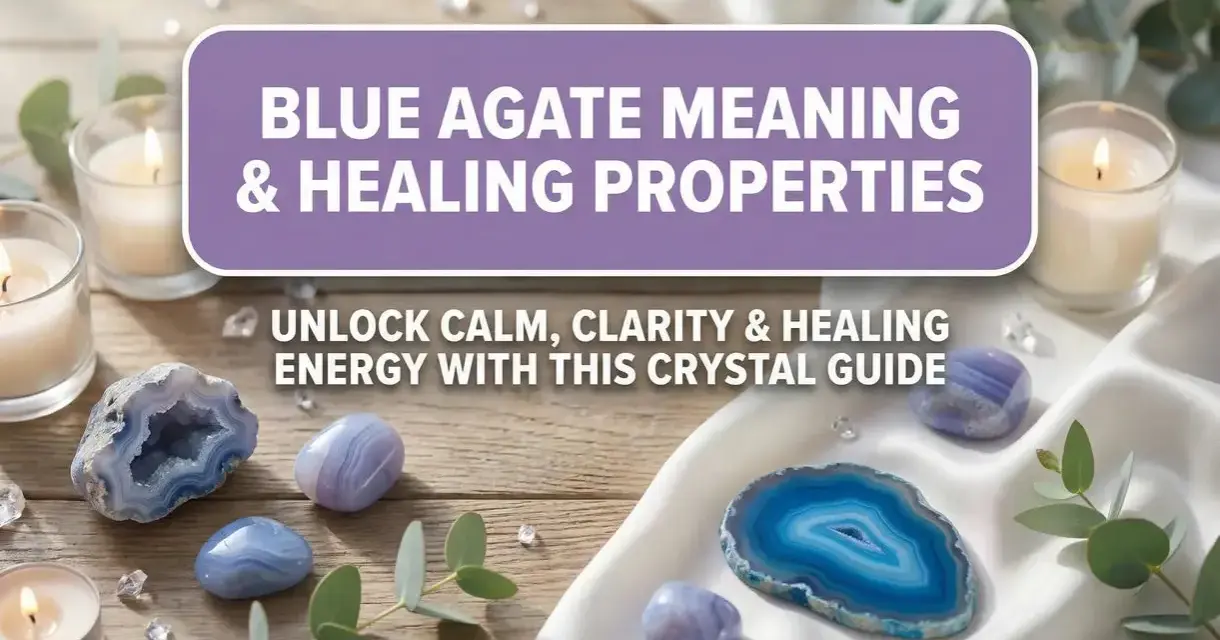
Blue agate is one of those stones that looks quietly elegant at first glance, then reveals more the longer you live with it. The blue agate meaning is usually tied to calm expression, emotional steadiness, and a softer kind of confidence, which is why it shows up so often in jewellery chosen for daily wear rather than for showy occasions. In this article I look at what the stone symbolises, how it behaves in jewellery, how to style it, and what to check before buying.
Key points to know before you buy or wear blue agate
- Blue agate is usually associated with calm, clear communication, patience, and emotional balance.
- It is a banded chalcedony, so its look is part of the meaning: soft layers read as gentle, steady, and refined.
- With a Mohs hardness around 6.5-7, it is suitable for regular jewellery wear, especially in protected settings.
- Pendants, earrings, and bracelets usually suit it better than high-impact rings.
- Natural-looking banding and honest treatment disclosure matter more than an intense, perfectly even blue.
- Simple cleaning with mild soap and lukewarm water is usually enough to keep it looking polished.
What blue agate symbolises and why people keep returning to it
Blue agate is most often read as a stone of calm communication. In crystal traditions, it is linked with speaking clearly, listening better, and keeping your emotions steady when things feel noisy or confrontational. I like that its symbolism is not dramatic or heavy-handed; it feels more like composure, patience, and the ability to say something important without forcing the moment.
That is also why it has such a natural home in jewellery symbolism. A blue agate piece can carry a personal message without looking precious in a fragile or formal way. People often choose it for situations where they want reassurance, focus, or a gentler kind of confidence, whether that is a new job, a difficult conversation, or a stage of life that asks for more balance than intensity.
- Calm: the blue tone and soft banding suggest quiet rather than pressure.
- Clarity: it is often associated with honest, thoughtful expression.
- Patience: the layered structure makes it feel settled and unhurried.
- Protection: many wearers treat it as a steadying talisman rather than a flashy statement stone.
That symbolic base matters, but it becomes more useful once you look at the stone itself and how its physical properties support the way it is worn.
The gem properties that matter when you actually wear it
Blue agate is a form of chalcedony, which means it sits in the quartz family and is usually banded. That matters because the look is not just decorative; the layering gives the stone its soft, almost breathing quality. With a hardness of around 6.5-7 on the Mohs scale, it is sturdy enough for regular jewellery, but it is not invincible. A hard knock can still chip a cabochon or bruise a bead, especially in a ring.
When I evaluate a piece, I pay attention to three things: the colour, the banding, and the finish. A good blue agate should look layered rather than flat, with enough translucency to keep it from feeling dead. The polish should be smooth and even, because that is what lets the blue read as clean and calming instead of dull or chalky.
| Property | What it means in practice | Jewellery impact |
|---|---|---|
| Mohs hardness around 6.5-7 | Fairly durable, but not suitable for careless wear | Good for everyday pieces if the setting protects the stone |
| Banded structure | Creates visual depth and softness | Works especially well in cabochons and beads |
| Translucent to opaque blue tones | Reads as calm, cool, and restrained | Pairs neatly with silver, white gold, and clean tailoring |
Once you understand those basics, the next question is less about mineralogy and more about style: how do you actually wear the stone so its meaning comes through?
How I would style blue agate in everyday jewellery
Blue agate works best when the jewellery design lets the stone breathe. A pendant is the most obvious choice because it puts the stone near the throat, which fits the communication symbolism and gives the colour a clear focal point. Earrings are subtler and often more elegant than people expect; they bring in the blue without taking over an outfit. Bracelets feel relaxed and wearable, especially when the stones are small and evenly cut.
If I were styling it for a British wardrobe, I would lean into pieces that feel clean rather than overworked. Blue agate sits beautifully against cream knits, navy tailoring, grey wool, denim, and white shirts. It also changes character depending on the metal:
- Silver or white gold: keeps the look cool, modern, and crisp.
- Yellow gold: adds warmth and makes the blue feel richer and slightly more vintage.
- Rose gold: softens the contrast, which can be useful if you want a gentler palette.
How blue agate compares with other blue stones
Jewellery labels can be loose, and blue stones in particular are often confused with one another. I find it easier to compare them by mood and visual effect than by name alone. Blue agate usually feels softer and more layered than the alternatives, which is part of why it appeals to people who want symbolism without too much drama.
| Stone | Look | Common symbolic feel | Best for |
|---|---|---|---|
| Blue agate / blue lace agate | Pale to medium blue, often banded and airy | Calm speech, patience, emotional steadiness | Gentle everyday jewellery with a soft, personal tone |
| Blue chalcedony | Smoother and mistier, often less visibly banded | Serenity, softness, ease | Minimal, modern pieces with a polished finish |
| Aquamarine | Clearer, brighter, and more watery | Clarity, confidence, freshness | More refined or luminous jewellery |
| Sodalite | Darker blue with strong white veining | Insight, expression, mental focus | Bolder contrast and graphic statement pieces |
If you want something quiet and composed, blue agate usually wins. If you want sharper contrast or a more obviously luxurious sparkle, another blue stone may suit you better. That is why the next step is not just choosing the colour you like, but choosing a piece that is honestly made and properly described.
What to look for before you buy
Because blue agate is popular in beads, cabochons, and fashion jewellery, the market includes plenty of well-made pieces, but also some dyed or loosely labelled material. I would always look for natural-looking variation in the banding rather than a flat, uniform blue. A stone that looks too perfectly even can be real, but it is worth asking whether any treatment was used.
These are the checks I would make before buying:
- Look for banding or layered structure, even if it is subtle.
- Ask whether the stone has been dyed or stabilised.
- Prefer sellers who describe the stone clearly instead of using vague gemstone language.
- Inspect the setting, especially on rings, to see whether the stone edge is protected.
- Be cautious if the colour looks unnaturally vivid and completely uniform.
That does not mean treated stones are automatically bad; it means you should know what you are buying. Honest labelling matters because it affects both the price and the way you care for the piece, which leads naturally to maintenance.
How to care for blue agate without dulling the finish
Blue agate is relatively easy to care for, and that is part of its appeal in jewellery. I would clean it with lukewarm water, a drop of mild soap, and a soft cloth or brush, then dry it thoroughly before storing it. For most everyday pieces, that is enough to keep the surface bright and the polish clean.
The main mistakes are simple ones: harsh chemicals, rough storage, and overconfidence about durability. I would not use steam or ultrasonic cleaning if the stone has fractures, glue, or any chance of treatment, because that is where problems start. If the piece is a bracelet or ring, remove it before gym sessions, gardening, or anything where the stone could be knocked against hard surfaces.
- Store it separately from harder stones to avoid surface scratching.
- Keep it away from perfume, bleach, and strong cleaning products.
- Wipe it after wear if it has picked up skin oils or residue.
- If the colour looks dyed, minimise long exposure to strong sunlight.
With those basics in place, blue agate stays attractive for a long time, which is why it remains such a reliable choice for people who want a stone with both meaning and practical wearability.
Why blue agate still earns a place in a well-edited jewellery box
Blue agate is not the loudest blue stone, and that is exactly its strength. It offers a calm visual language, a symbolism centred on expression and steadiness, and enough durability to make sense in real life rather than just in a display case. I think it works best when you want jewellery that feels composed, personal, and easy to live with.
If you choose a piece with natural-looking banding, a thoughtful setting, and clear treatment disclosure, you end up with something that does more than look pretty. It becomes a small daily reminder of the mood you want to carry: clear, steady, and unforced.