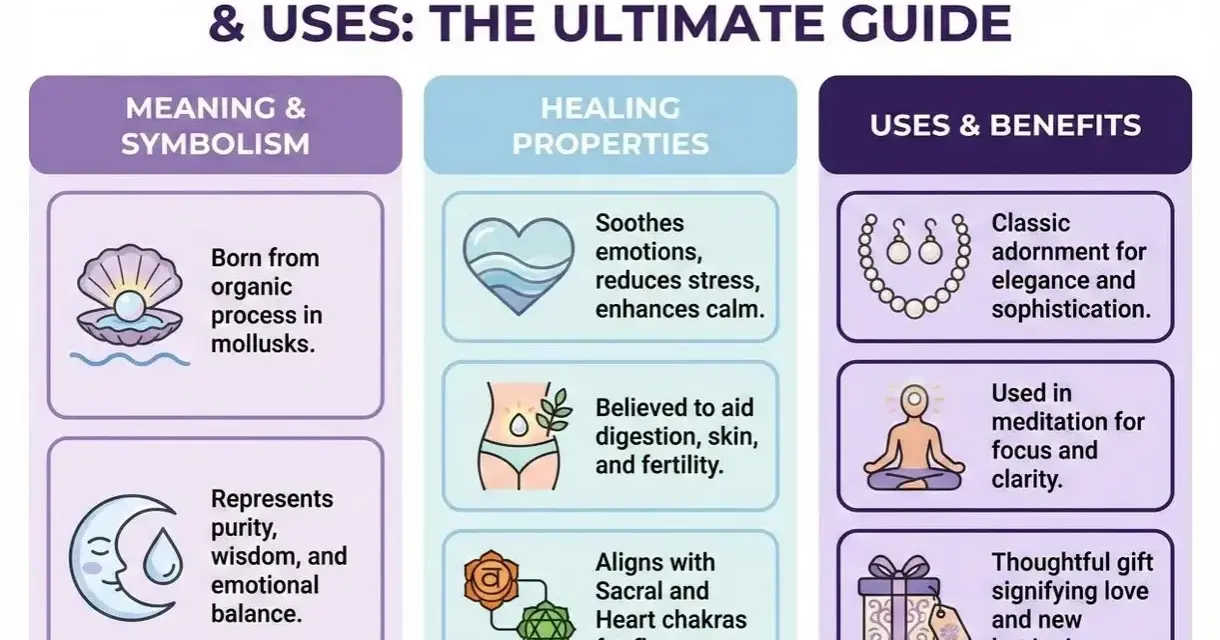
Pearls carry a quiet kind of power. Their symbolism is usually tied to purity, wisdom gained through experience, emotional calm, protection, and the idea that something beautiful can emerge from pressure. In this article, I look at what pearls symbolise, why those meanings developed, how colour changes the message, and how to wear them in a way that feels intentional.
Pearls carry a layered meaning that is calm rather than flashy
- Pearls are commonly linked with purity, wisdom, protection, and emotional balance.
- Their symbolic weight comes from both their natural formation and centuries of cultural tradition.
- White, black, pink, and gold pearls can suggest very different moods and intentions.
- In jewellery, a single pearl piece often communicates more clearly than an overly elaborate set.
- Pearls are delicate, so good care is part of preserving both their beauty and their value.
What pearls traditionally symbolise
The spiritual meaning of pearls is quiet but layered. Across different traditions, pearls have stood for purity, wisdom, protection, feminine energy, prosperity, and the kind of calm that comes only after something difficult has been handled well. That range matters, because it explains why pearl jewellery can feel bridal, devotional, mournful, or quietly luxurious depending on the setting.In broad terms, the symbolism tends to cluster around a few ideas:
- Purity and clarity, because of the pearl’s pale lustre.
- Wisdom and maturity, because a pearl takes time to form.
- Protection and blessing, especially in older Asian traditions.
- Wealth and status, because fine pearls were rare and costly.
- Grace through adversity, because a pearl begins with irritation, not ease.
That symbolic vocabulary becomes much easier to understand once you look at how a pearl is made.
Why their formation carries so much weight
I think the formation story is the reason pearls feel so emotionally persuasive. A mollusc coats an irritant with nacre, layer by layer, until something smooth and luminous emerges. People are naturally drawn to that image because it mirrors resilience: pressure does not vanish, but it can be transformed into something refined.
The water connection matters too. Pearls have long been tied to the moon, tides, femininity, intuition, and emotional cycles, and that gives them a softer, more inward energy than many harder gemstones. I would not call that a scientific property, but as symbolism it is strong because the shape, sheen, and origin all point in the same direction.
That is why the colour and shape of a pearl can change how the message is read.
How colour and shape change the message
Colour is where pearl symbolism gets more specific. I treat colour as a guide, not a rule, because the wearer and the occasion still matter, but certain readings keep appearing in jewellery writing and tradition.
| Pearl colour or type | Common symbolic reading | Best use case |
|---|---|---|
| White or cream Akoya / freshwater | Clarity, purity, new beginnings | Bridal pieces, classic everyday jewellery, formal occasions |
| Pink or blush freshwater | Tenderness, affection, compassion | Romantic gifts, softer styling, personal keepsakes |
| Black or charcoal Tahitian | Mystery, protection, resilience | Evening wear, modern minimal looks, bold statements |
| Golden South Sea | Abundance, confidence, solar warmth | Milestone gifts, statement jewellery, celebratory pieces |
| Baroque pearls | Individuality, creativity, transformation | Contemporary styling, one-off pieces, expressive collections |
Natural shape matters too. A perfectly round pearl often feels formal and classic, while a baroque pearl reads more individual and creative. If you want the piece to say “timeless,” round is usually the safer choice; if you want it to say “personal,” irregular forms are often more interesting.
Once the pearl itself sets the tone, the way you wear it decides whether that tone feels ceremonial, modern, or intimate.
How I would wear pearls with intention
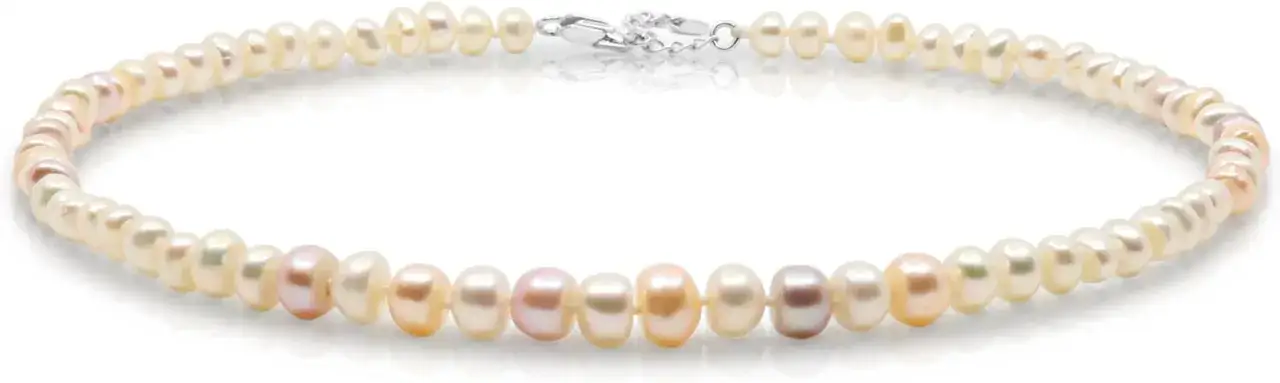
When I style pearls, I try to let them do one job well. A single pendant suggests clarity; studs suggest composure; a strand feels ceremonial; and a baroque drop or ring can make the meaning feel more personal and less formal. In a British wardrobe, they work especially well with tailoring, knitwear, silk shirts, and simple dresses because the contrast keeps them modern.
- For interviews, presentations, or formal dinners, choose smaller pearls and a clean silhouette.
- For weddings or milestone gifts, a strand or drop earrings can carry tradition without looking dated.
- For everyday wear, a single pearl pendant is the easiest way to keep the symbolism close without overdoing it.
- For a more contemporary feel, mix pearls with fine gold chains or plain hoops, but keep one element dominant.
I also treat care as part of the symbolism. Pearls are porous and relatively soft, so put them on after perfume and hairspray, wipe them with a soft cloth after wearing, and store them separately so they do not scratch. If you wear a pearl strand often, having it checked or restrung every 1 to 2 years is sensible; the thread ages long before the pearl itself does.
Because pearl jewellery often carries memory as much as style, it is worth being careful about what the symbols do and do not mean.
Where pearl symbolism is easy to misread
One mistake I see often is assuming pearls always mean purity. That is only part of the story. In some settings they signal mourning or respect; in others they are about wealth, social position, or feminine restraint. A pearl necklace can feel bridal in one context and sober in another, and both readings can be correct.
Another easy misread is treating every pearl as spiritually identical. If you care about material origin, natural pearls, cultured pearls, and imitation pearls may not feel the same to you, even if they look similar. That does not make one choice “better” in a moral sense, but it does change the emotional story the piece tells.I also think personal memory matters more than people admit. An inherited strand from a grandmother, for example, may feel protective because it carries family history, not because of some universal rule about pearls.
- Do not force one fixed meaning onto every culture.
- Do not ignore mourning and memorial associations.
- Do not assume the buyer and the wearer want the same message.
- Do not overlook how much a sentimental piece can outweigh any textbook symbolism.
That leaves the practical question of which pearls to choose if you want the symbolism to feel real in everyday life.
Choosing pearls that feel meaningful in real life
If you want pearls to feel spiritually coherent rather than decorative, start with the feeling you want the piece to carry. For calm and clarity, I would look at white or cream pearls. For warmth and affection, blush or pink tones work beautifully. For depth, mystery, or protection, darker Tahitian-style pearls create a stronger mood. For individuality, baroque shapes are the most expressive choice.
It also helps to think about context. A strand that feels right for a wedding or an anniversary may be too formal for daily wear, while a simple pendant can move easily between work, weekends, and travel. If you are buying a gift, I would choose the pearl first for the message, then for the setting, because the meaning is usually what makes the piece memorable.
For me, that is the real appeal of pearls: they can look understated at first glance and still carry a surprisingly deep emotional charge. When you choose them with intention, they stop being just a classic gem and become a small, wearable statement about patience, balance, and the kind of beauty that comes through time.