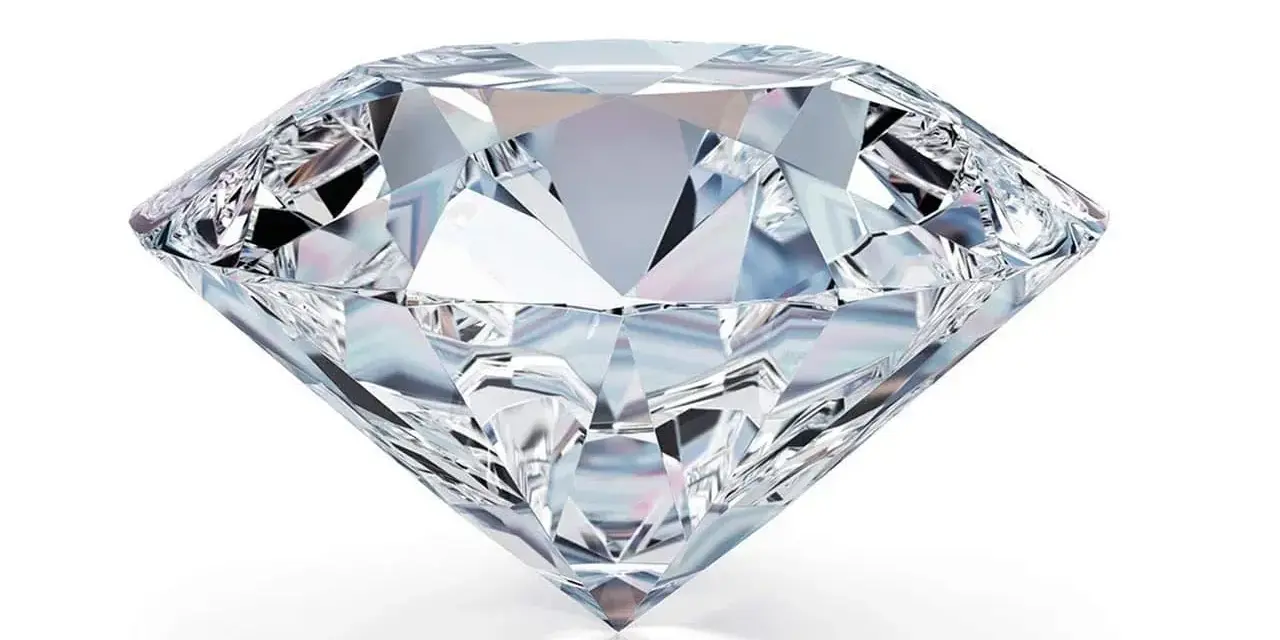
The meanings that show up most often
- Diamonds are commonly linked with clarity, truth, endurance, and spiritual illumination.
- The pressure that forms a diamond has become part of its symbolism, but it should be read as resilience, not romanticised suffering.
- Jewellery context matters: a solitaire, pendant, or heirloom diamond can carry very different messages.
- Colour, cut, and the metal around the stone subtly change the emotional tone.
- Lab-grown and natural diamonds can carry similar personal meaning, but the story you attach to the stone matters most.
The core meanings behind diamond symbolism
In spiritual language, I usually separate the stone’s symbolism from the romance marketing wrapped around it. Diamonds are often read as stones of clarity, honesty, and amplification: they are thought to make intentions sharper, not louder. In crystal traditions, they are also linked with the crown chakra, the energy centre associated with higher awareness, perspective, and a sense of connection beyond the everyday.
I would not treat those meanings as universal facts. They are interpretive, and that is exactly what makes them useful. A diamond can stand for purity without being naïve, truth without feeling cold, and endurance without becoming a symbol of stubbornness. That mix is why the stone works so well in jewellery that marks a vow, a transition, or a personal standard someone wants to keep.
- Clarity suggests clear thinking and honest self-awareness.
- Purity suggests clean intention and minimal distortion.
- Endurance suggests staying power under pressure.
- Amplification suggests focus: whatever you bring to the stone becomes more defined.
That symbolic language makes even more sense once you look at how the diamond is formed, because the geology behind the gem is a big part of why people read it the way they do.
Why pressure and brilliance shaped the symbolism
GIA notes that diamond forms under intense heat and pressure about 100 miles beneath the Earth’s surface, which is a neat metaphor for transformation without collapse. It is easy to see how that geological story turned into a spiritual one: something small, hidden, and under strain becomes clear, hard, and brilliantly reflective.
I think the pressure metaphor works best when it is used carefully. A diamond is not a badge of suffering, and I would not romanticise pain as if difficulty automatically makes a person better. What the stone does represent well is composure after pressure: the capacity to keep shape, keep polish, and keep reflecting light even after a difficult process.
That is also why diamonds are so often tied to permanence. They are the hardest natural material, but hardness is only part of the story. Their real symbolic power comes from the combination of strength and clarity, which is a much more useful idea when you move from geology into jewellery. Once you put that meaning into a ring, pendant, or heirloom piece, the jewellery form starts to steer the message.
How setting and jewellery form change the message
The same diamond reads differently depending on where it sits. A ring, a pendant, and a pair of earrings all create a different emotional frame, so I would never talk about the stone in isolation. In British jewellery especially, the setting often does as much storytelling as the diamond itself.
| Jewellery form | Common symbolic reading | Why it feels that way |
|---|---|---|
| Solitaire ring | Commitment, singular focus, a promise with no distraction | The eye goes straight to one stone, so the meaning feels concentrated and formal. |
| Pendant near the heart | Affection, protection, private belief | Worn close to the chest, it feels more intimate than public. |
| Heirloom piece | Continuity, memory, ancestry | Its value comes from story as much as from the stone itself. |
| Earrings or studs | Balance, discernment, calm clarity | Framing the face gives the stone a more mental, less romantic tone. |
| Cluster or halo design | Radiance, celebration, outward confidence | Multiple stones create a brighter, more social presence. |
The metal matters too. Platinum and white gold usually push the look towards restraint and cool precision, while yellow gold makes the same diamond feel warmer and more ceremonial. If you are trying to read the piece spiritually, I would pay as much attention to the frame as to the centre stone, because the frame tells you how the message is meant to be received.
Once that context is clear, colour and cut become the next layer of meaning.
How colour, cut, and clarity shift the reading
I would not treat every diamond as symbolically identical. A colourless stone, a faint yellow diamond, and a black diamond all carry a different emotional temperature, even before you get to the setting.
| Feature | Typical symbolic reading | Practical nuance |
|---|---|---|
| Colourless or near-colourless | Purity, transparency, directness | Feels the most classic and the least visually complicated. |
| Yellow or champagne tones | Warmth, vitality, optimism | Often reads as sunnier and less formal. |
| Pink diamonds | Tenderness, affection, emotional softness | Usually carries a more intimate, romantic tone. |
| Black or very dark diamonds | Protection, boundary-setting, mystery | Can feel strong and modern, but not everyone reads it that way. |
Cut changes the message just as much. A brilliant cut throws light everywhere, so it feels energetic and outward-looking. Emerald and other step cuts are more architectural; they read as composed, disciplined, and quietly elegant. Antique cuts often feel nostalgic and personal, which is one reason they work so well in heirloom-style jewellery.
Clarity is where people sometimes overcomplicate things. In technical grading, clarity describes internal features and surface marks; spiritually, some people read those traces as signs of authenticity or lived character. I would keep the two ideas separate. A technically clean diamond is not automatically more meaningful, and a less-than-perfect stone is not spiritually weaker. Meaning comes from the role it plays, not the grading term on the certificate.
That distinction matters even more once you start asking whether the stone is actually meaningful to you, or only expensive.
When a diamond feels meaningful and when it just looks expensive
There is a point where symbolism becomes honest, and a point where it becomes marketing. I usually trust a diamond’s meaning when it is tied to a real event, relationship, or value: an engagement, a family inheritance, a recovery period, a milestone, or a promise to oneself. In those cases, the stone becomes a marker, not just an object.
It is also worth saying plainly that lab-grown and natural diamonds can carry very similar personal meaning. If your focus is clarity, commitment, or remembrance, the origin may matter less than the story and ethics around the piece. If, however, you care deeply about earth-formed rarity or the symbolism of deep geological time, a natural diamond may feel more aligned with that belief system. Neither reaction is wrong; they just point to different values.
The mistake I see most often is assuming that price creates spiritual depth. It does not. A large diamond can feel emotionally thin if it was bought to impress, while a smaller stone can feel deeply charged if it was chosen with intention and worn as part of a personal story. For many readers in the UK, that story also includes sourcing, because a piece that conflicts with your values rarely feels fully symbolic for long.
- Meaningful when it marks a turning point, memory, or vow.
- Meaningful when its style matches the message you want to carry.
- Meaningful when you are comfortable with how it was sourced.
- Mostly decorative when the only story is status.
Once you separate meaning from price, the next step is much simpler: choose the message first, then let the stone support it.
The simplest way to read a diamond before you choose it
If I were reading a diamond symbolically for myself or for a client, I would ask four questions. What quality do I want this piece to represent? Where will it be worn? Does the setting reinforce the message? And does the origin of the stone fit the story I want to tell? Those answers usually reveal more than the carat weight ever will.
That approach keeps diamond symbolism grounded. It allows the stone to stand for clarity, resilience, devotion, or protection without pretending those meanings are universal laws. It also leaves room for taste, which matters more than people admit. A diamond should not feel like a sermon; it should feel like a well-chosen object that continues to make sense every time you wear it.
For me, the best diamond is the one whose meaning stays clear after the novelty has gone. If it still feels like a precise expression of your values, your relationships, or your own sense of strength, then the symbolism is doing real work rather than just adding shine.