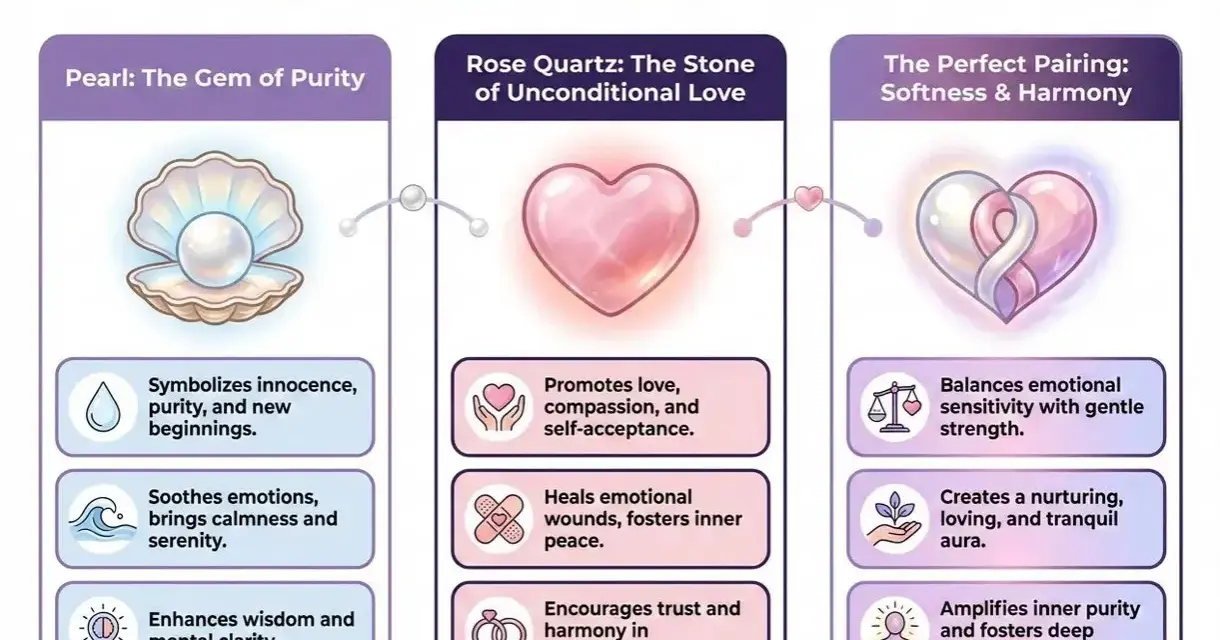
What white pearls communicate at a glance
- They usually suggest purity, calm, and understated elegance rather than flash.
- In British and wider Western jewellery, they are closely tied to weddings, formalwear, and heirloom gifts.
- The same pearl can also feel solemn, reflective, or memorial depending on the setting.
- Shape, size, shade, and metal change the message more than many people expect.
- Good lustre matters because the symbolic effect depends on a clean, luminous finish.
What white pearls usually stand for
I usually read white pearls as jewellery that communicates calm before display. They are one of the few gemstones that feel polished without looking aggressive, and that is exactly why they have stayed relevant for so long. Their symbolism tends to sit around purity, composure, sincerity, wisdom, and quiet confidence.
That mix matters. A diamond often speaks louder; a white pearl speaks more softly. In practice, that makes pearls especially useful when someone wants to look composed, respectful, and refined without appearing overdone. In British style, where understatement often carries more weight than spectacle, that quality is part of the appeal.
- Purity and new beginnings when the piece is worn for a wedding or another milestone.
- Calm and composure when the jewellery is simple and carefully matched.
- Wisdom and maturity when the piece feels inherited or traditionally styled.
- Sincerity and loyalty when pearls are given as a thoughtful gift.
- Quiet luxury when the design is clean rather than ornate.
I think that flexibility is what keeps pearls alive in modern wardrobes. They do not force one fixed meaning; they adapt to the moment. That is also why they fit so naturally into bridal dressing, which is where the symbolism becomes most visible.
Why white pearls became a bridal favourite
White pearls became a bridal staple because the visual and symbolic message lines up almost too neatly with weddings. They echo the lightness of a white dress, but they also carry a long-standing sense of tradition, restraint, and grace. In the UK, that combination still feels especially at home in classic ceremonies, whether the setting is a church, a registry office, or a formal reception.
They are also one of those rare pieces that can make a bride look polished without stealing attention from the dress. That is why I often recommend pearls when someone wants jewellery that feels timeless rather than trendy. They are also the traditional June birthstone and a classic 30th-anniversary gift, which gives them a second layer of meaning beyond the wedding itself.- Purity that aligns with bridal traditions in Western dress.
- Harmony because the colour rarely competes with the gown.
- Tradition because pearls have long been linked to formal occasion wear.
- Continuity because they often become heirloom pieces after the wedding.
I also like pearls as a bridal choice because they age well emotionally. A pearl necklace worn once on the day can later be worn for anniversaries, family events, or even passed on to someone else. That sense of continuity is one reason the symbolism feels so durable, and it also explains why pearls can shift from celebration to remembrance without losing their dignity.
When white pearls feel more like remembrance than romance
White pearls are not limited to celebration. In Victorian Britain and later mourning traditions, their pale surface could be read as tears, respect, or restrained grief. That reading still survives in certain memorial and royal contexts, which is why pearls can feel deeply appropriate on solemn occasions. The point is not that pearls always mean sorrow; it is that their quietness makes them suitable when the mood needs to stay dignified.
That same restraint is what makes a pearl necklace look very different at a memorial service than it does at a wedding, even though the object has not changed. Context does the heavy lifting. I think that is one of the most interesting things about pearl symbolism: the meaning is rarely fixed in the gem alone.
- Remembrance when the outfit is sombre and the jewellery is minimal.
- Respect when pearls appear in ceremonial or public formalwear.
- Continuity when an inherited piece is worn to honour family history.
Once you understand that shift, the next question becomes how design details change the message, because not every pearl piece reads the same way.
How design changes the message
Design is where symbolism becomes visible. A pearl is never read in isolation; the size, shape, strand length, and metal around it tell the eye whether the piece feels formal, romantic, contemporary, or quietly rebellious. I think that is where many people underestimate pearls: they assume the meaning is fixed, when in reality the styling does most of the talking.
| Piece | What it usually communicates | Best use |
|---|---|---|
| Single stud earrings | Restraint, cleanliness, everyday polish | Office wear, low-key gifts, daytime formalwear |
| Short pendant | Soft refinement and personal elegance | Daily wear and small occasions |
| Matched strand | Tradition, ceremony, heirloom value | Weddings, anniversaries, formal events |
| Drop earrings | Elegance, movement, evening polish | Special occasions and dressier looks |
| Baroque pearls | Individuality, modern taste, less rigid formality | Contemporary or creative wardrobes |
Shade matters too. Bright white feels crisp and ceremonial; cream reads warmer and more vintage; silver-white feels cooler and more modern. Metal does similar work: yellow gold leans heritage and warmth, while white gold or platinum keeps the look cleaner and more minimal. Good lustre matters here as well, because lustre is the sharpness and depth of the pearl’s reflection. When it is strong, the whole piece feels more alive.
With those cues in mind, choosing the right pearl becomes much easier, because the styling now matches the intention.
How I choose pearl jewellery for the message I want
When I choose pearl jewellery for someone else, I start with the message, not the price tag. If I want tradition, I reach for a matched strand or classic studs; if I want the piece to feel more personal, I lean toward a pendant or a less symmetrical shape. A smaller pearl with strong lustre often looks more elegant than a larger pearl with a flat surface, so size is not the only thing that matters.
- For a wedding, choose a neat strand, studs, or small drops if you want the symbolism to stay formal and timeless.
- For a birthday or anniversary gift, a pendant or earrings give the wearer more room to style the piece their own way.
- For everyday wear, small studs or a simple necklace keep the look polished without feeling ceremonial.
- For a modern, less traditional look, baroque pearls soften the classic reading and add individuality.
If the piece is meant to become an heirloom, I look closely at matching in strands and at the finishing around the clasp and setting. Matching means the pearls sit closely together in size, colour, shape, and lustre, and that visual consistency is what gives a strand its calm, composed character. That is also why pearl gifts often feel safer than more fashion-led stones: they leave room for the wearer’s own style without losing their meaning.
Once you have chosen the right piece, care becomes the last part of the symbolism, because pearls look their best only when they are handled with a little respect.
How to care for pearls so the symbolism stays clear
Pearls need a different kind of care from hard gemstones, and that is worth remembering because their meaning depends so much on the finish staying luminous. My rule is simple: put them on last, take them off first, and keep them away from perfume, hairspray, and abrasive surfaces.
- Wipe them with a soft cloth after wearing them.
- Store them separately so harder jewellery does not scratch them.
- Avoid soaking them in water or cleaning them with harsh chemicals.
- Restring a necklace if the thread starts to loosen or stretch.
- Wear them regularly, because occasional gentle contact with the skin can help prevent them from looking neglected.
That last point matters more than people expect. A pearl that has been cared for feels calm and alive; a pearl that has been ignored often looks tired, and the whole symbolic effect drops with it. Good care is not just maintenance here, it is part of preserving the message.
Why the quietest pieces still feel intentional
For me, the lasting appeal of pearls is that they communicate without trying too hard. They can be bridal, reflective, inherited, or simply elegant, and that range makes them unusually useful in real life, where one piece of jewellery often has to do more than one job.
So if you want to read pearls well, do not treat them as a fixed symbol. Look at the occasion, the shape, the metal, and the wearer’s style, and the message usually becomes clear: composure, continuity, and understated care. That is why white pearls still matter in 2026, and why they remain such a strong part of jewellery symbolism in the UK.