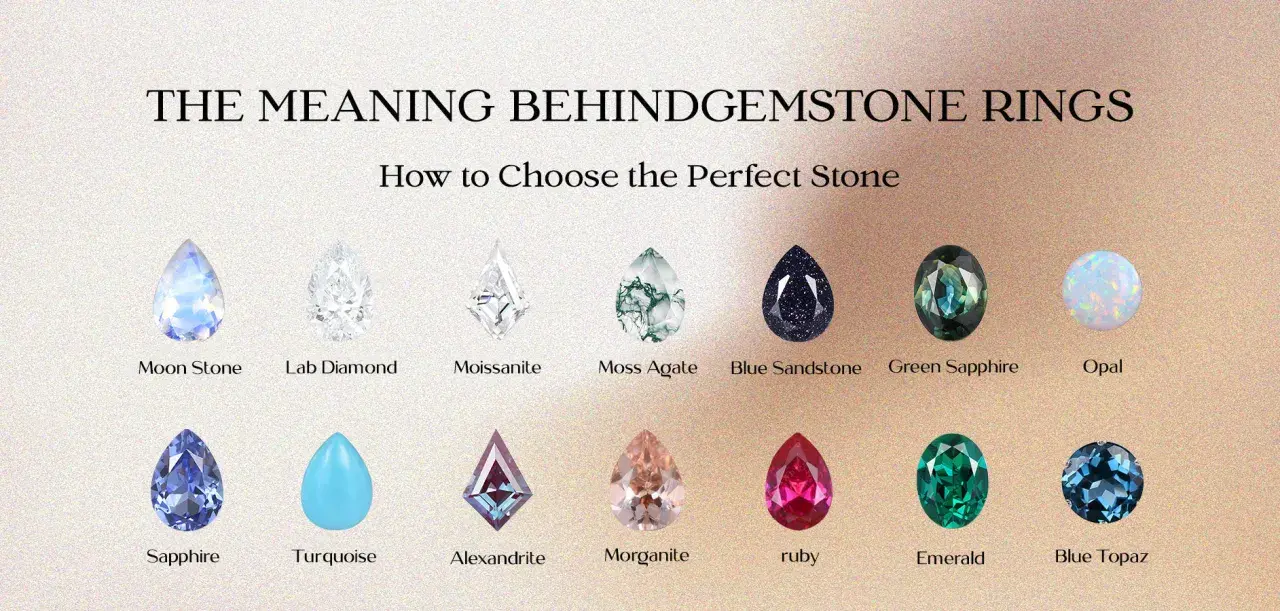
Gemstone jewellery carries more than colour: it can signal love, clarity, protection, renewal, or loyalty, and those associations still shape what people choose today. This guide explores the language of stones and meanings in jewellery in a way that is actually useful: which gems carry the clearest symbolism, how those meanings shift across cultures, and how to choose a stone that suits the person wearing it. I also cover the practical side, because a meaningful gem still has to survive real life on a ring, pendant, or bracelet.
The essentials at a glance
- Most gemstone meanings are traditions and stories, not fixed rules.
- Diamond, sapphire, ruby, emerald, amethyst, pearl, opal, garnet, and turquoise are the most recognisable symbolic stones.
- Birthstones are popular because they are easy to personalise, but they are only one way to make jewellery meaningful.
- Durability matters as much as symbolism, especially for rings and everyday pieces.
- The best choice usually blends meaning, wearability, and the wearer’s own style.
What gemstone symbolism actually tells you
When I talk about gemstone symbolism, I am not talking about a fixed code. I am talking about a cultural shorthand built from history, colour, rarity, religion, royalty, and gift-giving habits. A sapphire can suggest sincerity, a ruby can suggest passion, and a pearl can suggest quiet elegance, but none of those meanings are universal laws.
Symbolism should guide the choice, not override wearability. A stone can be beautiful and meaningful and still be wrong for the wearer if it is too delicate, too formal, or simply not their style. That is why I treat gemstone meaning as a layer of narrative: it adds depth to the piece, but it should not be the only reason the piece exists.
That distinction matters because it keeps jewellery honest. A symbolic stone is most effective when the meaning feels shared by the giver and the wearer, not forced by marketing. Once you see that, the most useful next step is to look at the stones people recognise most quickly and the messages they usually carry.
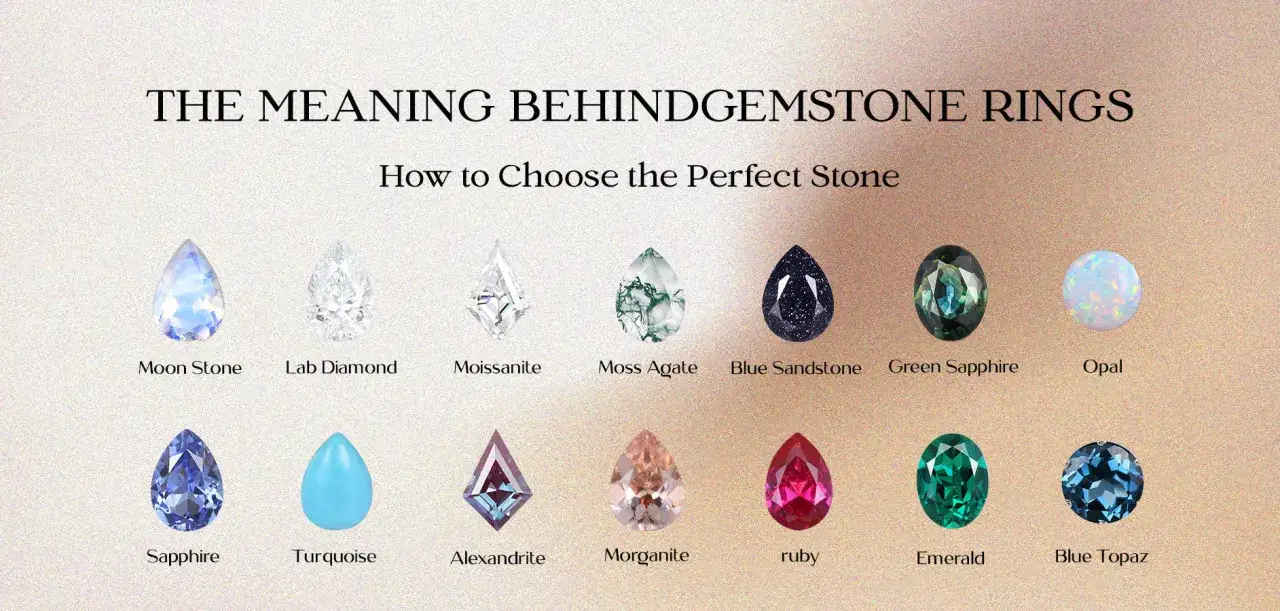
The stones most people recognise and what they usually mean
Some stones have become symbolic because they keep appearing in the same kinds of gifts, rituals, and heirlooms. These are the gems I reach for first when a piece needs a message that most people will understand immediately, even if they do not know the full history behind it.
| Stone | Common symbolism | Why people choose it | Wearability note |
|---|---|---|---|
| Diamond | Strength, endurance, clarity, commitment | Engagement rings, milestone gifts, heirloom pieces | Extremely durable and ideal for frequent wear |
| Ruby | Passion, courage, vitality, deep love | Romantic gifts and statement jewellery | Hard-wearing, but the setting should still be secure |
| Sapphire | Truth, sincerity, loyalty, nobility | Wedding jewellery, legacy pieces, refined everyday wear | One of the best stones for regular wear |
| Emerald | Renewal, rebirth, truth, growth | Celebratory gifts and pieces with a rich, green presence | Beautiful, but usually more delicate in practice than its hardness suggests |
| Amethyst | Calm, inner strength, clarity, empowerment | Personal talismans and thoughtful gifts | Suitable for regular wear if the piece is well made |
| Pearl | Purity, humility, innocence, quiet elegance | Bridal pieces, classic strands, subtle formal jewellery | Soft and sensitive to chemicals and abrasion |
| Opal | Hope, truth, creativity, originality | Artistic pieces and gifts with a more individual feel | Delicate and best treated with care |
| Garnet | Protection, calm, passion, prosperity | Understated jewellery with a warmer, richer tone | Generally practical for everyday pieces |
| Turquoise | Protection, good fortune, joy | Bohemian, heritage-inspired, or travel-themed jewellery | Porous and best cleaned gently |
What I like about this group is that the meanings are broad enough to work in modern jewellery without feeling theatrical. If you want a gift to feel personal without over-explaining it, start with one of these stones. From there, the real question becomes how to match the stone to the person rather than just to the message.
How to choose a stone that feels personal, not predictable
The best symbolic piece usually starts with the wearer’s style. Some people want something understated that they can wear every day; others want a stone with enough presence to feel ceremonial. I always ask myself whether the person prefers clean lines, vintage detail, warm metals, cool metals, or something more expressive, because symbolism lands better when the design already feels like them.
Birthstones are popular for a reason: they are easy to understand and easy to personalise. But they are not the only route. A sapphire can work beautifully for someone who values loyalty and structure, while a pearl may suit someone who likes softness and restraint more than sparkle. If you are buying for a birthday, anniversary, graduation, new job, or another life change, let the event shape the tone of the stone rather than forcing the stone to do all the work.
I also think setting matters more than many buyers realise. A cabochon, which is a smooth domed cut, can make a softer stone feel more intimate and wearable. A faceted stone will usually read as sharper, brighter, and more formal. That small design choice can completely change the emotional character of the piece, even when the stone itself stays the same.
- Choose a durable stone first if the piece will be worn often.
- Use a restrained setting if you want the symbolism to feel elegant rather than obvious.
- Combine a meaningful stone with engraving or a simple accent gem if you want the story to feel more personal.
Once the design starts to fit the person, the next practical filter is durability, because a stone that looks perfect in a display case may be awkward in daily life.
Why durability matters as much as symbolism
In jewellery, durability is not one thing. Hardness is resistance to scratching, while toughness is resistance to chipping or breaking. A stone can score well on hardness and still be vulnerable if it has many inclusions, layers, or internal stress. That is why I never judge a symbolic gem on meaning alone.
For everyday pieces, diamond, ruby, and sapphire sit at the top of the list. Their hardness makes them sensible choices for rings, bracelets, and other jewellery that gets knocked around. Emeralds can still be wonderful, but they often need more thoughtful settings and gentler handling. Amethyst and garnet usually sit in a comfortable middle ground, which makes them flexible for regular wear if the design is sound.
Pearl, opal, and turquoise are the stones that most often need a reality check. Pearls are soft and can be damaged by perfume, hairspray, and chlorine. Opals are more vulnerable to impact and sudden changes in environment. Turquoise is porous and can absorb oils and discolour more easily, which is why it behaves better in pendants or earrings than in a ring that never comes off.
If a gem has been treated, the treatment can also affect how you care for it. Oiled emeralds, waxed turquoise, dyed stones, and similarly altered materials should be cleaned according to the treatment, not just according to the species. In practice, that means the most symbolic piece is not always the most robust one, and that trade-off needs to be part of the decision from the start.
From there, it becomes clear that meaning is only half the story. The other half is how a stone is understood in different places, times, and families, which is where symbolism becomes more interesting.
How symbolism changes across cultures and generations
One of the biggest mistakes I see is treating gemstone meaning as if it were fixed everywhere. It is not. Turquoise, for example, has been associated with protection and good fortune in several traditions, but the emphasis shifts depending on culture and era. Opal has been admired as a symbol of hope and truth, yet it has also carried contradictory superstitions in different periods. Even a stone as familiar as emerald can point to rebirth in one context and truth or eloquence in another.
Generational meaning matters too. For one person, a diamond means marriage. For another, it means a promotion, a divorce reset, or a milestone birthday. In the UK especially, a lot of jewellery gifting now mixes older sentiment with contemporary taste: people still like birthstones and anniversary gems, but they want the design to feel current rather than overly formal. That is a useful balance, because it keeps symbolism grounded in real life.
When I am choosing for someone from a different background, I prefer to ask questions rather than assume the symbol will land in the same way it would for me. Sometimes the safest choice is a broad meaning such as strength, protection, or renewal. Sometimes the better choice is to let colour and design lead, and leave the symbolism secondary. The goal is not to flatten the story into one interpretation; it is to choose a piece that feels respectful and clear.
That broader view leads naturally to the most practical use of all: building a jewellery collection that carries meaning without becoming fragile, dated, or too literal.
A simple way to build a jewellery collection with meaning
If I were building a meaningful jewellery wardrobe from scratch, I would not try to make every piece symbolic in the same way. I would start with one anchor piece that marks a person, event, or value that genuinely matters, then add pieces that work for different levels of wear. A sapphire ring might become the daily piece, a pearl pendant could hold a family or bridal story, and an opal or emerald piece could stay reserved for moments when you want the symbolism to feel more special.
The most successful collections usually follow three rules: one clear story, one practical setting, and one stone the wearer actually enjoys looking at. That may sound obvious, but it is where many symbolic purchases go wrong. People buy the meaning first, then realise the colour is wrong, the stone is too delicate, or the design does not suit their wardrobe. The better approach is to let meaning and wearability support each other.
For custom jewellery, I think the strongest options are often the simplest ones: a birthstone in a clean bezel setting, a classic pendant with a meaningful gem, or a stacking ring that combines one symbolic stone with a neutral companion. Those choices age well because they keep the story close to the surface without making the piece dependent on a single trend.
In the end, the best symbolic jewellery is the kind that still feels right after the novelty fades. Choose a stone whose story is clear, whose care is realistic, and whose design the wearer will keep reaching for, because that is when meaning becomes part of everyday style rather than a one-time gesture.