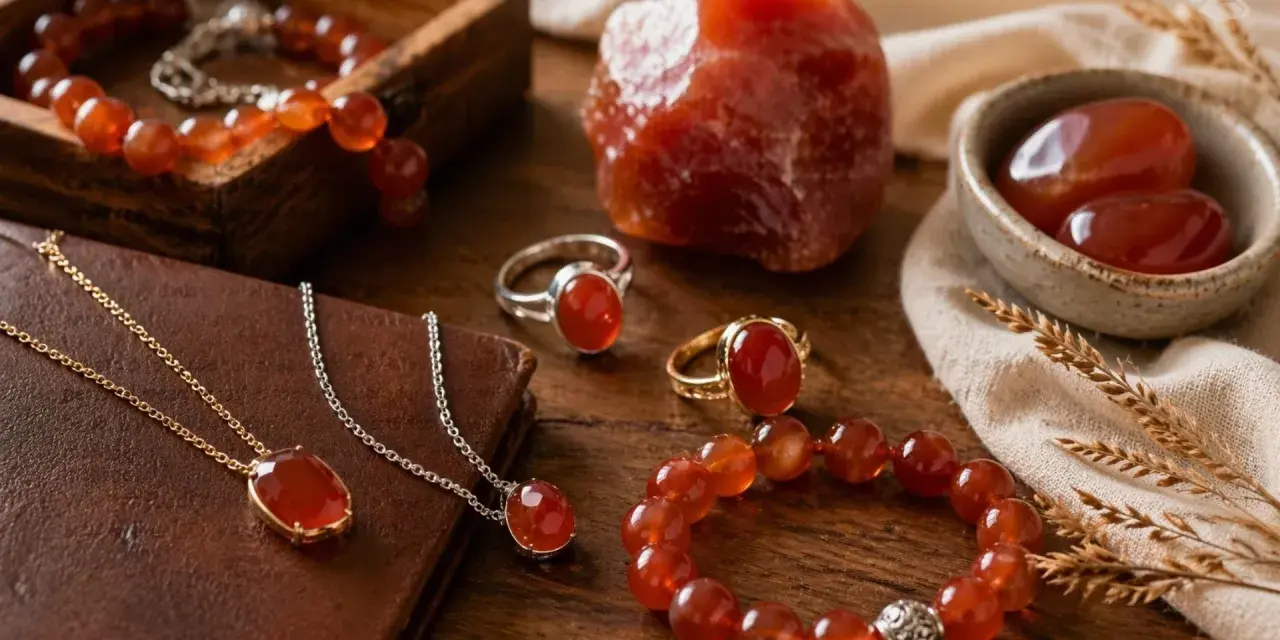
Carnelian is one of those stones that feels immediate: warm colour, clear symbolism, and an easy fit in jewellery that needs to say something without becoming loud. The carnelian spiritual meaning is usually tied to courage, vitality, creativity, and a steady push into action, but the interesting part is how that symbolism changes once the stone is set into a ring, pendant, or bracelet.
Here, I look at what carnelian commonly represents, why its colour has carried so much weight in jewellery history, and how to choose and wear it in a way that feels intentional rather than generic.
What carnelian usually symbolises in jewellery
- Carnelian is generally read as a stone of confidence, momentum, and creative energy rather than quiet reflection.
- Its orange-red tone is a big part of the symbolism, because it visually suggests warmth, movement, and life.
- It has a strong jewellery history, so it often feels more grounded and classical than trend-driven.
- It works especially well in pieces that are meant to be worn regularly, not just displayed.
- When I see it in jewellery, I think of personal identity, protection, and purposeful styling more than mystical certainty.
What carnelian usually means in spiritual jewellery
There is no single official meaning attached to carnelian, and I think that matters. In modern crystal traditions, it is most often linked with confidence, courage, creativity, motivation, and a sense of forward motion. In practice, that makes it a stone people choose when they want to feel more active, visible, or self-assured.
I read carnelian as a stone of action rather than stillness. Its colour sits between red and orange, so it combines the urgency of red with the warmth of orange. That is why it is so often associated with creative fire, personal drive, and the kind of energy that helps you start rather than just plan.
At the same time, I would keep the symbolism realistic. A carnelian pendant does not create courage on its own; it can serve as a visual reminder of the state you want to step into. That is a useful kind of symbolism, and in jewellery, usefulness often matters more than certainty. Once that is clear, the stone’s history makes even more sense.
Why its history gives the stone more weight
Carnelian has a long life in jewellery, and that history shapes how people read it today. GIA has documented its use in seals, inlay, and ornamental work across ancient traditions, and that background helps explain why the stone still feels tied to identity, authority, and protection. A stone used for personal seals is never just decorative; it already carries the idea of a mark, a signature, or a claim.
That historical role is important because it moves carnelian beyond a vague wellness symbol. In many cultures, carved stones and signet rings were not simply pretty objects. They were practical tools, status markers, and personal emblems. Carnelian fits that world beautifully because its colour is vivid without being flashy, and because it takes a polished finish with real depth.
For jewellery symbolism, that gives carnelian an unusual mix. It can suggest vitality, but it can also suggest discipline, ownership, and intention. That is why it works so well in pieces meant to feel personal rather than purely decorative. From there, the way you set it changes the message again.
How setting and metal change the message
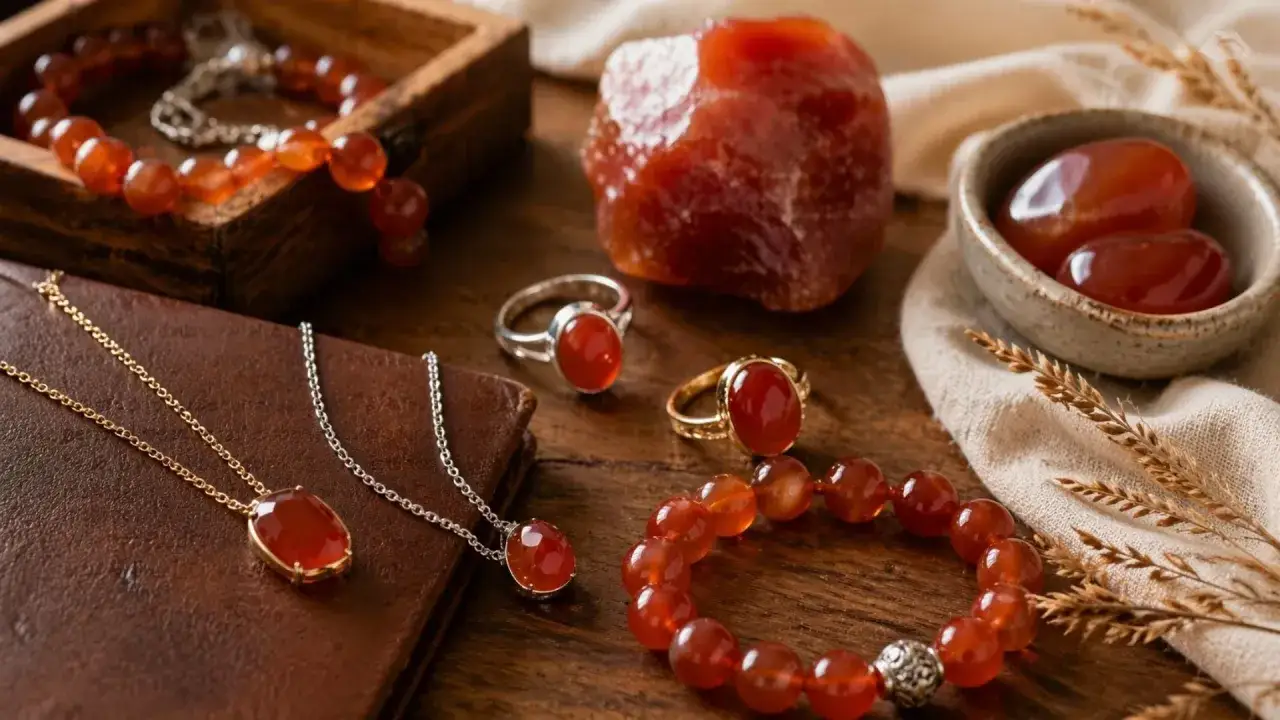
The same stone can feel quite different depending on the design around it. In warm yellow gold, carnelian usually looks richer and more solar, almost ceremonial. In sterling silver, it becomes sharper and more modern, which suits cleaner outfits and a more understated wardrobe. Rose gold sits somewhere in the middle, softening the contrast without losing warmth.
I also pay attention to the shape of the piece. A cabochon pendant feels more intimate and wearable every day. A signet ring gives the stone more authority, which makes sense because carnelian has such a strong history in engraved jewellery. Beaded bracelets and necklaces feel more relaxed and expressive, while carved pieces lean into old-world symbolism and craftsmanship.
For a UK wardrobe, carnelian is easier to wear than people often expect. It works with navy, cream, charcoal, camel, black, and dark green especially well, because the stone adds warmth without clashing. If I were styling it for everyday use, I would treat it as a strong accent rather than the whole outfit. That leads naturally to the question of how it compares with other symbolic stones.
How carnelian compares with other symbolic stones
| Stone | Common symbolic feel | Best use in jewellery | Visual impression |
|---|---|---|---|
| Carnelian | Courage, momentum, creativity, confidence | Everyday rings, pendants, signet pieces | Warm, energetic, vivid |
| Garnet | Depth, devotion, seriousness, passion | Evening jewellery, formal pieces, romantic gifts | Darker, richer, more dramatic |
| Citrine | Optimism, clarity, lightness, abundance | Bright daytime jewellery, cheerful gifts | Lighter, sunnier, more airy |
| Rose quartz | Tenderness, affection, emotional softness | Soft, sentimental, gifting-focused jewellery | Pale, gentle, romantic |
| Tiger’s eye | Grounding, focus, protection, resolve | Workwear-friendly pieces, masculine or unisex designs | Earthier, striped, protective |
I tend to recommend carnelian when someone wants energy without the heaviness of darker red stones. Garnet feels deeper and more formal; citrine is brighter and more openly optimistic; rose quartz is softer and more emotionally tender. Carnelian sits in the useful middle ground, which is probably why it keeps returning in both contemporary jewellery and older symbolic traditions. The next step is making sure the piece is suitable for real wear.
Choosing and caring for carnelian pieces that you will actually wear
Carnelian is a form of chalcedony, and it is generally durable enough for regular jewellery use. A Mohs hardness around 6.5 to 7 means it can handle everyday wear better than many softer stones, but it is not immune to scratches or hard knocks. That is why I would treat rings differently from pendants: a pendant can take a lot more daily use before showing wear.
When I choose a carnelian piece, I look for even colour, a clean polish, and a setting that suits the stone’s shape. For rings, a bezel setting is often the safest choice because it protects the edges better than exposed prongs. For carved or vintage pieces, I check the mount as carefully as the gem itself, because the symbolism only lasts if the setting is secure.
Care is straightforward. Clean carnelian with lukewarm water, mild soap, and a soft cloth or brush, then dry it properly before storing it away. I would avoid harsh chemicals, strong impacts, and loose storage with harder stones that could scratch the surface. If a piece is antique, engraved, or set in a delicate mounting, I am even more cautious, because the metalwork often becomes the weak point rather than the stone.
These practical details matter because symbolism is only useful if the jewellery stays part of your life. Once a stone is comfortable to wear, its meaning has a chance to become personal.
The detail that turns carnelian into a personal talisman
What makes carnelian feel meaningful is not just the stone itself but the reason you choose it. I see the strongest pieces as the ones linked to a specific intention: a ring worn before presentations, a pendant chosen during a career change, or a bracelet bought to mark a new chapter. That kind of connection is more convincing than any generic claim about energy.
If you are choosing carnelian for symbolism, let the design do some of the talking. A polished cabochon says calm confidence. An engraved or signet-style piece suggests identity and legacy. Beads feel more relaxed and personal. The best choice is the one that matches the life you actually live, not just the story you want the stone to tell.
That is why carnelian remains compelling in jewellery: it is visually strong, historically rich, and flexible enough to mean different things to different wearers without losing its core message of warmth and purposeful energy.