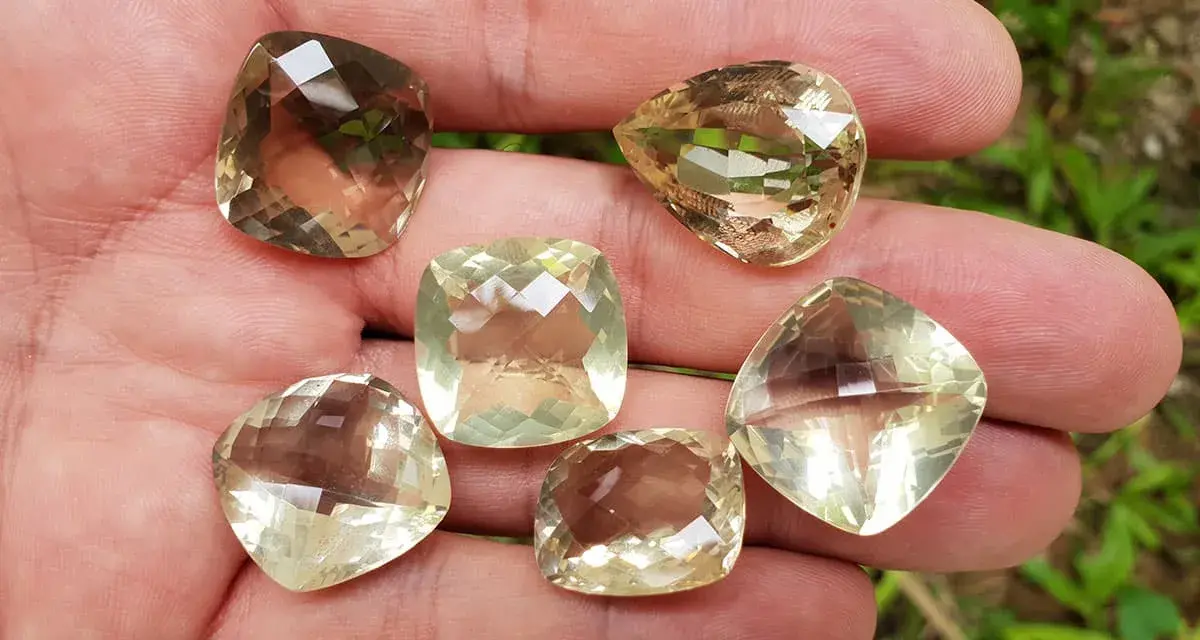
Lemon quartz sits at a useful point between beauty and symbolism: it is bright enough to feel uplifting, but subtle enough to wear every day. In this article I look at the lemon quartz meaning, what the stone actually is, how people interpret its colour, and how it works in real jewellery rather than in theory alone. I also compare it with similar yellow stones so you can tell whether it suits your style and expectations.
What matters most before you buy or wear it
- Lemon quartz is usually valued for its fresh yellow to yellow-green colour and lively sparkle.
- Its symbolism is commonly linked with clarity, optimism, renewal and a lighter emotional mood.
- In gemological terms, it is often treated smoky quartz, so it is better understood as a colour variety than a separate species.
- It compares closely with citrine, but the tone is usually brighter and cooler.
- At 7 on the Mohs scale, it is durable enough for regular wear, provided the setting is sensible.
- The metaphysical side is personal; the stone works best when its meaning feels authentic to the wearer.
What lemon quartz actually is
Lemon quartz is a variety of quartz with a distinctly lemon-yellow or yellow-green appearance. In the trade, it is commonly understood as heat-treated smoky quartz, which means the colour is part of what makes the stone desirable rather than proof of rarity on its own. That matters because the stone’s appeal is visual first: transparent, clean, and bright without tipping into the heavier orange-brown range that some yellow quartz can have.
Quartz is a sturdy gemstone, and lemon quartz inherits that practicality. With a hardness of 7 on the Mohs scale, it is suitable for many jewellery styles, especially earrings, pendants and well-made rings. I would still treat it as a real gemstone with limits, not as something indestructible. The cut, clarity and setting all influence how polished it feels on the hand or neck.
This gem also tends to read differently depending on the colour balance. A paler stone feels airy and clean, while a slightly greener one feels sharper and more modern. Once you understand the material, the symbolic language around it starts to make more sense.
The symbolic meanings most people attach to it
The symbolism of lemon quartz is built largely on colour psychology and crystal lore. I think of it as a stone that people reach for when they want a feeling of brightness without excess drama. The meanings most often associated with it are fairly consistent:
- Clarity - its clean colour is often read as mental tidiness, focus and a fresh perspective.
- Optimism - the yellow tone naturally suggests light, warmth and a more hopeful outlook.
- Renewal - many wearers see it as a symbol of starting again, especially after a tiring or cloudy period.
- Confidence - the stone is noticeable, but not loud, which gives it a quiet sense of self-assurance.
- Abundance - some people connect it with prosperity and opportunity, although I would treat that more as aspirational symbolism than a fixed tradition.
What I find most useful is this: lemon quartz is rarely chosen for deep, solemn symbolism. It is chosen for lift. That can be emotional lift, visual lift, or even style lift when a wardrobe needs one bright focal point. The limits are worth saying out loud, though. There is no scientific evidence that a stone changes mood or outcome by itself; the value is in the meaning the wearer brings to it. That is exactly why the jewellery context matters next.
How it changes when set in jewellery
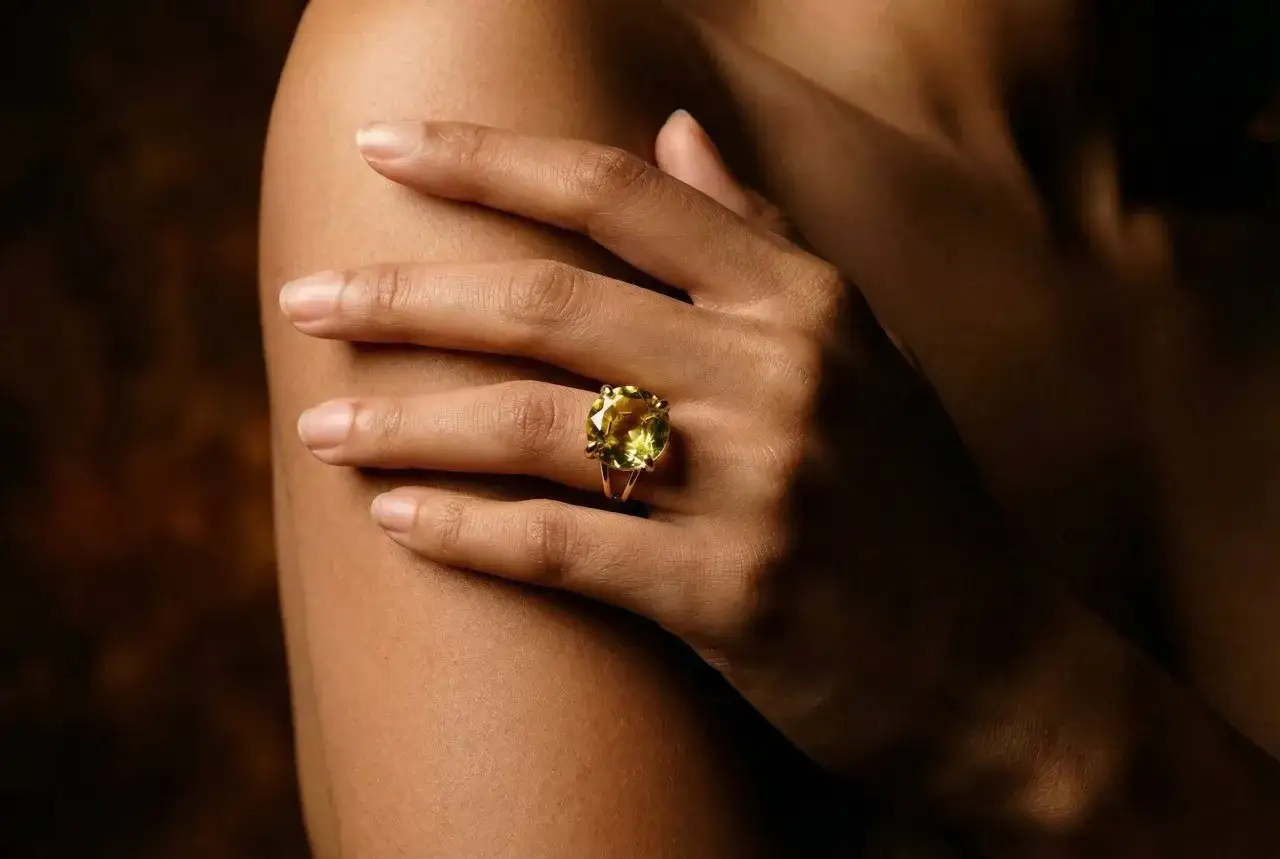
The same stone can feel different once it is mounted. In jewellery, lemon quartz often works best as a stone that adds brightness without overwhelming the rest of the outfit. I usually see three especially effective approaches.
- Yellow gold deepens the warmth and gives the stone a richer, more glowing presence.
- White gold or sterling silver sharpens the colour and makes the lemon tone look crisp and modern.
- Bezel settings create a contemporary frame and offer better protection for daily wear than very exposed settings.
Ring, pendant and earring placements also influence the symbolic reading. A pendant feels close to the heart and is often chosen when the meaning is personal. Earrings are more about atmosphere; they bring brightness near the face, which gives the stone a lifting effect without making it the whole story. Rings are the most assertive option, but only if the setting sits low enough to avoid constant knocks. For an everyday piece, I prefer a design that looks elegant before it looks precious.
The cut matters too. A brilliant cut amplifies sparkle and energy, while a step cut makes the stone feel cleaner and more architectural. If you want the symbolism to feel calm rather than flashy, the cut is usually the first place to make that decision. From there, it is natural to compare lemon quartz with the other yellow stones people often confuse it with.
How it compares with citrine and other yellow stones
Lemon quartz is often discussed alongside citrine, and the comparison is useful because the two stones overlap visually but not emotionally. Citrine usually feels warmer and earthier, while lemon quartz reads as fresher and more glassy. Yellow sapphire sits in a different category altogether, with a more formal and luxurious presence. Prasiolite, although not yellow, sometimes enters the conversation because buyers who like soft quartz colours often look at both.
| Stone | Typical look | Common symbolic tone | What it is best for |
|---|---|---|---|
| Lemon quartz | Bright yellow to yellow-green, lively and transparent | Clarity, optimism, renewal | Fresh, modern jewellery with a light feel |
| Citrine | Warm yellow to amber, often softer and toastier | Warmth, confidence, abundance | Earthier styles and richer autumnal palettes |
| Yellow sapphire | More saturated yellow, often with a finer luxury feel | Wisdom, status, commitment | Higher-value pieces and more formal jewellery |
| Prasiolite | Pale green to minty green | Calm, balance, renewal | Cooler, softer looks with a botanical tone |
The main trap here is assuming all yellow quartz carries the same meaning. It does not. Lemon quartz feels brighter and cleaner than citrine, and that difference changes the jewellery mood completely. If you are choosing between them, the real question is not which is “better” but which emotional register you want the piece to carry.
How to choose a piece that feels intentional
When I help someone think about a gemstone purchase, I look at three things first: colour, cut and setting. With lemon quartz, the colour should feel alive rather than dull, the cut should support sparkle without making the stone look busy, and the setting should match how often the piece will be worn. A bright stone in an awkward setting rarely feels meaningful for long.
- Choose the tone deliberately - a brighter lemon shade feels more energetic, while a greener shade feels cooler and sharper.
- Check the transparency - clear stones tend to look more refined and expressive in jewellery.
- Match the metal to the message - yellow gold softens the colour, while silver or white gold keeps it crisp.
- Ask about treatment disclosure - treated quartz is common, but it should still be represented honestly.
- Think about the wearer, not just the stone - symbolism works best when it fits the person’s style, habits and mood.
In the UK, I also pay attention to the quality of the setting itself, especially if the piece is in gold, silver or platinum. A well-made stone deserves a setting that feels finished and trustworthy. Lemon quartz is not a traditional birthstone, so it works especially well as a choice piece: something selected for taste, feeling and colour rather than convention. That freedom is part of its appeal.
Care, cleaning and the limits of the crystal-lore story
Lemon quartz is relatively easy to care for, which is one reason it works so well in everyday jewellery. Warm water, a little mild soap and a soft brush are usually enough for cleaning. I would avoid harsh chemicals, and I would be cautious with ultrasonic cleaning if the stone is set in a delicate mounting or if the treatment history is unclear. Even durable stones are more vulnerable once they are part of a piece of jewellery than when they are lying loose on a tray.
Storage matters as well. Quartz can scratch other softer gems, and it can be scratched by harder stones if it is left loose with them. A separate pouch or compartment is the simplest fix. For rings, the bigger issue is impact rather than wear on the surface: quartz can handle a lot, but a sharp knock against metal, stone or tile can still chip an edge.
There is also a practical limit to the metaphysical conversation. I think crystal symbolism can be useful when it helps someone choose a piece with intention, but it should not be confused with medical or psychological treatment. If the stone gives you a sense of calm or focus, that is a meaningful part of the jewellery experience. It is just not the same thing as a measurable effect.
Why this stone still feels relevant in modern jewellery
Lemon quartz stays relevant because it solves a real style problem: it adds colour without heaviness. Some yellow stones feel formal, and some feel too sugary. This one sits in the middle, which makes it versatile for contemporary jewellery, especially if you want something that feels bright but not childish, expressive but not ornate.
For me, the strongest pieces are the ones that let the stone do one clear job. A clean-cut lemon quartz ring can read as confidence. A pendant can read as renewal. Earrings can read as simple lightness. That flexibility is why the stone works so well for jewellery symbolism: the meaning is present, but it does not need to dominate the design.
If you want a gemstone that feels optimistic, easy to wear and visually fresh, lemon quartz is one of the more convincing choices in the yellow family. The best pieces are the ones that look bright from a distance and feel personal up close.