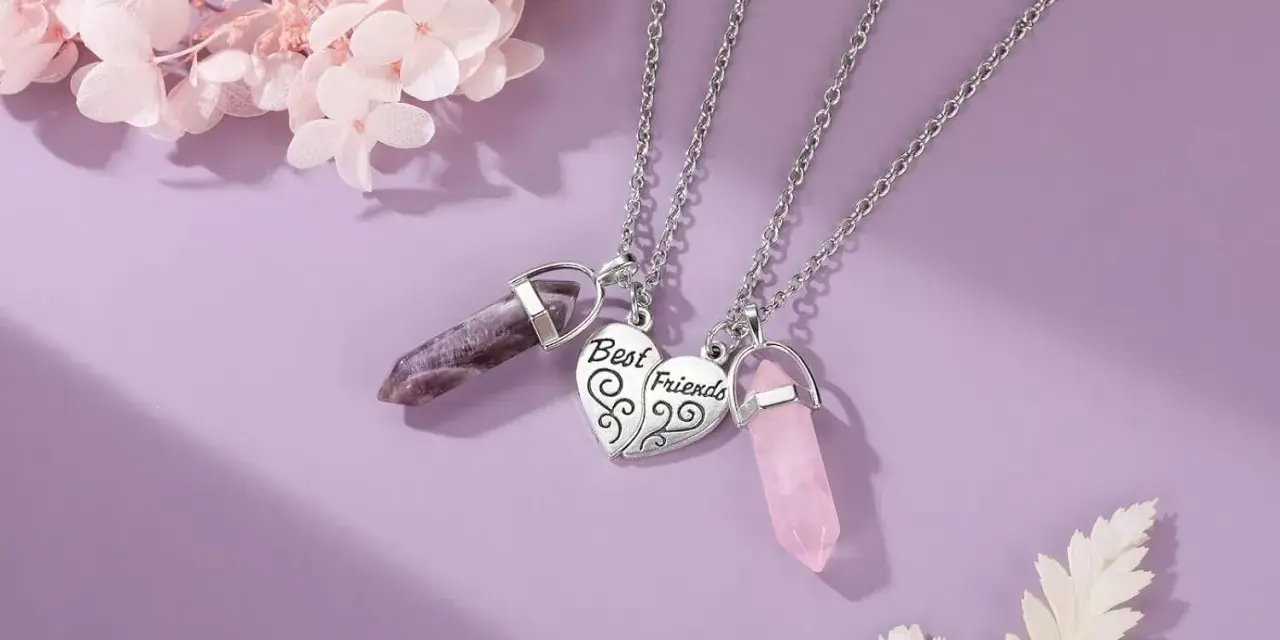
Friendship jewellery works best when the symbolism is easy to wear and hard to overread. In jewellery symbolism, crystals for friendship usually point to trust, warmth, honest communication, and the kind of steady affection that survives ordinary life. I prefer pieces that make that message clear without turning the gift into something overly sentimental or theatrical.
What matters most before you choose a friendship crystal
- Symbol first, sparkle second: the best stone matches the tone of the relationship, not just the colour.
- Rose quartz and rhodonite suit tenderness, repair, and forgiveness.
- Lapis lazuli and amazonite are stronger choices when communication matters most.
- Peridot, moss agate, and green aventurine work well for new beginnings and cheerful, low-pressure gifts.
- Pendants and bracelets are the easiest friendship pieces to wear every day.
- UK buyers usually get the best value from sterling silver or gold vermeil rather than oversized statement settings.
What friendship symbolism usually means in jewellery
When I look at symbolic jewellery, I separate the feeling from the fantasy. Crystal meanings are symbolic cues, not guarantees, so I use them to express what I want a relationship to feel like: loyal, open, patient, generous, and calm. That is why friendship jewellery works best when it stands for behaviour rather than magic.
There is also a history behind this. Jewellery has always been used to mark memory, allegiance, protection, and affection, so the idea of a friendship piece fits naturally into the larger tradition of meaningful adornment. A good stone does not need to shout its message; it only needs to remind the wearer of what the bond is built on. That brings us to the stones I would actually choose first.
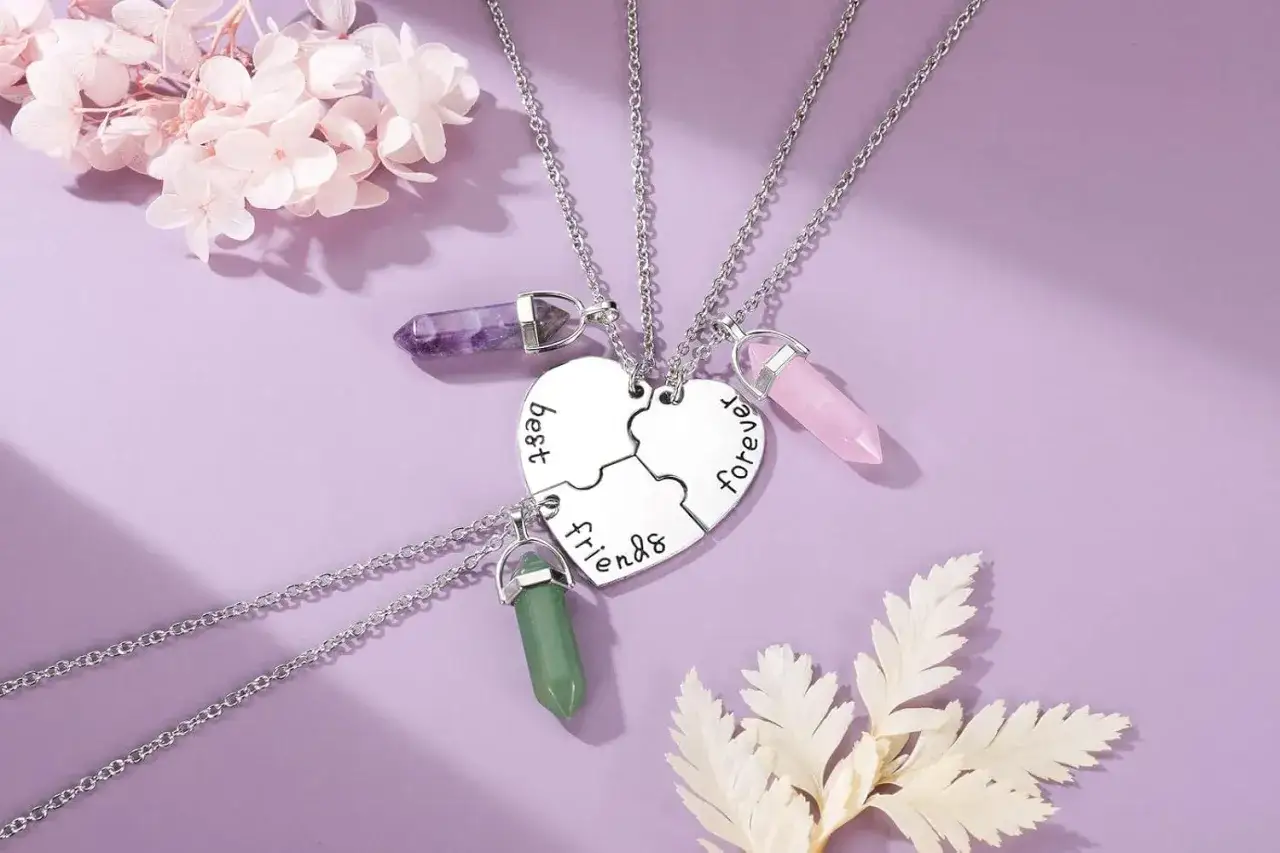
The crystals I would choose first for friendship jewellery
When I narrow the field, I usually start with stones that speak to communication, warmth, and emotional balance. These are the ones I reach for most often when I want the jewellery to feel meaningful without becoming overly precious.
| Stone | What it is usually linked with | Best friendship use | Best jewellery form |
|---|---|---|---|
| Rose quartz | Gentleness, affection, reconciliation | Repairing tension or showing warmth | Simple pendant or charm bracelet |
| Lapis lazuli | Honest communication, trust, wisdom | Friends who value clear conversation | Pendant or earrings |
| Peridot | Renewal, joy, optimism | Celebrating a fresh chapter | Studs, pendant, or slim ring |
| Amazonite | Calm dialogue, balance, boundaries | Long-distance or emotionally sensitive friendships | Bracelet or pendant |
| Moss agate | Growth, steadiness, new roots | New friendships that are still taking shape | Pendant or locket |
| Rhodonite | Forgiveness, emotional repair | Making peace after a disagreement | Small pendant or protective ring setting |
If I want a gentler, more everyday option, I also look at green aventurine. It has a softer, more easy-going feel, which makes it useful when the gift should say “I hope this goes well” rather than “this is intense.” Peridot, meanwhile, has extra birthday appeal because it is widely recognised as an August birthstone, so it carries celebration energy even before you get to its colour.
In practical terms, I would choose rose quartz or rhodonite for repair, lapis lazuli or amazonite for communication, and peridot or moss agate for growth and celebration. Once the stone is decided, the next question is how the jewellery should carry it.
How to turn the meaning into the right piece of jewellery
The stone matters, but the setting changes how the symbolism is read. A pendant sits near the heart and makes the message feel intimate. A bracelet is easier for everyday wear and is usually my safest choice when I am buying for someone else. Rings feel more committed and slightly more personal, so I reserve them for close friendships or milestone gifts.- Pendant: best for sentiment, daily visibility, and low risk on sizing.
- Bracelet: best for everyday reminders and friends who already wear wrist stacks.
- Earrings: best for subtle symbolism and minimalist dress codes.
- Ring: best for a close bond, but only if you know the style well.
- Locket or charm piece: best for shared memories, travel, or long-distance friendships.
In the UK, I usually see well-made sterling silver crystal jewellery start around £20-£60, gold vermeil pieces around £60-£150, and solid gold or bespoke work move from about £150 to £500+ depending on the stone and setting. For precious-metal pieces, I also look for a proper UK hallmark. It is one of the simplest ways to check that the metal claim is genuine, and it matters more than a polished sales story. That choice of metal is what finishes the message.
Which metals and colours make the symbolism feel clearer
Metal choice changes the mood more than people expect. Sterling silver and white gold keep the look cool, modern, and slightly understated, which works beautifully with lapis lazuli, amazonite, and amethyst. Yellow gold and gold vermeil warm everything up, so they suit peridot, rose quartz, and green aventurine when you want the piece to feel sunny and generous.
Rose gold sits in the middle. I like it when the gift should feel affectionate without reading as romantic, especially with blush-toned stones or a pale pendant. If the wearer prefers a very British, easy-to-style wardrobe, I usually lean towards smaller stones in silver or vermeil rather than oversized statement pieces, because the symbolism lasts longer when the jewellery does not fight the clothes.
One detail I find worth mentioning is scale. A 6 to 8 mm stone often reads as polished and wearable; much larger stones can start to look costume-like unless the design is intentionally bold. For friendship jewellery, restraint usually works better than spectacle. Good care keeps that quiet message alive, which is the next part worth getting right.
How to care for friendship stones so the message survives
Symbolic jewellery only stays meaningful if it survives daily wear. I clean most stones with lukewarm water, a drop of mild soap, and a soft cloth, then dry them immediately. I avoid ultrasonic cleaners, strong chemicals, and salt soaks for softer or more delicate stones, especially lapis lazuli, amazonite, and rhodonite, where the finish can be more vulnerable than it first appears.
- Remove the jewellery before swimming, gym sessions, gardening, or house cleaning.
- Keep perfume, hairspray, bleach, and hand sanitiser away from the stone when possible.
- Store each piece separately in a pouch or lined box to prevent scratches.
- Check clasps and settings at least every 6 months.
That last step matters more than people think. A friendship piece that loses a stone or snaps a chain stops being symbolic and becomes inconvenient, and convenience is a big part of whether someone actually wears it. That leads to the final question, which is not about stones at all, but about timing.
When crystal jewellery makes sense and when it does not
Crystal jewellery makes the most sense when the gift is tied to a clear moment: a birthday, a move, a reconciliation, a new job, or a long-distance friendship that needs a visible thread. It is also a strong choice when you know the person likes symbolic pieces and already wears necklaces, bracelets, or rings without fuss.
It is less effective when the relationship needs a conversation rather than a gift. If trust has been broken, I would not hide behind a stone and pretend the issue is solved. In my view, the best use of symbolic jewellery is as a reminder of the behaviour you are both committing to, not as a substitute for the behaviour itself.
That is why I treat the most successful friendship pieces as small, durable prompts: a nudge to be kinder, clearer, and more consistent. With that in mind, these are the combinations I would choose first.
The friendship pieces I would actually choose first
If I had to buy with confidence, I would match the stone to the type of friendship rather than chase the loudest meaning.
- New friendship: moss agate or green aventurine, because the message is growth without pressure.
- Long-distance friendship: amazonite, because calm communication matters more than drama.
- Repair after a misunderstanding: rose quartz or rhodonite, because the symbolism should point toward warmth and forgiveness.
- Deep, long-term friendship: lapis lazuli, because it reads as trust and honest conversation.
- Celebration gift: peridot, because it feels bright, optimistic, and easy to wear.
If you want the shortest rule, choose the stone for the emotional message, the setting for the person’s style, and the metal for the way they already dress. When those three line up, the jewellery feels thoughtful rather than themed, and that is what makes friendship symbolism last.