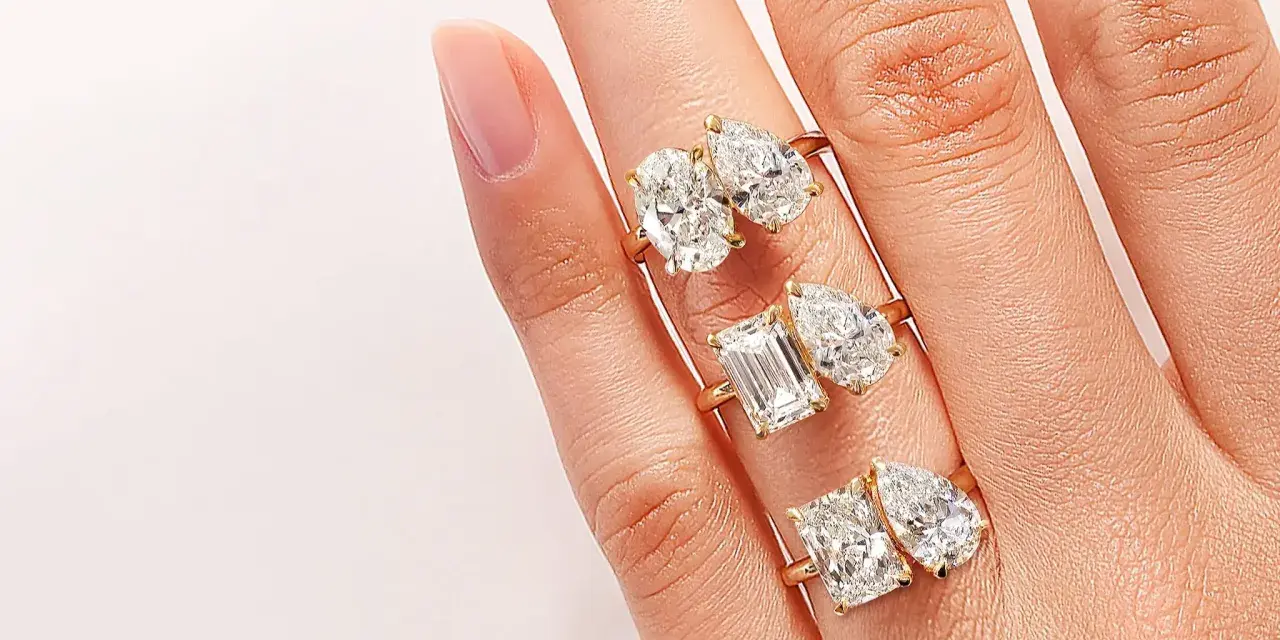
A toi et moi ring pairs two stones in a way that is emotionally direct and visually distinctive. The toi et moi meaning is simple on the surface, yet the design carries a lot of nuance: union, balance, individuality, and sometimes a very personal choice of stones. In the UK, it is often chosen for engagement or anniversary jewellery, but it works just as well as a statement ring when the story matters more than tradition.
The two-stone design stands for two lives, two identities, and one shared story
- Toi et moi is French for “you and me”.
- Each stone can represent a partner, a milestone, a birthstone, or two sides of the same person.
- The style became famous through romantic history and still reads as intimate rather than showy.
- Stone pairing changes the mood, so the same design can feel classic, bold, sentimental, or modern.
- It suits engagement, anniversary, and self-purchase pieces, but comfort and setting height matter.
What the two-stone design actually means
The appeal is in the balance. One stone does not overpower the other; they sit together as equals, which makes the ring feel less like a trophy and more like a relationship in miniature. I usually read it as a symbol of two distinct identities choosing closeness without disappearing into each other.
That is why the style has become popular for romance, but it is not limited to romance. Some wearers use it to mark a parent and child, a lifelong friendship, a fresh chapter after change, or two birthstones that carry personal weight. The design is flexible enough to hold all of those meanings without losing clarity.
In practical terms, the ring works because the message is visible at a glance. You do not need to decode it for long: two stones, side by side, suggest connection, contrast, and mutual respect. That visual shorthand is what makes the design so durable, and it leads naturally into the history behind the symbol.
Why this ring style has such a long romantic history
The look became famous in the late 18th century, when Napoléon Bonaparte gave Joséphine de Beauharnais a two-stone ring in 1796. That gesture helped fix the design in the romantic imagination, and the story still matters because it links the ring to devotion under pressure, not just pretty decoration.
Over time, the design moved through different eras and was reworked in new ways, from more traditional pairings to later interpretations with unusual stone shapes and stronger contrast. It survived because the concept is bigger than any one fashion cycle: two stones are an easy metaphor, and a good metaphor rarely goes out of style.
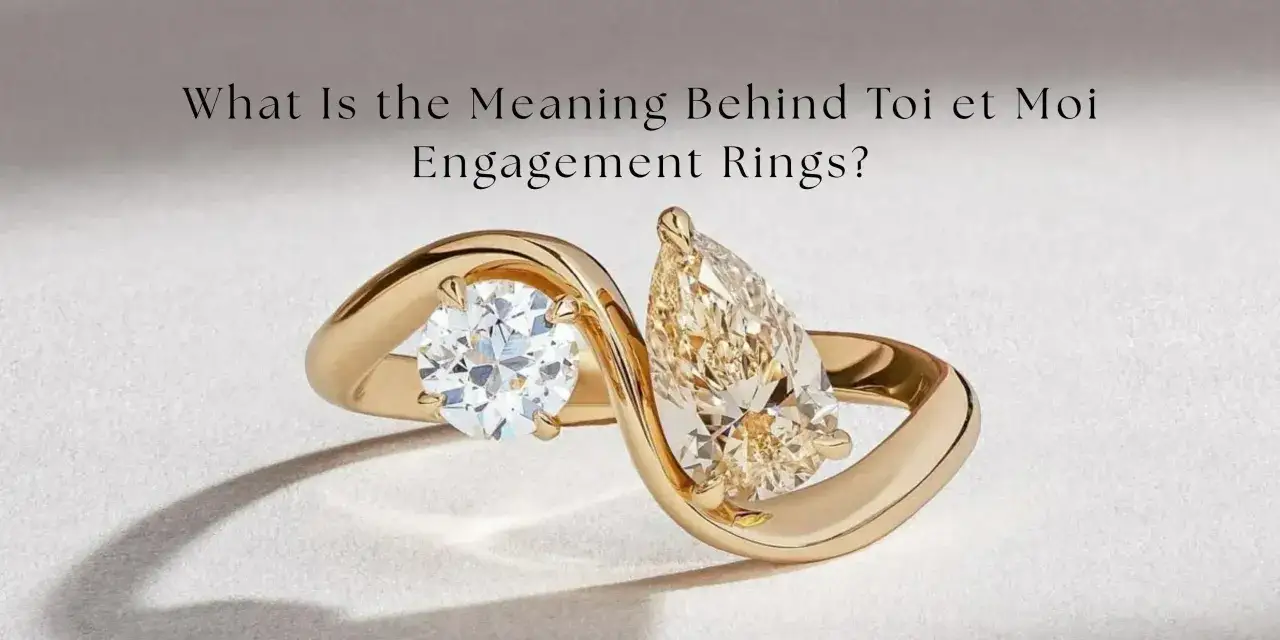
In the UK, you will sometimes see the style described as a two-stone or bypass ring, especially when the stones appear to cross or lean towards each other. The terminology changes slightly, but the symbolic core stays the same: a pair that belongs together without becoming identical. That historical foundation explains the emotion, but the real character of the ring depends on the stones themselves.
How the stones change the story you are telling
I like this part because it is where the ring becomes personal rather than merely romantic. The same two-stone setting can feel very different depending on shape, colour, and metal, so the message is not only in the idea but in the composition.
| Stone pairing | What it tends to suggest | What it feels like on the hand |
|---|---|---|
| Diamond and diamond | Equality, calm, classic commitment | Clean, balanced, understated |
| Diamond and sapphire | Loyalty, steadiness, depth | Refined with a slightly cooler mood |
| Diamond and ruby | Passion, energy, confidence | Stronger contrast and more warmth |
| Emerald and diamond | Growth, renewal, vintage elegance | Softly distinctive and often very flattering |
| Two different shapes or colours | Individuality and dual identity | More contemporary, especially with asymmetry |
There is no fixed code. A matching pair reads as harmony; a contrasting pair reads as dialogue. The cut matters too: pears and ovals feel fluid, emerald cuts feel structured, and an open bypass setting can make the whole piece look more dynamic than a straight side-by-side layout. Once you know how the pairing changes the message, the next question is when the style actually makes sense to wear.
When a toi et moi ring is the right choice
It is strongest when the buyer wants symbolism and a little originality. Engagement is the obvious case, but not the only one. I also see it work well for anniversaries, self-purchase pieces, and milestone gifts where the meaning matters more than conforming to a conventional solitaire.
| Occasion | Why it works | Watch-outs |
|---|---|---|
| Engagement | It signals commitment while still feeling distinctive. | Some couples find the open design harder to pair with a straight wedding band. |
| Anniversary | It can represent two people, two years, or two shared chapters. | Choose stones and proportions that still feel wearable every day. |
| Self-gift | It can mark dual identity, recovery, or a personal milestone. | Too much symbolism can become cluttered if the design is overloaded. |
| Fashion ring | It looks sculptural and modern without needing a traditional bridal role. | Statement settings are less practical if you type, travel, or use your hands constantly. |
For me, the style works best when the wearer can explain the choice in one sentence. If the story is clear, the ring feels intentional rather than decorative. That leads directly to the practical side, because even the most beautiful ring has to work on the hand.
What to check before buying one in the UK
For a ring worn every day, I would check four things first: how high the stones sit, how protected the tips are, whether the band feels comfortable between the fingers, and whether the setting leaves room for a future wedding band. Two-stone designs can be beautiful and still awkward if they are too tall or too open.
- Height: Higher settings catch more on knitwear, gloves, and pockets.
- Security: Each stone should feel firmly anchored; the design can be airy, but it should never feel delicate in a worrying way.
- Metal: Platinum is a practical choice for long-term wear, while yellow or rose gold changes the mood and can make the stones read warmer.
- Hallmark and paperwork: In the UK, ask for proper hallmarks on solid precious-metal rings and supporting documentation for diamonds or notable gemstones.
- Resizing: Asymmetrical and bypass styles can be trickier to alter cleanly than a plain band.
If the ring is being bought as an engagement piece, I would also ask how it will sit with a wedding band. Some two-stone settings stack neatly; others need a contoured or custom band to avoid gaps. Those practical details sound dull, but they are what stop a romantic ring from becoming a daily annoyance.
Why this design still feels current instead of nostalgic
In 2026, the style still feels current because it gives people a way to wear symbolism without looking formulaic. It can be delicate or architectural, sentimental or fashion-led, and that flexibility matters because modern buyers usually want jewellery that says something personal without reading as copy-and-paste romance.
If I were choosing one now, I would not start with the biggest stone or the loudest contrast. I would start with the relationship between the two stones. Are they meant to mirror each other, contrast with each other, or represent two different parts of the same story? That question usually leads to a better ring than any mood board does.
- Choose contrast if you want the ring to look expressive and modern.
- Choose similarity if you want a quieter, more classic result.
- Choose a lower profile if the ring will be worn every day.
- Choose a custom band if the setting needs help sitting neatly on the hand.
That is what makes the design endure: it is romantic enough to feel meaningful, but open enough to let the wearer define the meaning for themselves.