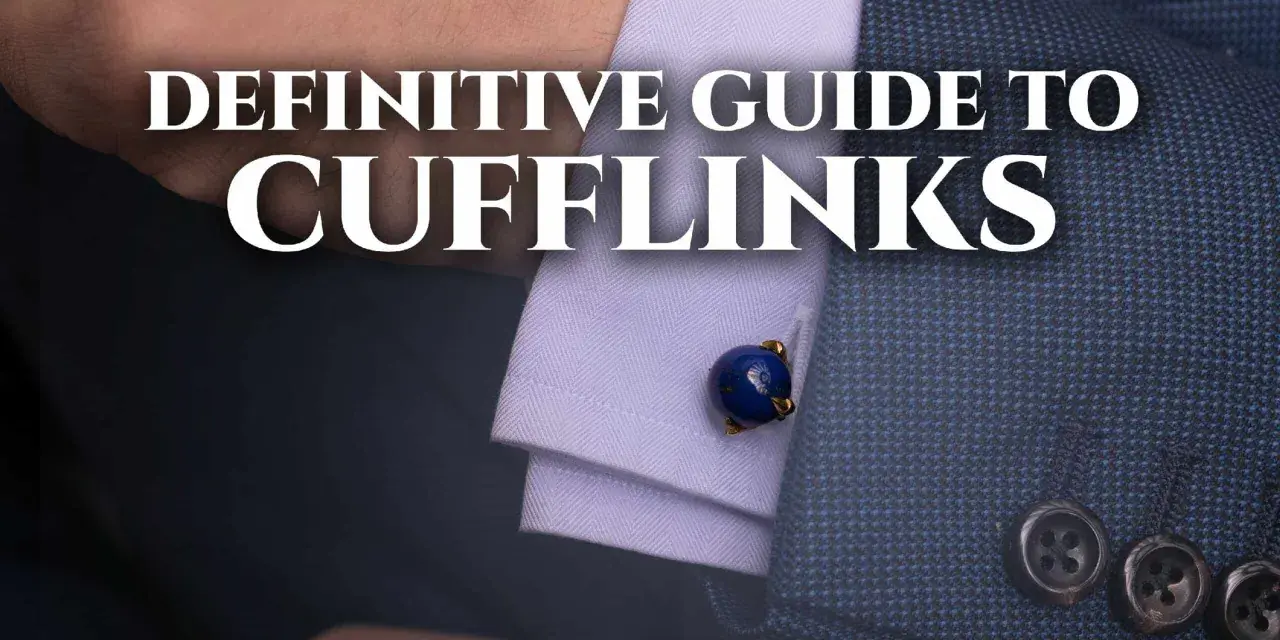
Cufflinks are one of those accessories that look small until you try to dress well without them. They fasten shirt cuffs, but they also change the tone of a shirt, adding a sharper, more deliberate finish that sits right between tailoring and jewellery. In this guide I explain what they are, which shirts they suit, how the main styles differ, and how to choose and care for a pair that will actually earn its place in your jewellery box.
The essentials in one glance
- Cufflinks are decorative fasteners used to secure shirt cuffs that do not close with ordinary buttons.
- They work best with French cuffs and convertible cuffs, not standard barrel cuffs.
- The mechanism matters: swivel-back, fixed-back, chain-link, silk knot, and stud-style cufflinks each create a different look.
- For most wardrobes, one plain silver pair, one formal pair, and one more personal pair cover the majority of occasions.
- The best cufflinks look intentional rather than loud, and they should sit neatly under a jacket sleeve.
What are cufflinks and why they still matter
Cufflinks are small decorative fasteners that join the two sides of a shirt cuff. In practical terms, they replace the button closure on certain shirts; in style terms, they give the wrist a finished, polished edge. I think of them as functional jewellery: tiny enough to stay subtle, but visible enough to shape how an outfit is read.
What makes them interesting is that they sit at the meeting point of utility and expression. A plain pair in polished metal reads quiet and classic. A pair with enamel, stone, or engraving says something more personal. That is why cufflinks still matter in 2026: they are one of the few accessories that can make a shirt feel more formal without making it feel stiff.
They are also more versatile than many people assume. While they are strongly associated with dress shirts and formalwear, they are just as useful when you want a smarter business look or a more thoughtful wedding outfit. Once you know where they belong, the next question is which shirts they actually work with.
Which shirts they actually belong with
The shirt matters as much as the cufflink itself. The wrong cuff style makes even a beautiful pair look awkward, while the right shirt lets the accessory do its job cleanly.
| Shirt type | Works with cufflinks | What it means in practice | Best for |
|---|---|---|---|
| French cuff or double cuff | Yes, standard choice | The cuff folds back on itself and is held closed by links | Weddings, evening wear, formal business |
| Convertible cuff | Yes, flexible choice | Can be worn with buttons or cufflinks depending on the occasion | Travel, office wear, occasional formal events |
| Barrel cuff | Usually no | Designed for buttons, not links | Everyday shirts and routine workwear |
| Tuxedo shirt | Yes, often essential | Usually paired with formal studs or a restrained link set | Black tie and highly formal occasions |
For a neat finish, I like the cuff to show a little under the jacket sleeve, not dominate it. In UK tailoring terms, about 1 to 2 cm, or roughly half an inch to 1 inch, of shirt cuff visible is usually enough. That small margin makes the cufflinks noticeable without turning them into a stunt. From there, the style of the cufflink itself does the talking.
The main styles and the mood each one creates
The mechanism changes the experience as much as the appearance. Some cufflinks feel architectural and precise. Others feel relaxed, heritage-led, or slightly playful. If you know the differences, it becomes much easier to choose a pair that suits the outfit instead of fighting it.
| Style | How it closes | Style impression | When I would choose it |
|---|---|---|---|
| Swivel back | A post flips into place behind the cuff | Classic, reliable, easy to wear | As a first pair or for regular use |
| Fixed back | A solid post with no moving toggle | Clean, sleek, slightly more formal | When I want a sharp, minimal look |
| Chain link | Two faces joined by a chain | Old-world and slightly softer at the wrist | For heritage styling or a less rigid feel |
| Silk knot | Elastic fabric knot | Casual, colourful, easygoing | For smart casual outfits or low-risk colour |
| Stud-style | Decorative face only, usually in a dress set | Formal and ceremonial | With tuxedo shirts and black tie |
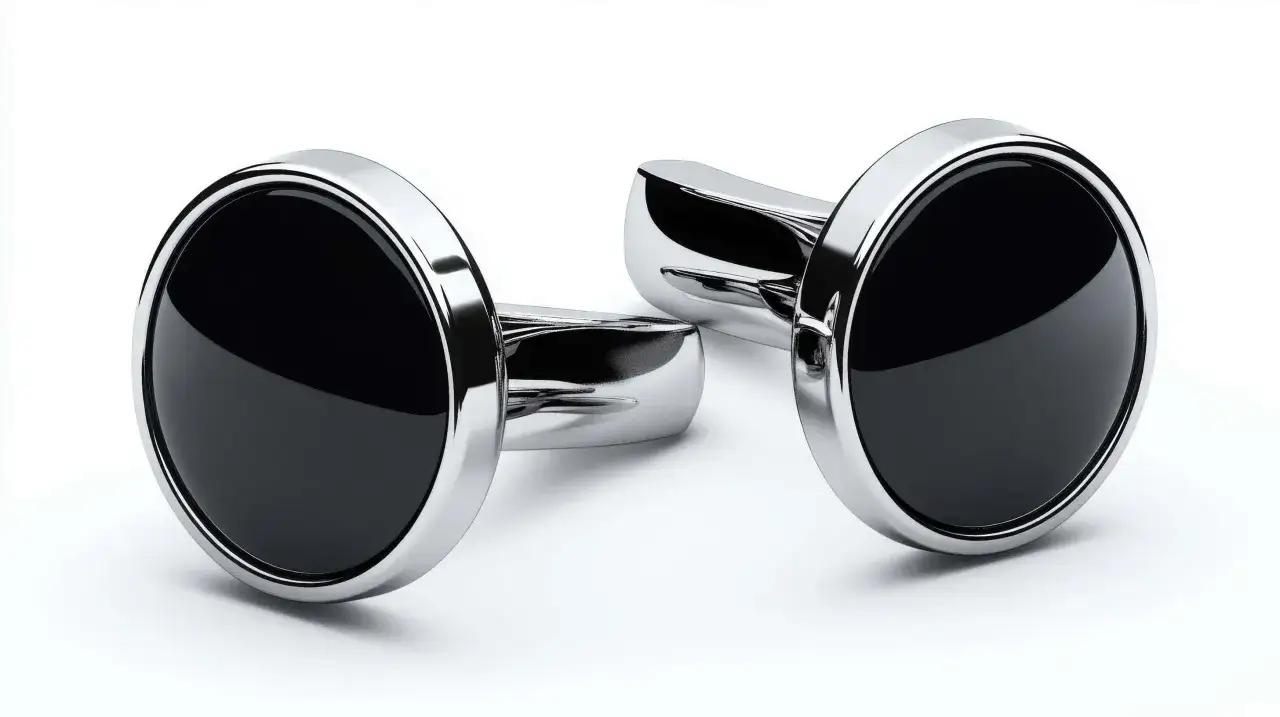
The material is half the story. Silver-toned metal feels cool and versatile, gold reads warmer and more traditional, and mother-of-pearl or onyx pushes the look toward evening formality. Enamel and coloured stones are where cufflinks become more expressive, but they work best when the rest of the outfit stays controlled. That is where the styling decisions get practical, because the right pair depends on the occasion as much as the mechanism.
How to choose a pair for the occasion
When I choose cufflinks, I start with the event and work backwards. That keeps the choice grounded. A wedding guest pair should not behave like a black-tie set, and a business pair should not look like a novelty joke unless the setting is genuinely relaxed.
| Occasion | Good choice | Why it works | What to avoid |
|---|---|---|---|
| Wedding guest | Silver, mother-of-pearl, engraved initials | Polished without competing with the outfit | Oversized novelty shapes |
| Office or client meeting | Plain silver, brushed metal, subtle enamel | Looks intentional and professional | Very bright stones or loud graphics |
| Black tie | Onyx, mother-of-pearl, formal stud set | Matches the discipline of the dress code | Chunky, colourful, or playful designs |
| Smart casual or creative work | Coloured stones, fabric knots, mixed textures | Adds personality without requiring a full suit | Trying to match every accessory exactly |
| Gift | Initials, birthstone, simple classic pair | Personal but still useful | Overly niche themes unless you know the person well |
If you only want one practical starting point, buy a medium-sized pair in silver-toned metal with a swivel-back closure. It is the safest foundation because it works with the widest range of shirts, ties, and jacket colours. If you later add a more formal pair and one more expressive pair, you will cover most real-world situations without building a drawer full of duplicates. Once the pair is chosen, the real difference comes from how cleanly you put it on.
How to put them on neatly and avoid the usual mistakes
Putting on cufflinks is simple once you know the order, but the details matter. A cuff that sits badly or a hole that is slightly misaligned can make the whole look feel careless.
- Fold the cuff back so the two layers line up cleanly.
- Hold the cuff flat and align all the buttonholes.
- Insert the cufflink from the outside of the sleeve toward the inside.
- Close the fastening so the decorative face stays visible on the outside.
The most common mistake is trying to use them with the wrong shirt. If the cuff already has buttons and no proper link holes, the result will look forced. The second mistake is choosing a pair that is too heavy for a fine cuff fabric; it pulls the sleeve down and makes the wrist look cluttered. A third is wearing novelty cufflinks to a formal event where restraint would do the job better.
I also pay attention to balance. If the cufflink is ornate, the shirt should be quiet. If the shirt has texture or a stronger pattern, the cufflink should be simpler. That kind of restraint is what makes cufflinks feel expensive, even when they are not. The last thing that keeps a pair looking good is maintenance, which is easier than most people think.
How to care for them so they stay sharp
Cufflinks do not need much care, but they do need the right kind. A quick wipe after wearing them is usually enough to remove skin oils and keep metal bright. For silver-toned pairs, I use a soft anti-tarnish cloth and store them dry, because moisture is what makes polishing feel like work later.
- Wipe smooth metal with a microfiber cloth after each wear.
- Use a silver cloth for sterling silver or silver-plated pairs.
- Avoid harsh polish, soaking, or ultrasonic cleaning on enamel, resin, and glued stones.
- Store each pair in a separate compartment or pouch so faces do not scratch each other.
- Check swivels, chains, and posts occasionally so a loose mechanism does not catch on the cuff.
A single velvet-lined box is better than tossing them into a tray with other jewellery. Cufflinks scratch easily because the exposed face is the point you notice first, which makes protection more important than it is with some other accessories. Once a pair is clean and stored properly, the final question is simply how much of a cufflink wardrobe you really need.
A small collection can do more than a crowded drawer
For most people, three pairs are enough. That sounds modest, but it is actually the efficient way to build a useful collection. One restrained pair handles formal and business wear. One dressy pair takes care of weddings and evening occasions. One more personal pair gives you room to show character without stretching the dress code.
- One plain silver or steel pair for the broadest use.
- One black-tie-friendly pair in onyx, mother-of-pearl, or a formal dress-set style.
- One expressive pair with engraving, colour, or texture for occasions that allow personality.
That is the real value of cufflinks in modern style: they let you move between restraint and expression without changing the whole outfit. I would rather see one well-made pair worn often than six novelty pairs that never leave the box. If you treat cufflinks as functional jewellery, they become one of the most useful small details in a well-edited wardrobe.