The essentials at a glance
- A drop earring hangs below the earlobe and usually moves very little.
- The style can be simple or decorative; the defining feature is the vertical line, not the amount of ornament.
- It sits between studs and dangles, which is why it works so well for everyday wear.
- Shorter drops feel neat and understated, while longer ones create more visual length.
- Weight, backing, and material matter as much as design if you want them to feel comfortable all day.
What are drop earrings
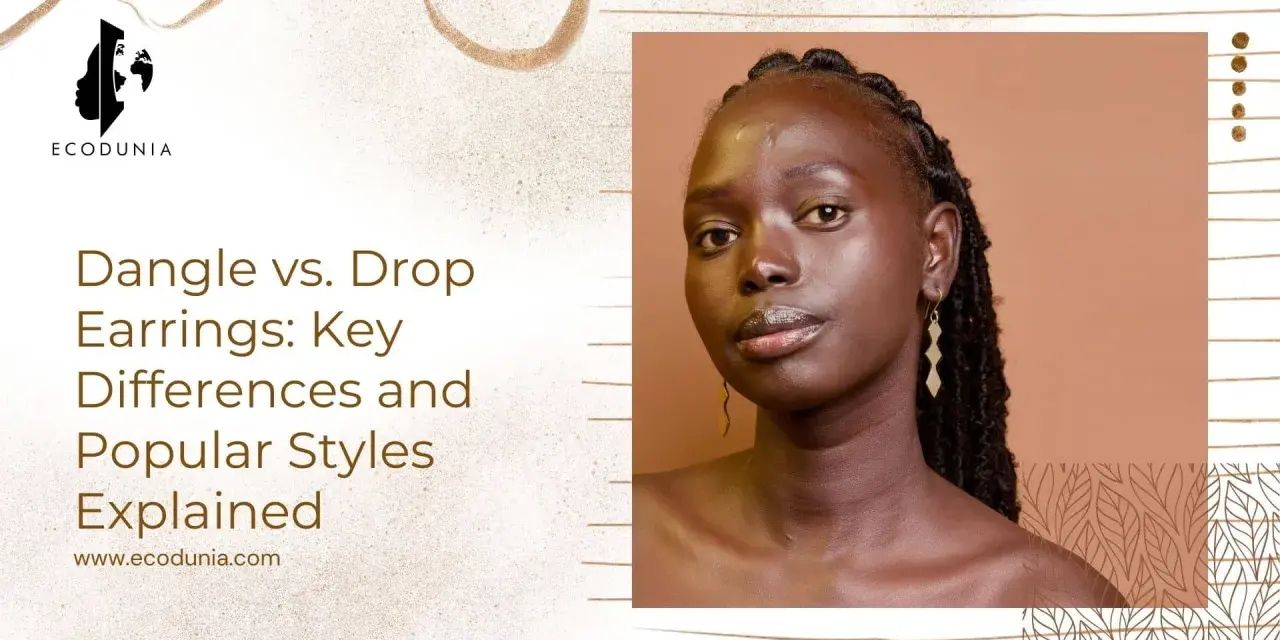
A drop earring is any earring that hangs below the earlobe while staying relatively controlled in movement. The “drop” may be a pearl, gemstone, metal shape, charm, or a more elaborate decorative element, and it can be attached by a post, hook, leverback, or short chain. The important point is simple: the design descends from the ear, but it does not need to swing freely.
In styling terms, I think of drops as the bridge between studs and dangles. A pair might sit just a few millimetres below the lobe or extend several centimetres down the neck, but the silhouette is usually calmer than a moving earring. That is why the style feels so dependable: it gives presence without asking for too much attention.
Once that basic definition is clear, the next step is understanding how drops compare with the other familiar earring shapes.
How they differ from studs, dangles and hoops
The easiest way to separate these styles is by movement. Studs stay on the lobe, drop earrings hang below it with little motion, dangles are designed to move, and hoops form a continuous loop around part of the ear. That sounds obvious on paper, but in real jewellery shopping the line can blur quickly.
| Style | How it sits | Movement | Usual feel | Best for |
|---|---|---|---|---|
| Studs | On the lobe | Minimal | Quiet and close to the ear | Everyday wear, sport, very low-profile looks |
| Drop earrings | Below the lobe | Little to moderate | Polished and controlled | Workwear, dinners, weddings, smart casual outfits |
| Dangle earrings | Below the lobe | Noticeable | More lively and expressive | Evening looks, statement styling, occasions that invite movement |
| Hoops | Curves around part of the ear | Varies by size | Classic and graphic | Casual styling, modern tailoring, layered ear looks |
Some designs sit on the border. A short chain with a fixed charm may behave like a drop if the main piece stays steady, while a longer version with visible swing starts to read as a dangle. I usually judge by movement first and shape second, because that is what changes the way the earring feels on the face. With that in mind, the most useful next question is what kinds of drops you are most likely to see in the wild.
The main drop styles you are most likely to see
Teardrop and pear-shaped drops
These are some of the most recognisable forms. A teardrop shape narrows gently towards the bottom, which gives the earring a soft vertical line and makes it flattering with both simple knitwear and dressier outfits. They are a good choice when you want something elegant without anything fussy or overworked.
Pearl and gemstone drops
Pearls and coloured stones are common because they bring instant focus without needing a complex setting. A single pearl drop feels refined and timeless; a gemstone drop adds colour and can echo a ring, pendant, or dress detail. In my view, this is where drop earrings become especially useful for occasions, because they look intentional rather than merely decorative.
Bar, charm and geometric drops
Sleek bars, discs, rectangles, and small symbolic charms create a cleaner, more modern line. These styles suit tailored jackets, open necklines, and outfits that already have texture or pattern. They are not trying to compete with the clothes; they are there to sharpen the silhouette.
Hybrid drops with a touch of movement
Some pairs are technically drops but include a little extra motion, usually through a short chain or a secondary element. These can be useful if you want more life than a fixed drop provides, but still prefer a calmer look than a full dangle. The trade-off is simple: more movement usually means more visual interest, but also more chance of snagging and a slightly less restrained feel.
Once you can recognise the main families, choosing a pair becomes less about fashion jargon and more about proportion, comfort, and the kind of impression you want to make.
How to choose a pair that suits your face, outfit and routine
I usually start with three questions: where will you wear them, how much movement can you tolerate, and what part of the face do you want to emphasise? A short drop around the lobe can feel neat and practical, while a longer one draws the eye downward and gives a more deliberate line. As a rough styling guide, shorter drops often sit about 1 to 2 cm below the lobe, while more elongated versions can extend 3 to 6 cm or more.
- Face shape: Longer vertical lines can elongate a rounder face, while softer teardrop shapes often sit well against angular features.
- Neckline: Open collars, V-necks, and square necks usually welcome a more visible drop. High necklines often work better with shorter, cleaner designs.
- Hair: Hair up shows the earring fully; loose hair can soften the effect and make a larger drop feel less dominant.
- Occasion: A simple pearl or metal drop is easy for work and daytime, while a gemstone or more detailed design makes sense when the rest of the outfit is quieter.
In practical terms, the best pair is the one you forget you are wearing until it catches the light. If you feel yourself adjusting it all day, the proportion is probably wrong, the weight is too high, or the movement is more than your routine can comfortably handle. That leads directly to the part many people overlook: the material and construction.
Materials, comfort and care
Material changes both the look and the wearability. Sterling silver gives a cool, clean finish; gold and gold vermeil feel warmer; pearls soften a look; gemstones add colour and contrast. If you are buying for sensitive ears, the backing and the base metal matter as much as the visible design. A beautiful drop that irritates the lobe will not get worn often, no matter how good it looks in the box.Comfort also depends on balance. A well-made drop should hang straight rather than twist, tug, or pull forward. Posts, hooks, and leverbacks each have their place, but the best choice is the one that keeps the front centred and the back secure. For care, I keep the routine simple: wipe them after wear, store them separately so they do not scratch, and keep pearls and plated finishes away from perfume, hairspray, and excess moisture.
If the piece has stones or a plated surface, gentle handling matters more than aggressive cleaning. That is especially true for lighter coatings and natural materials, which can lose their finish long before the design itself feels dated.
When drop earrings work best and when another style is smarter
Drop earrings shine in situations where you want a clear line and a touch of polish. They are excellent for office wear, dinners, weddings, and everyday outfits that need a little structure. They also photograph well because they create shape without the distraction of heavy movement. That is one reason they remain such a reliable jewellery style rather than a passing trend.
There are times when a different style is the better call. If you are travelling, wearing a lot of knitwear, or moving through a long, busy day, a smaller drop or a stud may be more practical. The same applies if your outfit already has a lot of detail around the neckline; in that case, a quieter earring often works harder than a more elaborate one.
- Choose smaller drops when you want comfort and versatility.
- Choose medium-length drops when you want a visible but controlled effect.
- Choose longer drops when the outfit is simple and you want the earrings to carry the look.
- Skip oversized drops when hair, scarves, or textured fabrics are likely to catch.
That practical balance is what makes the style so enduring: it can be subtle, but it is never invisible.
The small details that make a pair feel right
The difference between a good pair and a great one is usually hidden in the details. I look at how the earring sits against the jawline, whether the front surface reflects light cleanly, whether the hook or post feels secure, and whether the drop length matches the clothes it will actually be worn with. Those small checks sound unglamorous, but they are what keep a beautiful design from becoming a drawer ornament.
If you are buying with confidence, remember this: the best drop earrings are the ones that suit your proportions, stay comfortable for the whole day, and add shape without clutter. That is the real value of the style, and it is why a well-chosen pair can move easily from everyday wear to more dressed-up occasions.When the line is clean, the weight is balanced, and the finish suits your wardrobe, drop earrings do exactly what good jewellery should do: they make the whole look feel more considered without demanding all the attention.