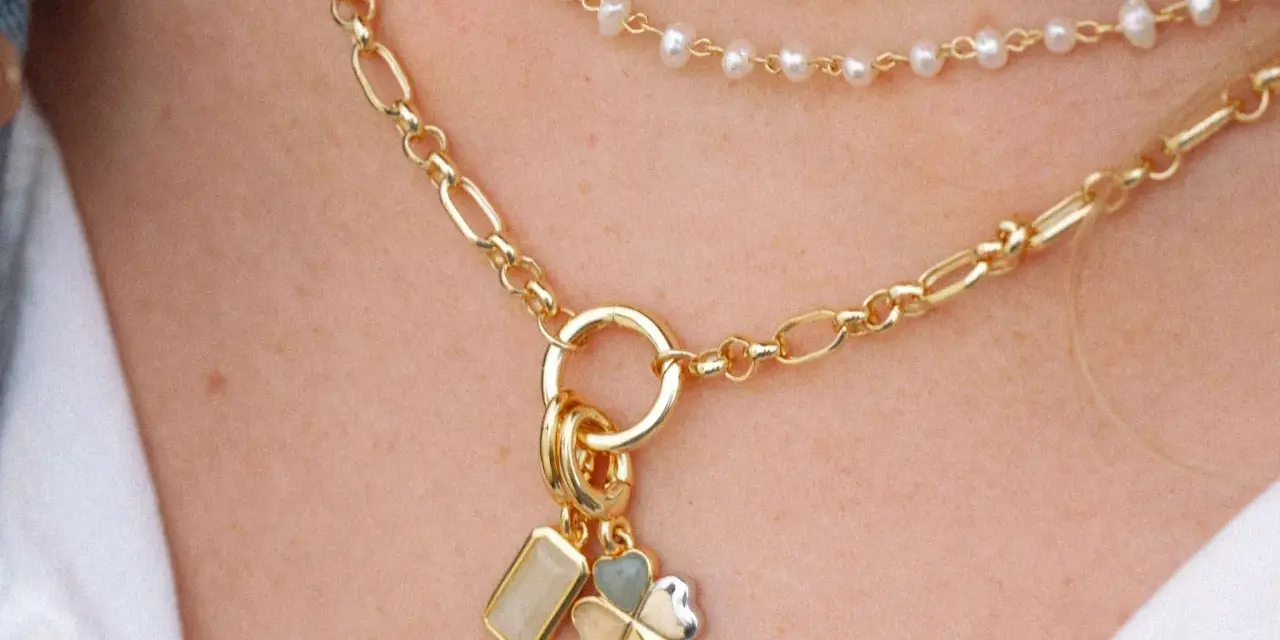
When people compare different types of gold chains, the real choice is less about colour and more about link shape, weight, and how the piece will be worn. In this guide, I break down the main chain styles, explain how construction changes comfort and durability, and show how to choose a chain that works for pendants, layering, or a clean solo look. I’m keeping it practical, because the best chain is usually the one that fits your wardrobe and survives real use.
The best chain is the one that balances style, strength, and how you actually wear jewellery
- Cable and curb chains are the safest all-rounders if you want one piece that does a bit of everything.
- Rope, Franco, and wheat chains feel more substantial and usually read as more decorative.
- Hollow chains can look bold for their weight, but they dent more easily than solid ones.
- In the UK, gold items over 1 gram sold as gold should normally be hallmarked.
- 9ct gold is the practical everyday choice for many buyers, while 18ct gives a richer colour but is softer.
- For pendants, chain thickness matters just as much as the chain style itself.
How chain construction changes the way a gold necklace wears
I usually start with construction before I even think about style. Two chains can look similar from a distance and behave very differently on the neck once one is heavier, flatter, more flexible, or built from hollow links rather than solid metal. That is why the same design can feel delicate, sturdy, or outright fragile depending on how it is made.
| Construction choice | What it changes | What I look for |
|---|---|---|
| Link shape | The visual rhythm and the way light catches the chain | Smoother shapes for a classic look, more angular links for a sharper profile |
| Width and thickness | How bold the chain looks and how much strain it can handle | Thicker chains for pendants and everyday wear, finer ones for layering |
| Solid or hollow | Durability, weight, and price | Solid gold for long-term wear, hollow if you want a lighter feel and lower entry cost |
| Finish | Shine, texture, and how visibly the chain ages | Diamond-cut finishes if you want more sparkle, smoother finishes if you want understatement |
| Clasp type | Security and ease of fastening | Lobster clasps for most daily chains, box clasps for heavier pieces |
That last point is easy to overlook, but I think it matters. A beautiful chain with a weak clasp is still a bad buy if you plan to wear it often. And if a chain is very fine, the jump rings and clasp become part of the design problem, not just the finishing detail.
The chain styles I would learn first
Once construction makes sense, the styles themselves become much easier to read. Some chain types are classic because they are practical; others are popular because they add texture without looking overdone. The table below is the shortlist I would use if I wanted to understand the market quickly.
| Style | What it looks like | Why it matters |
|---|---|---|
| Cable | Simple, evenly spaced oval or round links | The most versatile option; it disappears into an outfit and works well with pendants |
| Curb | Flat, interlocked links that sit neatly against the skin | Feels a little more polished and usually wears well in daily use |
| Cuban link | A heavier curb variation with more presence | Better for statement dressing; it gives the chain more visual weight |
| Figaro | A repeating pattern, usually one long link followed by smaller links | More decorative than cable or curb, but still easy to wear |
| Rope | Twisted links that mimic a coiled strand | Excellent if you want texture and sparkle; it catches light very well |
| Box | Square links that form a smooth geometric line | Clean, modern, and neat under pendants |
| Wheat | Interwoven links that look braided and fluid | Elegant and tactile, with a softer drape than box or curb chains |
| Snake | A sleek, almost liquid-looking tube | Very polished and minimal, though it needs gentler handling than many other styles |
| Franco | A dense, V-shaped weave with a tight profile | Strong and substantial without looking bulky, which makes it a favourite for regular wear |
| Paperclip | Long, elongated links with a modern edge | Best for layering and lighter styling rather than heavy pendants |
| Mariner | Oval links with a central bar, inspired by anchor chains | Structured and slightly nautical, which makes it feel different from the usual classics |
If I had to narrow that list down for most buyers, I would start with cable, curb, rope, and Figaro. Those four cover the widest range of needs without forcing the chain into one narrow look. Paperclip and snake chains are more fashion-led; they can be excellent, but they make more sense when you already know the kind of silhouette you want.
How to choose the right chain for pendants, layering, and everyday wear
The same chain can be perfect in one setting and awkward in another. A pendant changes the load on the necklace. Layering changes spacing and proportion. Everyday wear changes everything, because comfort, clasp security, and durability all move to the front of the queue.
For pendants
For pendants, I want a chain that does not fight the charm. A small pendant usually sits well on a fine to medium cable, curb, or box chain. A heavier pendant needs a stronger chain with more substance, otherwise the bail and clasp take too much stress over time. As a rough guide, a pendant chain around 1.5 mm to 2.5 mm is a practical starting point for most medium charms, while more substantial pendants often need 3 mm or more.
For layering
Layering works best when the chains are visibly different in length or texture. I like to leave at least 5 cm between layers, and 7 to 10 cm is even cleaner if the pieces are similar in weight. A fine cable chain can sit next to a rope or Figaro chain without looking crowded, but two similar thin chains often tangle and lose definition.
For everyday wear
If the chain is going to be worn often, I usually push people towards a classic shape with a straightforward clasp. Cable, curb, and Franco chains are easy choices because they look good without requiring much maintenance. Snake chains look beautiful, but they are less forgiving if they kink or get tugged, so I treat them as slightly more delicate than they first appear.
| Length | Approx. inches | Typical position | Best use |
|---|---|---|---|
| 40 cm | 16 in | High on the neck or just below it | Layering and a neat, close fit |
| 45 cm | 18 in | Usually sits around the collarbone | The safest all-round everyday length |
| 50 cm | 20 in | Falls a little lower on the chest | Pendants, knitwear, and a more relaxed look |
| 55-60 cm | 22-24 in | Lower still, with more visual drop | Statement wear and layered styling |
That range is especially useful in the UK, where 40 cm, 45 cm, 50 cm, and 60 cm are the lengths I see most often in everyday jewellery collections. The point is not to memorise a chart; it is to understand that length changes the mood of the same chain just as much as the link pattern does.
What UK buyers should check before they buy
This is where style stops being abstract and starts becoming a purchase decision. In the UK, the description on the tag, the hallmark, the finish, and the actual feel of the chain matter as much as the design. GOV.UK notes that gold items over 1 gram sold as gold should normally be hallmarked, so if a chain is being sold as solid gold, that is not a detail to gloss over.
Solid, hollow, plated, and bonded are not interchangeable
I see confusion here all the time, especially when a chain looks thick in photos. Solid gold means the piece is made from a gold alloy throughout. Hollow gold still contains real gold, but less of it, so the chain feels lighter and is more vulnerable to dents. Gold-plated, rolled gold, and bonded gold use a different metal underneath, which changes both price and long-term wear. None of those options is automatically bad, but they are not the same purchase.
| Type | What it means | How it behaves | Best for |
|---|---|---|---|
| Solid gold | Gold alloy throughout | Most durable and easiest to value over time | Daily wear and heirloom pieces |
| Hollow gold | Real gold, but with less material inside | Lighter and often cheaper, but easier to dent | Bolder looks without maximum weight |
| Gold-plated | Gold layer over a base metal | Can look convincing at first, but the surface can wear | Fashion pieces and short-term styling |
| Bonded or rolled gold | Thicker gold layer applied to another metal | More durable than basic plating, but still not solid gold | Lower-cost jewellery with a gold finish |
Read Also: How to Layer Necklaces - Stop the Tangles & Look Polished
The fineness mark tells you how much gold is actually there
In Britain, the common hallmarks are straightforward once you know the code. 375 means 9ct, 585 means 14ct, and 750 means 18ct. I think that matters because the same chain profile can feel very different at each purity level: 9ct is harder and usually more practical for daily wear, 18ct has a richer colour but is softer, and 14ct sits neatly between the two.
A simple way to think about it is this: if you want the chain to take more knocks, 9ct is usually the sensible choice. If colour and richness matter more than hardness, 18ct becomes more attractive. And if you are unsure, 14ct often gives the best compromise, though it is less common in some UK ranges than 9ct and 18ct.
How to keep a gold chain looking sharp for longer
The cleaner a chain looks, the easier it is to forget how much work it is doing. Fine links catch on fabric, clasps loosen slowly, and surface shine dulls if the piece is worn hard and never cleaned. A little maintenance goes a long way, especially with chains that are worn close to the skin.
- Take the chain off before swimming, showering, or using heavy skincare and perfume. Chlorine and residue are not kind to jewellery.
- Store chains separately when possible. Thin ropes, snakes, and cable chains tangle faster than most people expect.
- Use warm water with a mild soap and a soft brush for cleaning. Dry the chain fully before putting it away.
- Check the clasp and jump rings every few months if you wear the piece often. Small wear becomes expensive wear if it is ignored.
- Be gentler with hollow chains and snake chains. They can still look excellent, but they do not like hard pulls or rough storage.
I also avoid treating plated and solid gold the same way. A solid chain can tolerate more cleaning and handling, while plated pieces need more caution because the finish is doing the visual work. If the surface layer is thin, aggressive polishing can shorten its life.
If I had to start with one chain, I would choose this
If I wanted one chain that covers most situations, I would start with a 45 cm 9ct curb or cable chain in a medium weight. It is the easiest chain to wear with a pendant, it layers cleanly, and it does not look out of place with either everyday clothes or something more formal. That is why I think the “best” chain is often the least dramatic one in the room.
From there, I would add a second piece only if there was a clear reason: a rope chain for texture, a Figaro for pattern, or a paperclip chain for a more modern silhouette. The point is to build a small collection with different jobs, not to buy five chains that all compete for the same outfit. That approach usually saves money and gives you a wardrobe that actually gets worn.
If you are deciding between a softer, richer gold tone and a harder, more practical chain, I would default to wearability first and glamour second. The chain that stays in rotation is the one that sits well, fastens securely, and makes sense every time you open the jewellery box.