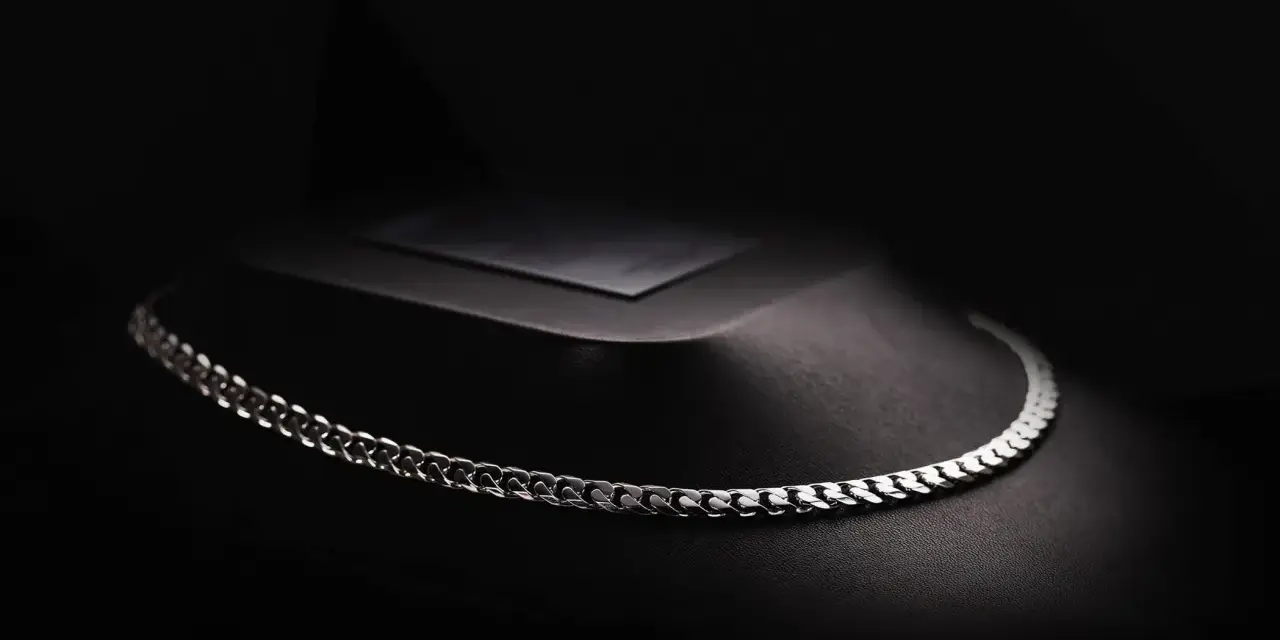
A men’s platinum necklace works best when the metal and the chain design do more than look expensive: they need to suit the way the piece will actually be worn. In this guide I look at the styles that make sense, the lengths that sit properly, how platinum compares with white gold and silver, and the UK checks that matter before money changes hands. I also cover care, because platinum is tough, but it is not maintenance-free, and the difference between a chain that ages well and one that looks tired is usually in the details.
The practical takeaways before you buy a platinum chain
- Platinum is naturally white, dense, and hypoallergenic, which makes it a strong choice for everyday wear and sensitive skin.
- For most men, 20 inches (50 cm) is the safest starting point; 22-24 inches works better with pendants or a looser fit.
- Cable, curb, and box chains are the easiest everyday options; rope and Cuban links read bolder and cost more because they use more metal.
- In the UK, genuine platinum jewellery normally carries a hallmark, and 950 platinum is the fine-jewellery standard most buyers should recognise.
- Platinum does scratch, but it usually develops a soft patina rather than losing colour the way white gold can.
What a platinum necklace gives men that other metals do not
When I look at platinum as a necklace metal, I think of three things first: colour, feel, and long-term behaviour. The colour is a clean natural white, so it does not rely on plating to look bright. The feel is substantial rather than flimsy, which matters a lot on men’s chains because a lightweight necklace can look accidental instead of intentional.
The other advantage is practical. Platinum is naturally well suited to sensitive skin, and it holds its colour without the upkeep that white gold usually needs. It is also dense, which gives the chain a solid presence even when the width is not extreme. That does not mean it is immune to wear, though. Platinum can mark and develop a softened surface over time, and many people actually like that lived-in finish because it makes the piece feel quieter and more personal rather than glossy and showy.
For men’s jewellery, that balance is useful. Platinum reads refined without trying too hard, so it works with a T-shirt, a knit polo, or a collared shirt in a way that flashier metals sometimes do not. Once that base is clear, the next question is not whether platinum works, but which chain style makes it work best.
Which chain styles look right on men
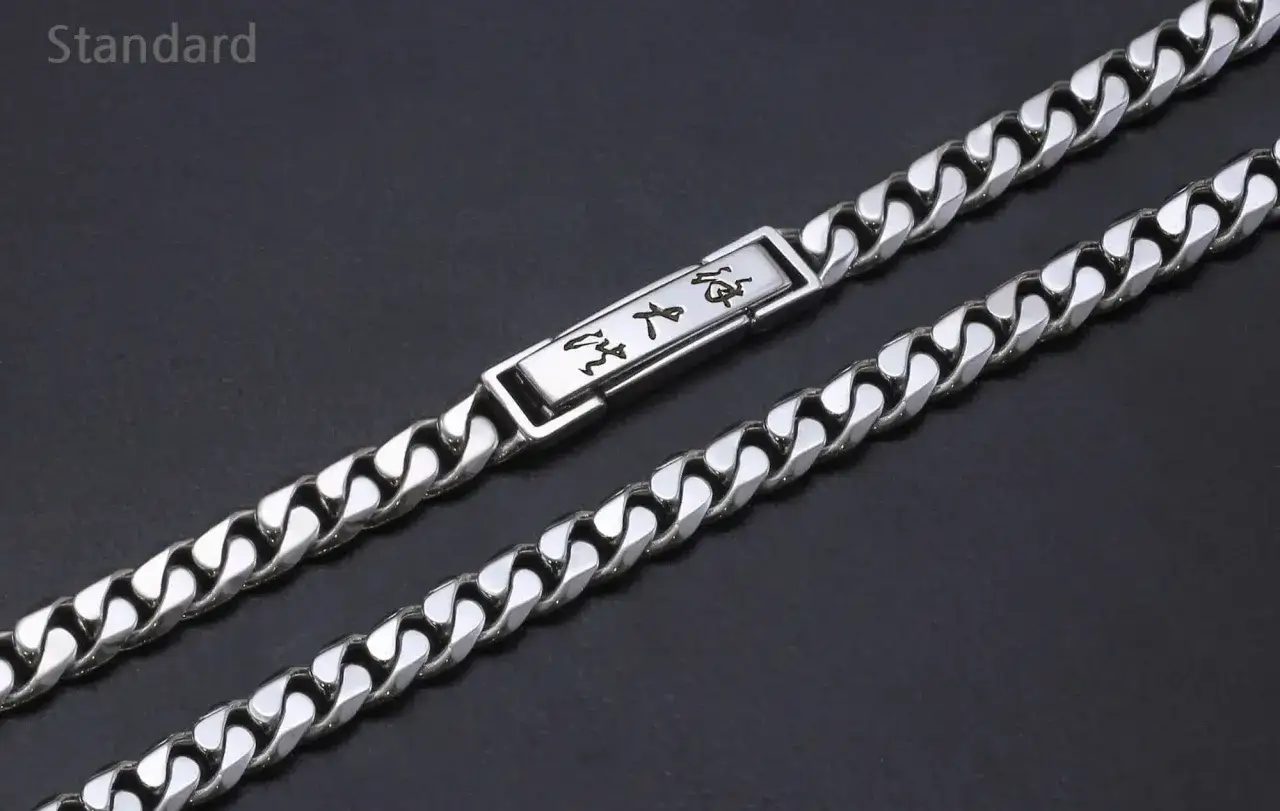
Style matters as much as purity. A men’s platinum chain can look clean and minimal, rugged and masculine, or fully statement-led depending on the link pattern. I usually narrow the choice by asking one question: do you want the necklace to blend into your wardrobe or become the outfit’s focal point?
| Chain style | How it reads | Best use | My take |
|---|---|---|---|
| Cable | Simple, classic, restrained | Everyday wear and small pendants | The safest first buy if you want something versatile and understated. |
| Curb | Flat, clean, masculine | Solo wear or medium pendants | Probably the easiest all-rounder for men because it looks polished without effort. |
| Box | Geometric and modern | Minimal looks and sharper outfits | Good if you like structure; the squared links give a more engineered feel. |
| Rope | Textured and reflective | Statement wear and dressier looks | Strong visual impact, but it can feel a bit louder than a curb or cable chain. |
| Figaro | Rhythmic, relaxed, slightly Italian | Casual and smart-casual outfits | A nice middle ground if you want personality without going into full statement territory. |
| Cuban link | Bold, weighty, luxurious | Stand-alone statement pieces | Very effective in platinum, but the cost rises fast because the metal weight is significant. |
If I had to reduce the choice to one practical rule, it would be this: the slimmer and cleaner the look, the easier it is to wear every day. The bolder and wider the chain, the more it becomes a style statement and the more attention it draws to itself. That is not a flaw, but it does mean you should choose intentionally rather than simply chasing a bigger width. Once the style is right, length becomes the part that determines whether the necklace sits naturally or feels off.
How to choose length, width, and pendant balance
For men, necklace length changes the whole silhouette. A chain that sits on the collarbone gives a neat, controlled look. A longer chain gives more movement and works better over a T-shirt or with a pendant. Most buyers are happy in the 18 to 24 inch range, but the right one depends on neck size, build, and how visible you want the chain to be.| Length | Approx. drop | How it wears | Best for |
|---|---|---|---|
| 18 inches / 45 cm | High on the neck | Close, neat, and more fitted | Smaller necks or a sharper, cleaner profile |
| 20 inches / 50 cm | At or just below the collarbone | The most versatile everyday length | The safest starting point for most men |
| 22 inches / 55 cm | Below the collarbone | More visible and easier to style over clothing | Pendants, open shirts, and a relaxed look |
| 24 inches / 60 cm | Upper chest | More obvious and more relaxed | Statement pendants and layering |
| 30 inches / 76 cm | Mid-chest | Long, deliberate, and clearly styled | Large pendants or a more fashion-led look |
Width matters almost as much as length. In practical terms, 1.5-2.5 mm feels discreet, 3-4.5 mm feels like an everyday solid chain, and anything above 5-6 mm starts to read as a statement. That is especially important in platinum because the metal’s density gives even a modest width a heavier, more serious feel than many people expect.
If you plan to add a pendant, I would keep the proportions honest. A small chain with a heavy pendant looks mismatched and can wear badly at the clasp or jump ring. As a rule, the chain should look at least as substantial as the pendant it carries. If you want layering, keep the lengths separated by roughly 2-4 inches and vary the textures so the pieces do not visually compete. With proportions sorted, the next decision is whether platinum is actually worth the premium over the other common metals.
Platinum versus white gold and sterling silver
Buyers often compare platinum with white gold and sterling silver because the surface colour can appear similar at a glance. The similarity ends there. The right choice depends on whether you value low maintenance, lower upfront cost, or a brighter fashion look that may need more upkeep.| Metal | Look | Maintenance | Price level | Best for |
|---|---|---|---|---|
| Platinum | Natural white, cool, refined | Low day-to-day maintenance | Highest | Daily wear, sensitive skin, heirloom pieces |
| White gold | Bright and similar at first glance | Needs periodic replating | Mid to high | People who want a white-metal look at a lower starting cost |
| Sterling silver | Bright but softer visually | Tarnishes more easily | Lowest | Fashion-first pieces and occasional wear |
My practical view is simple: if you want a chain to become part of your daily uniform, platinum is the cleanest long-term choice. If you want the look for less money and you are comfortable with more upkeep, white gold can work. Sterling silver is fine for style testing or occasional wear, but it does not deliver the same sense of permanence. Once that trade-off is clear, the UK buying details become much easier to read.
What to check before buying in the UK
In the UK, I would treat hallmarking as the first filter, not an optional extra. GOV.UK says platinum jewellery sold in trade normally needs a hallmark unless it falls under a small-weight exemption, and for a real necklace chain that exemption rarely matters. The hallmark should show the maker’s mark, the fineness mark, and the assay office mark, so you can see what the piece is and who submitted it for testing.
For platinum jewellery, 950 is the number most buyers should learn first because it means 95% platinum and is the common fine-jewellery standard. You may also see 900 or 999, but 950 is the mark I expect to find on a well-made modern necklace. If a chain is described as solid platinum and the price looks implausibly low, I would stop and check the hallmark before believing the description.
- Ask for the weight in grams; on platinum, grams tell you more than marketing words do.
- Check the clasp carefully. A slim cable chain can work with a lobster clasp, but a heavier piece is safer with a stronger box clasp or a clasp with a security catch.
- Confirm whether the piece is solid platinum or a platinum finish. The difference is huge in both value and wear.
- Buy from a jeweller who can explain repairs and resizing in platinum, not just in white gold.
- Use price as a signal, not a verdict. In the current market, slim solid platinum chains can start around the low hundreds of pounds, while wider, heavier designs quickly move into several thousand pounds.
That last point matters more than many shoppers realise. Platinum pricing rises quickly because metal weight matters so much, and the style of the links can swing the total price by a surprising amount. Once you have the paperwork and the price logic in place, the only thing left is keeping the piece looking good.
How to keep it looking good without babying it
Platinum is durable, but it still deserves routine care. My preferred approach is boring on purpose: wear it often, wipe it after use, and clean it gently before grime has a chance to settle into the links. Warm water, mild soap, and a soft brush are usually enough for a home clean, followed by a lint-free cloth.
Avoid harsh chemicals, especially bleach and strong chlorine, because they are rough on jewellery in general and not worth the risk for a piece you want to keep long term. I would also remove a platinum chain for the gym, swimming, gardening, and heavy work. That is not because platinum is fragile; it is because knocks, friction, and repeated stress are what make clasps loosen and links look tired.
One thing I remind people about often is this: scratches on platinum are not the same as material loss. Platinum tends to move rather than flake away, so a chain can develop character without thinning out in the same way other metals sometimes do. If the surface becomes dull or the clasp feels loose, a professional clean and inspection is enough for most owners. A couple of times a year is a sensible rhythm for an everyday piece, and sooner if you wear it hard. With that in mind, the final decision is really about the first version you want to live with.
The version I would buy first for real-world wear
If I were choosing one versatile piece, I would start with a 950 platinum curb or box chain in the 20 to 22 inch range, with a width around 2.5-4 mm and a clasp that feels mechanically secure. That combination is subtle enough for daily wear, strong enough to stand alone, and balanced enough to take a small pendant later if the style changes.
If you want something quieter, go slimmer and shorter. If you want something more expressive, move toward a rope or Cuban link and accept that the chain itself becomes the statement. Either way, the best men’s platinum necklace is the one whose proportions feel deliberate, not forced. When the length, link style, and finish line up, platinum does what it does best: it gives the piece quiet authority instead of obvious shine.