Some earring styles work quietly in the background, while others change the whole balance of an outfit. The useful question is not which pair is prettiest in isolation, but which shape, finish, and size will actually suit the way you dress, wear your hair, and move through the day. In this guide, I’m breaking down the main types, how to compare them, and how to build a small collection that feels thoughtful rather than random.
The quickest way to narrow the choice
- Studs are the most versatile option for daily wear and travel.
- Hoops and huggies add more presence without becoming difficult to wear.
- Drops, dangles, and chandeliers create movement and work best when you want an outfit to feel dressed up.
- Material and weight matter as much as shape, especially for sensitive ears.
- A curated ear looks better when the sizes and finishes are balanced, not matched too literally.
The main earring types and what each one does best
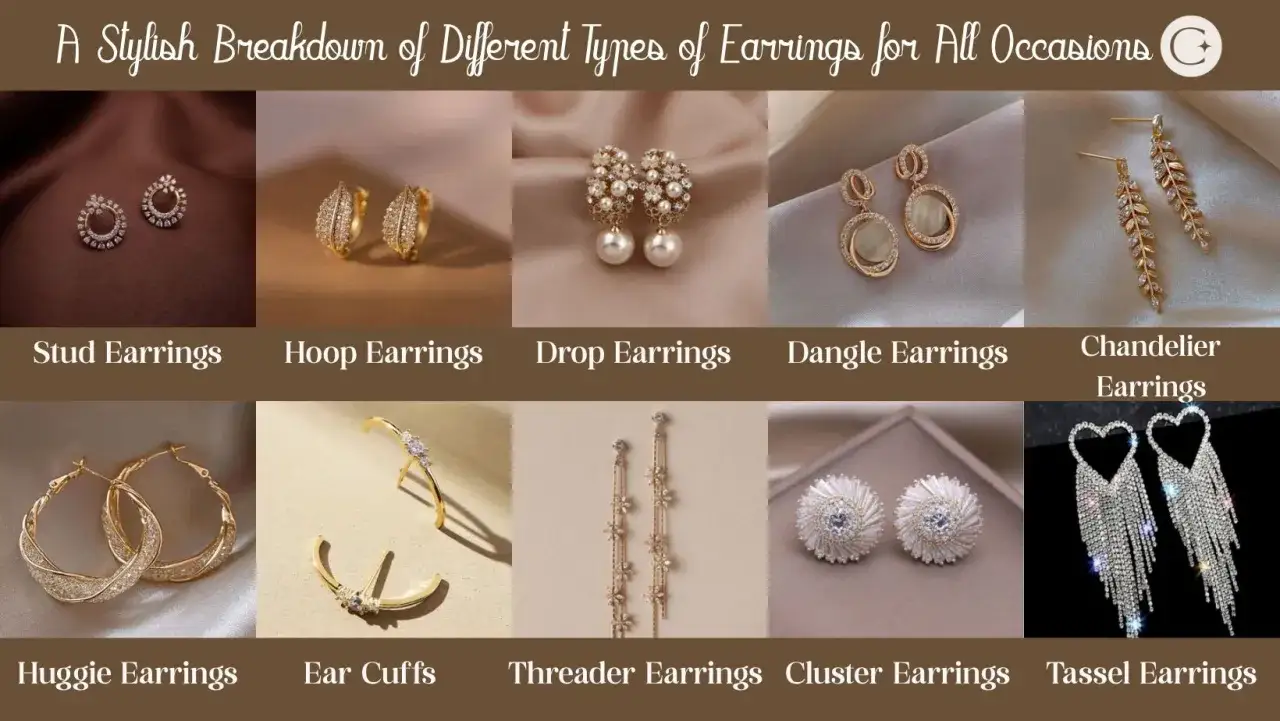
I group earrings by silhouette first, because silhouette decides how much visual weight a pair carries. A tiny stud and a medium hoop may both look simple, but they do completely different work on the face. British Vogue has kept statement earrings in the conversation for years, and I think that is because one strong pair can change the mood of an outfit faster than almost anything else in jewellery.
| Style | What it looks like | Where it works best | Practical note |
|---|---|---|---|
| Studs | Small, fixed pieces that sit flat on the ear | Everyday wear, office settings, travel | The safest first buy if you want something that goes with almost everything |
| Hoops | Open circular or oval shapes that frame the face | Casual outfits, smart daytime looks, weekend dressing | Medium hoops usually feel more wearable than oversized ones |
| Huggies | Small hoops that sit close to the lobe | Layered looks, minimal wardrobes, second-piercing stacks | They are a good bridge between studs and full hoops |
| Drop earrings | Pieces that hang below the lobe with a small amount of movement | Lunch, dinner, polished daywear | Good when you want elegance without the drama of a chandelier |
| Dangle earrings | Longer pieces that move more freely | Evenings, events, occasion dressing | They draw the eye downward and can lengthen the look of the neck |
| Chandeliers | Layered, decorative earrings with more volume and detail | Formal occasions, weddings, party dressing | Best when the rest of the outfit is relatively clean |
| Threaders | Fine chain-like styles that pull through the piercing | Modern, delicate styling, minimal evening looks | They feel light and fluid, but they are not always the most secure option |
| Ear cuffs and climbers | Cuffs hug the ear without a piercing; climbers trace upward along the lobe | Curated ears, fashion-led looks, non-committal styling | Useful if you want more impact without adding another piercing |
If I had to build a first jewellery wardrobe from scratch, I would start with studs, a medium hoop, and one dressier drop. That combination covers most situations without becoming repetitive. The rest of the collection can then be more expressive, which is the part people often get backward.
How to choose a shape that flatters your face and outfit
I rarely treat face shape as a rigid rule, but it is a useful shortcut when you are unsure where to begin. The main idea is simple: use earrings to either echo your features or counterbalance them. If the rest of your outfit is already busy, the earrings should usually be cleaner; if the outfit is plain, the earrings can carry more of the visual interest.
- Round or softly curved faces often benefit from longer shapes, slim drops, or vertical threaders because they add a little length.
- Angular faces often look softer with hoops, rounded studs, or domed shapes that repeat the curves of the face.
- Longer faces often work well with wider hoops, clustered studs, or pieces that add width rather than height.
- Hair worn up makes detail more visible, so you can choose smaller pieces that would disappear under loose hair.
- High necklines and scarves usually suit compact earrings better than long, fragile silhouettes that compete with the fabric.
For me, the best result comes from thinking about proportion rather than trend. A sleek blazer usually likes a cleaner geometric shape; a soft knit can take a little more curve or movement. Once you start matching the line of the earring to the line of the outfit, the whole look becomes easier to judge.
Materials and finishes change the look more than many people realise
Shape gets most of the attention, but material often decides whether a pair feels refined, casual, or costume-like. I usually think about three things here: how the metal looks, how it wears over time, and how my skin reacts to it. If your ears are sensitive, this section matters as much as the design itself.
- Solid gold has the most enduring feel and usually works well for regular wear if you want a long-term piece.
- Sterling silver gives a clean, cool finish and suits minimalist wardrobes, though it may need more polishing.
- Gold vermeil is a useful middle ground when you want the look of gold without committing to solid gold pricing.
- Plated fashion metals are fine for trend-led pieces, but the finish tends to wear faster, especially with frequent use.
- Pearls, enamel, and gemstones change the mood of a pair immediately, even when the silhouette stays simple.
In the UK, checking hallmarks on precious-metal pieces is a sensible habit because it gives you more confidence about the metal content. I also keep plated earrings away from perfume, hairspray, and damp storage; that single habit does more to preserve the finish than most people expect. If a pair is delicate, store it separately rather than throwing it into the same tray as heavier pieces.
Building a curated ear without making it look crowded
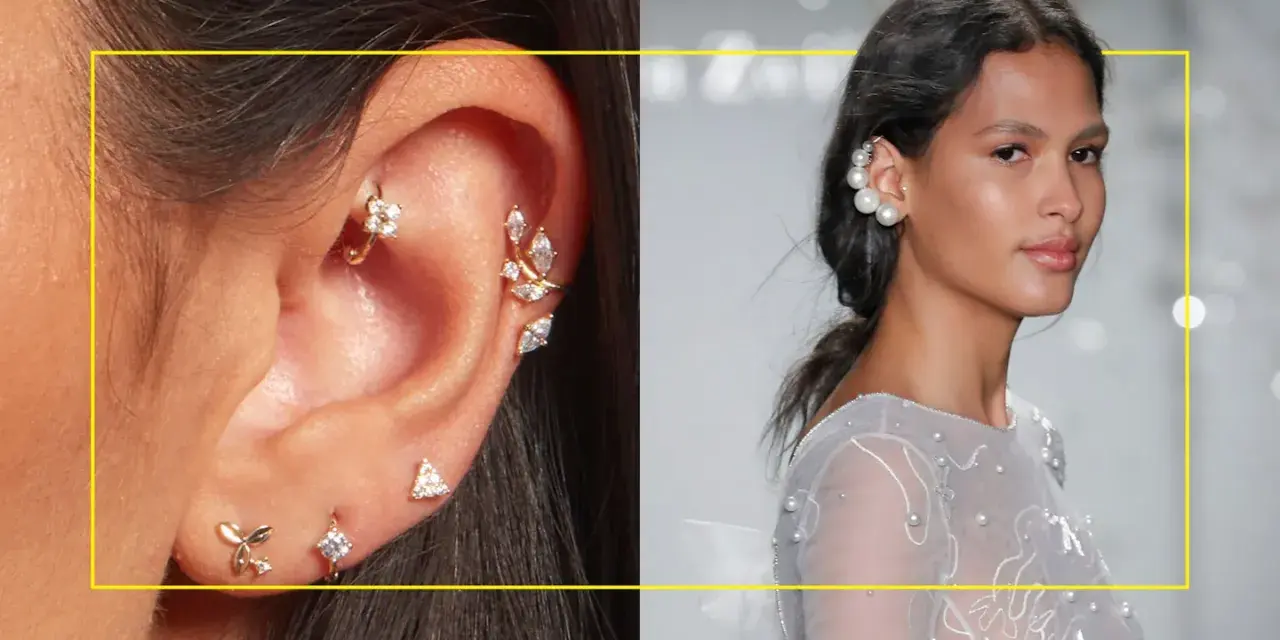
A curated ear works because it feels composed, not because it is packed. Astrid & Miyu’s piercing-led styling language reflects what I see most often now: people are building from the ear outward, not treating earrings as an afterthought. The trick is to give the eye a clear route across the ear rather than loading every available space.
- Choose one anchor piece, usually the most visible stud, hoop, or drop.
- Repeat one metal or finish so the stack feels intentional.
- Vary the scale, mixing a larger shape with smaller supporting pieces.
- Leave one section of the ear quiet so the arrangement can breathe.
- Balance both ears either symmetrically or with a deliberate mismatch, but do not let it look accidental.
Placement matters too. Lobe, helix, tragus, conch, rook, and daith piercings all change where the eye lands, so the same earring can look completely different depending on where it sits. A climber along the lobe gives a very different effect from a small hoop in the helix, even when the materials match. That is why I prefer to plan a stack by rhythm and spacing rather than by quantity.
Common mistakes that make good earrings look wrong on the ear
Most disappointing earring purchases are not bad designs; they are mismatches between design and real life. A pair can look perfect in a product shot and still fail because it is too heavy, catches on clothing, or clashes with the rest of the outfit. The following mistakes come up constantly, and they are easy to avoid once you know what to look for.
- Choosing sparkle before weight, which often leads to earrings you wear for an hour and then remove.
- Ignoring the fastening, even though a secure back can matter more than decoration.
- Mixing too many finishes without a clear rule, which makes the ear look busy rather than styled.
- Wearing oversized drops with busy necklines, scarves, or high collars that compete for attention.
- Buying a trend piece you cannot imagine wearing twice, which turns the jewellery box into a storage problem.
I also think people underestimate movement. Earrings shift when you walk, turn your head, or tie your hair back, so a pair that feels balanced in the mirror can behave very differently in motion. If a style feels awkward in your hand, it will usually feel awkward on the ear too.
A small collection that earns its keep
If you want a collection that covers most situations, keep it small and make each pair count. The goal is not to own every silhouette; it is to own the right mix of silhouettes. I usually recommend starting with four pieces that each solve a different problem.
- One refined pair of studs for work, travel, and quiet outfits.
- One medium hoop or huggie for everyday wear that still feels polished.
- One drop or statement pair for evenings, events, and days when the outfit needs a focal point.
- One playful piece, such as a sculptural design or ear cuff, to keep the collection from feeling flat.