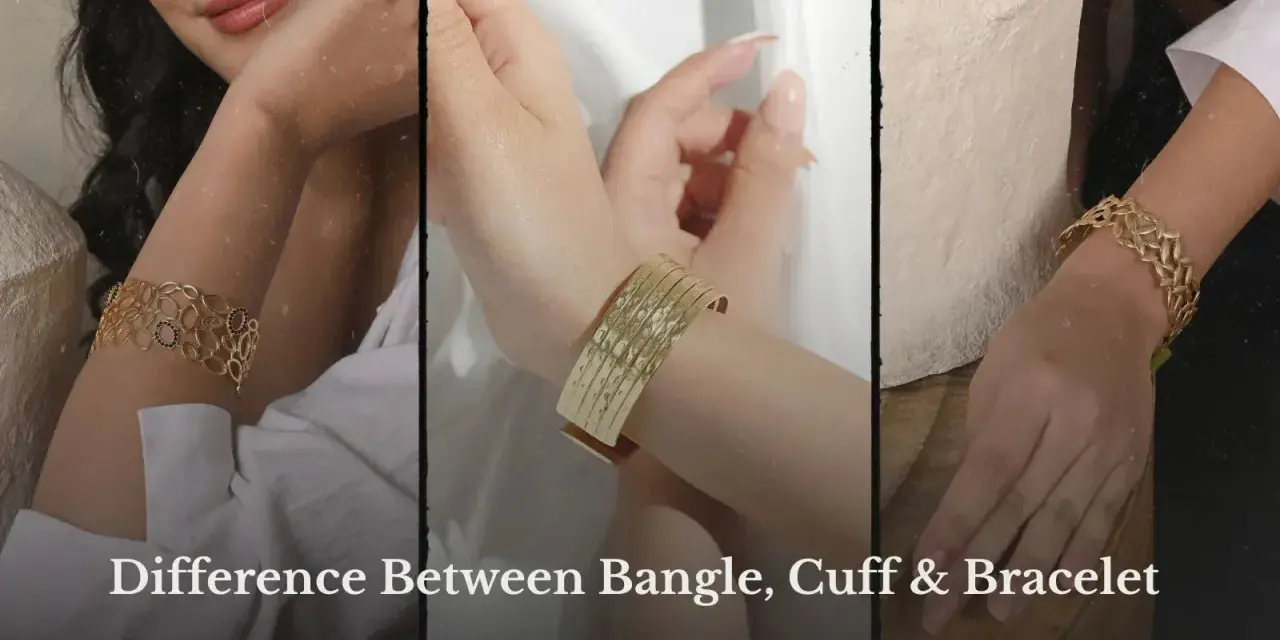
The quickest way to tell them apart
- Bangles are rigid, ring-like pieces that usually slip over the hand or open on a hinge.
- Bracelets are typically more flexible and are usually sized to the wrist, not the hand.
- If you want a sculptural, statement look, I would usually start with a bangle.
- If comfort, layering, and easy everyday wear matter most, a bracelet is the safer pick.
- Fit is the main trap: bangles depend on hand width, while bracelets depend on wrist circumference.
- In the UK, bracelet sizes are still often listed in inches, so checking centimetres as well saves mistakes.
What actually separates a bangle from a bracelet
I like to explain this in a simple way: a bangle is the rigid, structural version of wrist jewellery, while a bracelet is the broader category that usually allows more movement, flexibility, and closure options. That distinction sounds small, but it changes almost everything about how the piece wears.
| Feature | Bangle | Bracelet |
|---|---|---|
| Shape | Usually a firm circular, oval, or geometric loop | Can be chain-based, linked, beaded, woven, or flexible metal |
| Closure | Often slip-on, hinged, or open-ended | Commonly uses a clasp, slider, stretch fit, or adjustable fastener |
| Fit logic | Must pass over the hand or open to fit the wrist | Sizes directly to the wrist circumference |
| Movement | More fixed, more audible, more sculptural | Usually softer on the wrist and easier to forget you are wearing |
| Typical materials | Metal, glass, resin, wood, or rigid mixed materials | Metal chains, leather, beads, cords, fabric, or mixed constructions |
| Style effect | Clean, defined, and often more statement-like | More layered, relaxed, or delicate depending on construction |
Why fit matters more than most people think
Fit is where a lot of people get surprised. A bracelet can tolerate a small size variation, but a solid bangle has to clear your hand first, which means the measuring method is completely different. If you use a wrist measurement for a rigid bangle, you can end up with a piece that looks right online and feels wrong in real life.
- For bracelets, measure your wrist just below the wrist bone and add about 1.5 to 2 cm for a close fit, or up to 2.5 cm if you want extra movement.
- For bangles, measure the widest part of your hand in a cupped position, or use the inner diameter of a bangle you already own and wear comfortably.
- If you are between sizes, I would usually size up for a bangle, because too-tight rigid pieces are frustrating to put on and take off.
- For gifting, bracelets are usually the safer choice when you do not know the wearer’s hand width, while bangles work best when you know their preferred diameter.
For reference, adult bangle inner diameters often sit roughly between 53 mm and 70 mm, with the middle sizes around 60 mm to 63 mm being common starting points. In the UK, many jewellers still list bracelet lengths in inches, so I always check both metric and imperial before I buy. Fit sets the baseline, but style is what decides whether the piece feels intentional or merely decorative.
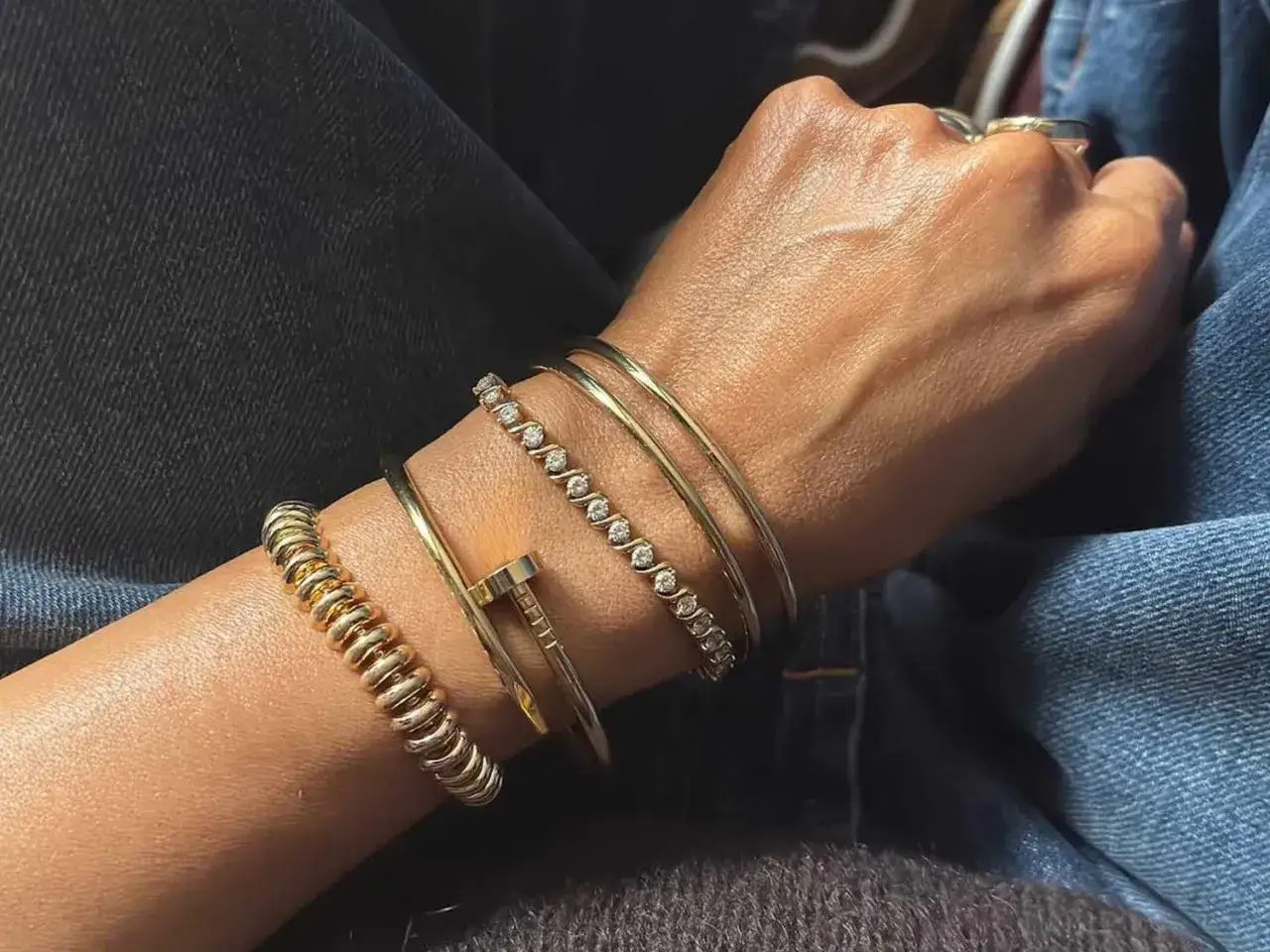
How I style each piece in real outfits
This is where the difference becomes visible at a glance. I reach for a bangle when I want one clean line on the wrist, a bit of shine, and a stronger silhouette. I reach for a bracelet when I want softness, movement, or something that can sit neatly with a watch or other wristwear.
- Bangles work well with tailored sleeves, evening dresses, sharp monochrome outfits, and minimal looks that need one focal point.
- Bracelets suit knitwear, workwear, casual shirts, and layered looks where texture matters more than shape.
- A single bold bangle can look more polished than several pieces that are all competing for attention.
- Multiple slim bracelets often create a lighter, more lived-in feel than a rigid stack of bangles.
- If you spend a lot of time at a desk, bracelets are usually less distracting than several hard metal pieces knocking together.
Bangles also carry stronger cultural and ceremonial associations in many traditions, so they can read as heritage pieces as much as fashion pieces. That is part of their appeal, and part of why they feel more deliberate than a generic wrist chain. Once the styling choice is clear, material and upkeep decide how well the piece survives real life.
Materials and care are where the difference becomes practical
Material changes both the look and the long-term behaviour of the piece. A polished gold bangle feels very different from a beaded bracelet, and not just visually. Weight, rigidity, scratch resistance, and the type of fastener all affect how long the jewellery stays attractive and how easy it is to wear.
| Material or build | What it does well | What to watch for |
|---|---|---|
| Solid gold or silver | Durable, valuable, and ideal for heirloom pieces | Scratches show over time, and the price rises quickly with weight |
| Hollow metal | Lighter on the wrist and cheaper than a solid version | Dents more easily, especially in rigid bangles |
| Chain or link bracelet | Flexible, easy to stack, and comfortable for daily wear | Can snag on knitwear or catch on clasps if the design is delicate |
| Beads, leather, cord, or fabric | Relaxed, colourful, and easy to dress down | Less water-friendly and usually less formal |
| Glass, wood, resin, or mixed media | Strong decorative character and useful for statement looks | More vulnerable to impact, chips, or surface wear |
My simple care rule is this: take wrist jewellery off for the gym, shower, and pool, and store each piece separately so hard surfaces do not rub against one another. Polished metal likes a soft cloth; more delicate stones, finishes, or glued settings need extra caution. If the piece has a clasp, hinge, or hidden lock, check it regularly, because the failure point is often mechanical rather than decorative. The material also shapes what you should expect to pay, which is the next practical filter.
What I would expect to spend in the UK
Price is not just about brand names. With bangles especially, metal weight has a huge effect on cost, so two pieces that look similar in a product photo can sit in very different price bands once you look at the construction. I also pay attention to whether a piece is solid, hollow, plated, or gold-filled, because that tells me far more than the styling photo does. Gold-filled means a much thicker bonded layer of gold over a base metal than standard plating, so it tends to hold up better.
| Style | Rough UK price band | What you are usually paying for |
|---|---|---|
| Fashion bracelet or bangle | £10 to £60 | Style, light wear, and a lower entry price |
| Silver bracelet or slim silver bangle | £40 to £180 | Better metal quality, cleaner finishes, and longer life |
| Solid gold piece | £250 to £1,500+ | Metal weight, purity, and often a more substantial feel |
| Gemstone or designer piece | £150 to £2,000+ | Craftsmanship, setting work, and design identity |
The simplest way to choose the right piece for your wrist and wardrobe
If I had to reduce the decision to one line, I would say this: choose a bangle when you want structure, and choose a bracelet when you want flexibility. Everything else is a refinement of that choice.- Choose a bangle if you want a sharper silhouette, a more sculptural look, or a piece that feels like the main event.
- Choose a bracelet if comfort, movement, stacking, and daily practicality matter more than visual formality.
- Choose a hinged bangle if you like the shape of a bangle but do not want the effort of sliding it over your hand.
- Choose a chain bracelet if you wear a watch, switch outfits often, or want something that disappears into your day rather than announcing itself.
- Choose the safer gift as a bracelet when hand size is unknown, or a bangle only when you already know the wearer’s preferred fit.
If I were building a small jewellery collection in the UK, I would start with one flexible everyday bracelet and one clean, well-made bangle. That combination covers most outfits without feeling repetitive, and it gives you both ends of the spectrum: ease and structure. The best piece is usually the one you will actually wear, not the one that only looks clever in a product shot.