Hoop earrings look simple, but the details change everything: how they sit, how heavy they feel, and whether they read as discreet, polished, or statement-making. There are many types of hoop earrings, yet the most useful distinctions come down to size, shape, thickness, and closure. In this guide, I break down the main styles, explain how to choose them, and show where each one works best in a real jewellery wardrobe.
The quickest way to read hoop styles is by fit, shape, and finish
- Fit tells you whether a hoop hugs the ear or hangs away from it.
- Diameter changes proportion more than most shoppers expect, especially in small faces or stacked piercings.
- Thickness shifts a pair from delicate to bold even when the diameter stays the same.
- Closure affects comfort and security if you wear hoops all day.
- Material determines how the pair ages, how often it needs cleaning, and whether it suits sensitive ears.
The main hoop styles worth knowing
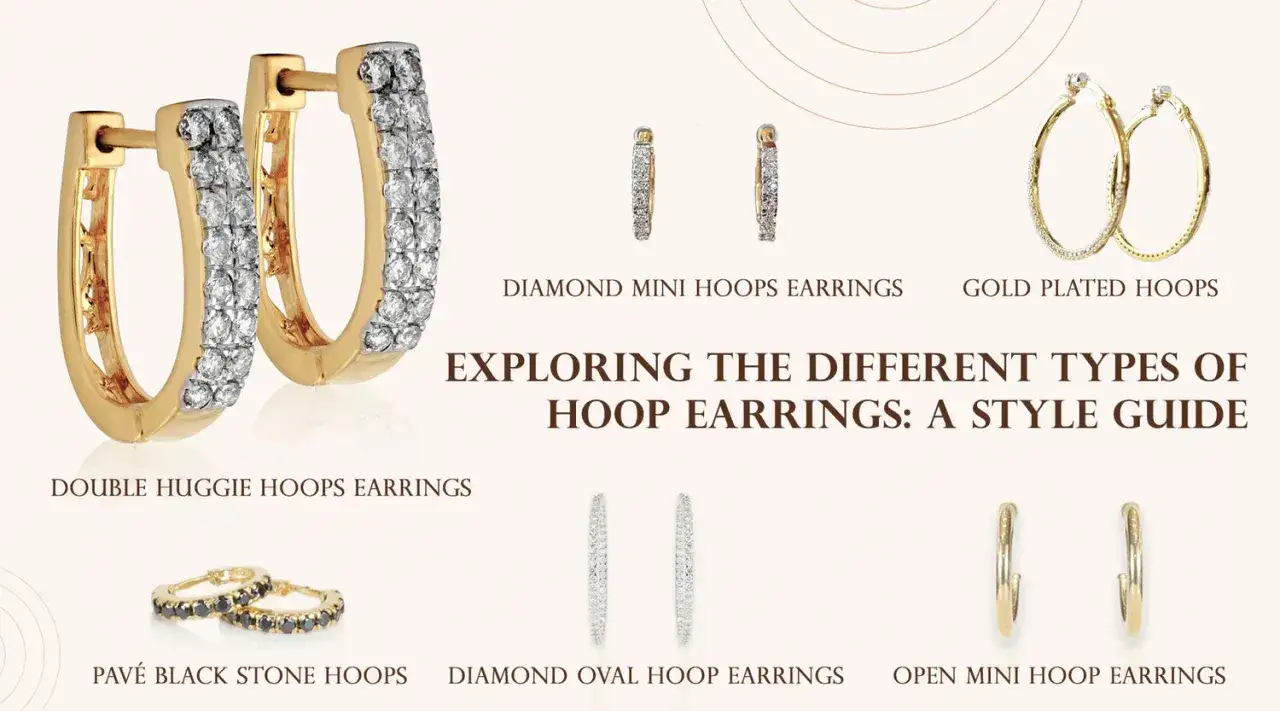
I usually group hoops by silhouette before I think about metal or price. That keeps the category useful, because a tiny huggie, a round medium hoop, and a chunky tube hoop can all live in the same drawer but behave very differently on the ear. Once you know the family, shopping becomes far less guesswork and far more editing.
| Style | What it looks like | Best use | Trade-off |
|---|---|---|---|
| Classic round hoops | A clean circular shape with balanced proportions | Everyday wear, office looks, simple outfits | Can feel plain if the finish is very thin or flat |
| Huggies and mini hoops | Small hoops that sit close to the lobe | Daily wear, second piercings, sleeping or travel-friendly styles | May disappear visually if you want more impact |
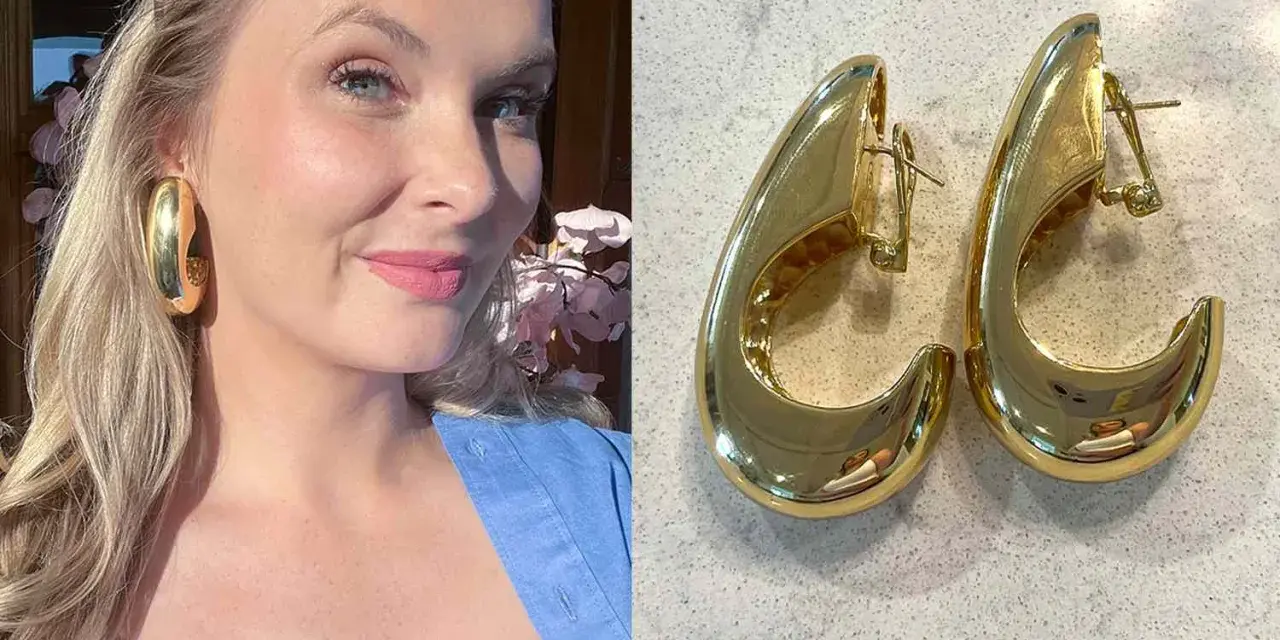
| Tube, chunky, or chubby hoops | Thicker profiles with more visual weight | Statement dressing, simple tops, modern minimal wardrobes | Can overwhelm delicate features or heavy necklines |
| Oval hoops | Longer than they are wide | Softening the face, elegant tailoring, a slightly unexpected look | Less classic than a round hoop |
| Geometric hoops | Squares, hexagons, or broken-circle shapes | Modern styling, sharper wardrobes, fashion-led outfits | Less timeless if you want one forever pair |
| Half hoops and open hoops | C-shaped or front-facing arcs rather than full circles | Lightweight styling, low-profile everyday wear | They read less like a traditional hoop |
| Charm, pearl, or gemstone hoops | Hoops with a drop, accent, or removable detail | Outfits that need personality or a dressier finish | Extra movement can catch on hair or scarves |
| Textured or twisted hoops | Ribbed, rope-like, hammered, or faceted surfaces | Adding light and interest without changing the base shape | Texture is less minimal, so it can date faster |
Classic round hoops and huggies
Classic round hoops are the backbone of the category. They are easy to wear, easy to recognise, and easy to pair with almost anything. Huggies are the close-fitting version, and that is why they work so well for daily wear or for a second piercing where you want something neat rather than theatrical. Sleeper-style hoops sit in the same practical family: minimal, secure, and designed to stay out of the way.
Chunky, tube, and chubby hoops
Chunky hoops solve a different problem. They give you more presence without needing much extra decoration, which is why they look strong with a plain white shirt, a black knit, or a simple dress. A hollow tube hoop can give you that fullness without the drag of a solid metal design, so the pair looks substantial but still feels wearable. I tend to reach for this family when I want the earrings to do the styling work on their own.
Oval, geometric, and half hoops
Oval hoops are a quiet upgrade on the standard circle. They lengthen the line of the earring a little, which can be useful if you want something softer but not overly precious. Geometric hoops are sharper and more architectural, so they suit a wardrobe that already leans modern. Half hoops, also called open hoops or C-shapes, are the lightest-reading option of the group, and they are useful when you want the idea of a hoop without the full visual weight of one.
Read Also: Bracelet Styles Guide - Find Your Perfect Fit & Look
Charm, pearl, and textured hoops
This is where hoops become more personal. A charm hoop can be playful or sentimental, depending on the drop. Pearl hoops feel dressier and more traditionally polished, while pavé and gemstone styles add sparkle in a way that reads more evening-ready. Textured and diamond-cut hoops are worth understanding too: diamond-cut simply means the metal has been faceted so it catches light more sharply. That gives the pair more energy without changing the silhouette.
That style map becomes much more useful once you know how size, weight, and fastening change the way a hoop actually wears.
Why size and closure do more than the label suggests
Size is where many people get tripped up, because hoop naming is often vague. I trust the millimetre measurement more than the marketing label, and I always check the inner diameter first. A 20 mm hoop and a 40 mm hoop may both be called “small” or “medium” by different brands, but they will look completely different once they are on the ear.
| Approx. inner diameter | How it usually reads on the ear | Typical effect | Best use |
|---|---|---|---|
| 10-15 mm | Very close-fitting | Subtle, tidy, almost like jewellery you forget about | Second piercings, low-key daily wear, sleeper styles |
| 16-25 mm | Small but visible | Clean and balanced | Workwear, everyday outfits, stacking |
| 26-40 mm | Medium and versatile | Noticeable without dominating | The safest “one pair does most things” size |
| 41-60 mm | Clearly statement-making | More movement and more presence | Simple outfits, evenings, cropped hair or pulled-back hair |
| 60 mm+ | Oversized | Dramatic and intentionally fashion-led | Strong styling moments rather than everyday wear |
Thickness matters almost as much. A thin hoop can look refined even at a larger diameter, while a thick one can feel bold at a fairly small size. If a brand lists weight, I pay attention to it; a hoop that looks petite in the photo can still feel tiring if it is dense or solid.
- Hinged click closures are the easiest choice for everyday wear because they open and shut quickly and feel secure.
- Endless hoops create a seamless circle, which looks clean, but they take more patience to put on.
- Latch backs suit larger or more traditional hoops and usually feel sturdy once closed.
- Post and clutch backs are familiar and adjustable, though the back can loosen over time.
- Leverbacks are useful on heavier designs because the closure helps carry the weight more comfortably.
For the hoops I wear most often, I lean towards a hinge or click closure. It gives the best mix of security, speed, and low fuss, which is exactly what you want if a pair is meant to stay in rotation.
How I choose hoops for different outfits and features
I do not start with face shape alone. I start with the outfit, the neckline, the hairstyle, and how much attention the rest of the jewellery is already asking for. Face shape can be a useful hint, but it is not a rulebook. In practice, the mirror matters more than a chart.
- With tailoring, I prefer medium round hoops or polished huggies because they look deliberate without competing with clean lines.
- With knitwear or high necks, slightly larger hoops tend to work better because they stay visible rather than disappearing into the fabric.
- With pulled-back hair, sculptural, oval, or slightly chunkier hoops become more interesting because the face frame is clearer.
- With multiple piercings, I like a small hoop in the upper hole and a medium hoop or a textured style in the main lobe so the stack has contrast.
- With evening clothes, pearl, pavé, or mixed-metal hoops add enough light to feel finished without requiring a necklace.
If you want a rough face-shape guide, I would use it like this: rounded hoops can soften sharper features, and slightly elongated hoops can add length to softer or rounder faces. Still, the bigger question is whether the shape feels balanced against your own proportions. That is why trying hoops on, even briefly, usually tells you more than the product copy does.
Once proportion feels right, the next thing I look at is the material, because that is where style and longevity start to separate.
Materials and finishes that change both the look and the lifespan
In the UK market, simple plated hoops often sit around £20-£60, better gold-plated or vermeil styles usually move into the £50-£180 range, and solid gold or gemstone hoops can climb well beyond £200. Those are broad bands rather than strict rules, but they are useful if you are trying to decide whether a pair is a casual buy or a long-term piece.
| Material or finish | What it gives you | Best for | What to watch for | Typical UK price band |
|---|---|---|---|---|
| Gold-plated brass or steel | Warm colour at an accessible price | Trend-led styles and first purchases | Plating can wear with friction, water, and perfume | £20-£60 |
| Gold vermeil | A thicker gold layer over sterling silver | Frequent wear with a richer finish | Still a surface layer, not solid gold | £50-£180 |
| Sterling silver | A cool, bright look that works with most wardrobes | Clean minimal styling and everyday wear | Tarnishes over time, though it cleans well | £30-£120 |
| Solid 9ct or 14ct gold | Long-term value and strong durability | Investment pieces and sensitive ears | Higher upfront cost | £180-£600+ |
| Stainless steel or titanium | Practical, sturdy, and often allergy-friendly | Low-maintenance everyday wear | Can look less warm or luxurious than gold | £15-£80 |
| Pavé or gemstone-set styles | Extra sparkle and more visual detail | Evenings, events, and dressier outfits | Needs gentler handling and storage | £60-£300+ |
When I am choosing for daily wear, I ask one blunt question: will I still like this after repeated use, not just in the product photo? That is where solid metal, better closures, and cleaner finishes start to justify themselves. For plating, storage matters too; a soft pouch or compartment keeps the surfaces from rubbing against other pieces, and that makes more difference than people expect.
Pavé, by the way, is simply a setting where small stones sit closely together so the surface reads as continuous sparkle. It is beautiful, but it is not the lowest-maintenance choice, so I only buy it if I know I will wear it in the right context.
Common buying mistakes that make hoops underperform
Most hoop regrets come from one of three things: size, weight, or fastening. The design might be attractive, but if one of those three is wrong, the pair sits unused. I have found it more useful to shop by problem and solution than by trend name.
| Common mistake | Why it causes disappointment | Better approach |
|---|---|---|
| Buying by the name alone | “Small” and “medium” mean different things across brands | Check inner diameter in millimetres and compare it with a model photo |
| Ignoring weight | A hoop can look light but feel tiring after a few hours | Choose hollow or smaller profiles if you wear earrings all day |
| Choosing plating for constant wear in water | The finish usually ages faster under friction, sweat, and showering | Save plated pieces for dry, lower-stress wear or move up to better metal |
| Forgetting the closure | An awkward fastening can make a lovely pair feel annoying | Pick a hinge, latch, or leverback that suits how often you remove them |
| Buying a hoop that fights your neckline | The earrings either vanish or compete with the outfit | Let the fabric and shape of the clothing guide the hoop size |
| Ignoring other piercings | A strong main hoop can clash with crowded stacks | Coordinate smaller hoops or huggies with the rest of the ear |
If the product page does not tell you the inner diameter, material, and closure, I treat that as a warning sign rather than a harmless omission. Those three details decide whether a hoop will be a regular favourite or a piece that sits in the box.
The hoop collection I would start with for maximum range
If I were building a compact collection from scratch, I would keep the range tight and intentional. A small set of well-chosen hoops is more useful than a drawer full of near-duplicates, because each pair should earn its place by solving a different styling problem.
- one close-fitting huggie or sleeper-style hoop for low-profile everyday wear and second piercings
- one medium classic round hoop in the metal you reach for most often
- one textured, sculptural, or chunky pair for outfits that need more presence
- one dressier pair with pearls, stones, or a mixed-metal finish for evenings and occasions
That mix covers most wardrobes without making the jewellery box feel repetitive. If I had to leave you with one practical rule, it would be this: choose the silhouette first, then the finish. When the shape suits your face, clothes, and routine, the rest becomes a matter of taste rather than trial and error.