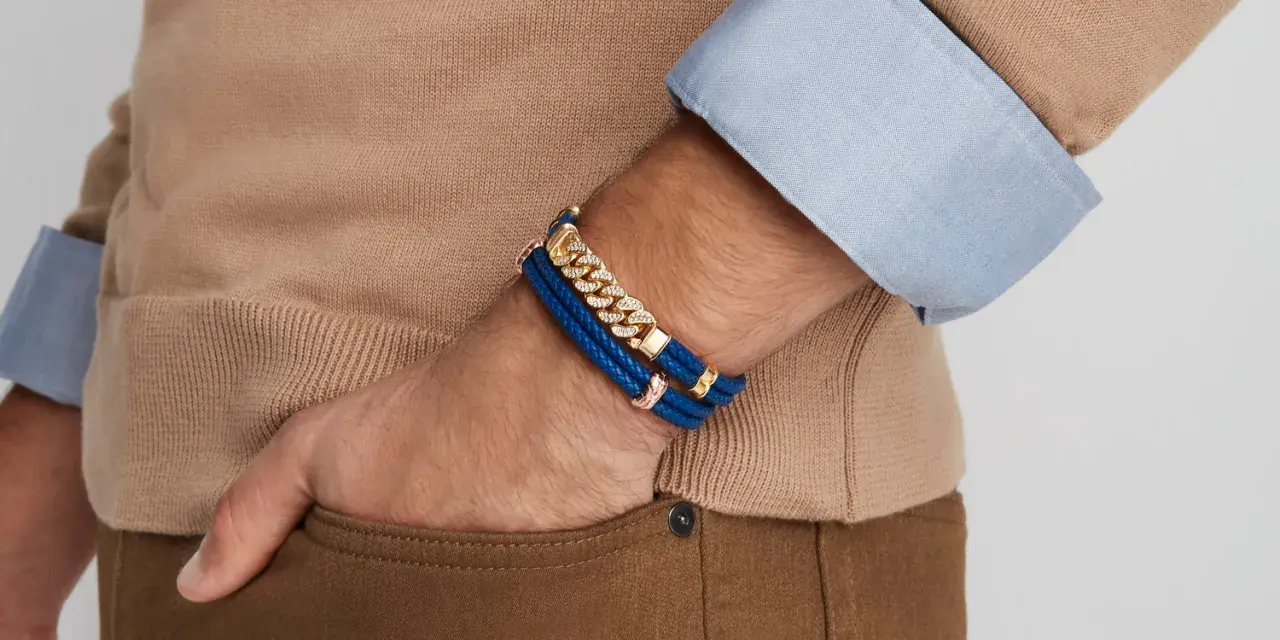
How the main bracelet families differ
- Flexible styles such as chain and tennis bracelets move with the wrist and are easiest to layer.
- Rigid styles like bangles and cuffs create a cleaner silhouette and usually make the strongest statement.
- Decorative designs such as charm, beaded and wrap bracelets add personality, but they often read more casual or sentimental.
- Fit matters as much as style: add roughly 1 to 2 cm for a close fit, or 2 to 3 cm for a looser one.
- For everyday wear, a well-made chain bracelet in a durable metal is usually the safest starting point.
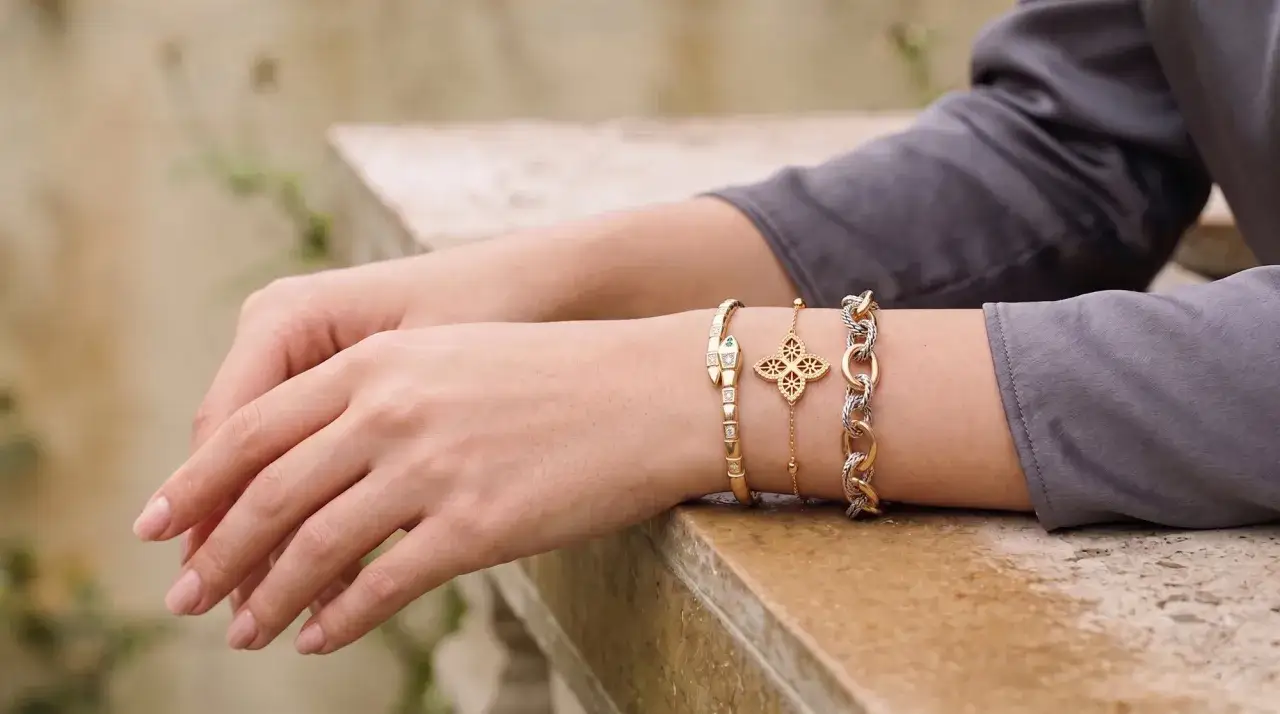
The bracelet families that shape the look
When I sort bracelets into usable categories, I usually start with construction rather than decoration. Some pieces are built to move with the wrist, some are built to hold shape, and others sit somewhere in between with extra detail, symbolism or texture.
| Category | What it looks like | Best for | Watch-out |
|---|---|---|---|
| Flexible | Chain, tennis, beaded and wrap styles | Daily wear, layering, comfort | Fine links can twist; stretch cords can weaken over time |
| Rigid | Bangles, cuffs and hinged bracelets | Sharp silhouettes, stacking, a polished finish | Fit has to be right, especially for bangles that must pass over the hand |
| Decorative | Charm, bar, ID and sentimental designs | Gifting, storytelling, personal style | Can feel visually busy if the rest of the outfit is already doing a lot |
That basic split makes the rest of the conversation easier, because once you know the structure, you can read the style more confidently. Next, the real question is how the individual designs behave on the wrist.
Chain bracelets and the links that change the mood
Chain bracelets are the most adaptable category in the group, and that is why they show up in so many jewellery boxes. The same general form can look delicate, bold, vintage-inspired or modern depending on the links, thickness and finish.
Curb, Figaro and rope links
Curb chains sit flat and read cleanly, which is why they are so reliable for everyday wear. Figaro links add a little rhythm with their repeating pattern, and that small change is enough to make the bracelet feel more styled without becoming flashy. Rope chains have a twisted texture that catches the light nicely, so they work well when you want visible movement rather than a perfectly smooth line.
Paperclip and snake styles
Paperclip bracelets feel more contemporary, especially in gold, because the open-link structure gives the wrist some negative space. Snake chains are smoother and more fluid; they skim the skin with a softer shine and suit people who want a minimal look with a refined finish. In practice, these are the chain styles I reach for when the outfit already has a strong shape and the bracelet needs to support it rather than compete with it.
Chain bracelets are usually the easiest place to start if you want something wearable, but they are not the only option that works for everyday life. Once you know how chains behave, the next decision is whether you want the wrist to look more structured or more sculpted.
Rigid bracelets when you want more structure
Rigid pieces create an entirely different effect. They draw a clear line around the wrist, which makes them especially good when you want the jewellery to feel deliberate rather than casual. Bangles and cuffs are often grouped together, but they solve slightly different style problems.
Bangles
A bangle is usually a closed or hinged circle that sits around the wrist with a firm shape. Slim bangles are excellent for stacking, and a polished gold or silver version can make even a simple jumper look more considered. The main limitation is fit: a solid bangle has to pass over the widest part of the hand, so if it is too tight, you will feel it immediately.
Cuffs
Cuffs are open-ended and tend to read bolder than bangles. They can be minimal and architectural, or wide and dramatic, depending on the design. I like cuffs when a look needs one strong focal point rather than several smaller ones, but they do have one practical trade-off: because they are open, they can catch on sleeves or feel awkward if the opening is too loose.
A good rule is simple: choose a bangle when you want rhythm and stacking options, and choose a cuff when you want one decisive gesture on the wrist. If you want more personality than structure, the decorative styles are where the conversation gets interesting.
Gem-set, beaded and sentimental styles
This is the part of bracelet design that feels most expressive. These pieces are not only about shape; they are about sparkle, memory, colour or identity. Some are fine-jewellery staples, while others are deliberately informal, and both have a place.
Tennis bracelets
A tennis bracelet is the classic line-of-stones style: flexible, elegant and easy to recognise without looking loud. It works because the line is continuous, so the eye reads it as one clean band of light. In practical terms, I think of it as the most versatile formal bracelet, because it can sit with tailoring, evening wear or even a pared-back knit if the rest of the jewellery is minimal. For security, I would want a good clasp with a safety catch.
Charm and bar designs
Charm bracelets are less about symmetry and more about story. They collect meaning over time, which is exactly why people keep returning to them. Bar or ID bracelets are cleaner and more linear, so they suit anyone who likes a personalised piece without the visual clutter of multiple pendants.
Beaded, wrap and friendship bracelets
Beaded bracelets introduce colour and texture, and they can move from casual to refined depending on the material. Gemstone beads feel more elevated than glass or cord, but the layout still reads relaxed. Wrap bracelets wind around the wrist and bring in more movement, which is useful if you want a bohemian or layered feel. Friendship bracelets remain one of the most direct sentimental styles because they are personal, informal and easy to wear with other pieces.
Read Also: Opal Jewellery Guide - Choose, Wear & Care for Your Gems
Permanent bracelets
Permanent bracelets are the most niche option here, but they are worth mentioning because they have become a real part of modern jewellery culture. They create a seamless look with no everyday clasping, yet that convenience comes with a practical limit: you need to be comfortable with a piece that is not quickly removed for every activity. I would treat them as a lifestyle choice, not a novelty.
Once you move into these more expressive styles, the choice becomes less about categories and more about how the bracelet fits the rest of your life. That is where selection starts to matter as much as design.
How to choose one that suits your wrist and wardrobe
When I narrow down a bracelet purchase, I usually look at three things: movement, silhouette and maintenance. If a piece fails on one of those, it tends to get worn less often than people expect.
| If you want... | Start with... | Why it works |
|---|---|---|
| Everyday layering | A fine chain or slim paperclip bracelet | It sits close to the wrist and pairs easily with a watch or other bracelets |
| Sharp polish | A bangle or hinged bracelet | It gives a clean outline and looks intentional even with very simple clothes |
| Visible sparkle | A tennis bracelet | The continuous line of stones does the work without needing extra styling |
| Sentimental value | A charm or friendship bracelet | It can carry meaning, milestones or a personal colour palette |
| Low-fuss wear | A solid chain in a durable metal | It is usually the least demanding to style and care for |
Fit is the part people often underestimate. I measure the wrist first, then add about 1 to 2 cm for a close fit or 2 to 3 cm if the bracelet should sit more loosely. Bangles are different: they need to clear the widest part of the hand, not just the wrist itself. If you are between sizes, I would usually go up rather than down, because a bracelet that pinches never feels elegant for long.
Metal choice matters too. In the UK, 9ct gold is often a practical everyday option because it is harder-wearing than higher-karat gold, while 18ct gives a richer colour and a more luxurious feel. Sterling silver is accessible and versatile, but it asks for a little more polishing, and platinum is the hardest-wearing of the precious metals, though it is usually the most expensive. That leads naturally to care, because the right metal still needs the right routine.
Care that keeps each style looking sharp
Bracelets take more daily friction than many people realise. They rub against desks, sleeves, handbags and each other, and that means clasps, surfaces and stones all need a bit of attention. I check clasps first, because wrist movement puts more stress on them than most necklace clasps ever see.
- Chain bracelets: store them flat or hanging so they do not tangle, and check that the clasp closes cleanly.
- Bangles: keep them separated with a soft cloth to reduce scratching, especially if they are polished metal.
- Tennis bracelets: store them in a lined box and inspect the clasp and safety catch regularly.
- Beaded and leather styles: keep them away from perfume, heavy moisture and repeated impact.
- Silver pieces: expect some tarnish over time and use a soft cloth rather than aggressive polishing.
- White gold pieces: remember that the bright surface is often rhodium plating, which may need refreshing later.
If I am cleaning metal bracelets, I keep it simple: mild soapy water, a soft brush where needed, and a careful dry-off afterwards. I am much more cautious with glued stones, pearls and porous beads, because not every style tolerates the same treatment. A bracelet that fits well but is stored badly will still age quickly, so the final choice is always about wear habits as much as design.
The bracelet mix I would start with
If I were building a balanced jewellery box from scratch, I would start with three pieces: one slim chain bracelet for daily wear, one rigid style for structure, and one more decorative piece for evenings or gifting. That gives you enough range to cover most situations without buying duplicates of the same visual idea.- A fine chain or paperclip bracelet for maximum versatility.
- A bangle or cuff if you prefer cleaner lines and a stronger silhouette.
- A tennis, charm or beaded bracelet if you want sparkle, story or texture.
The best bracelet is rarely the loudest one in the case; it is the one you keep reaching for because it fits your wrist, suits your clothes and feels right on an ordinary day.