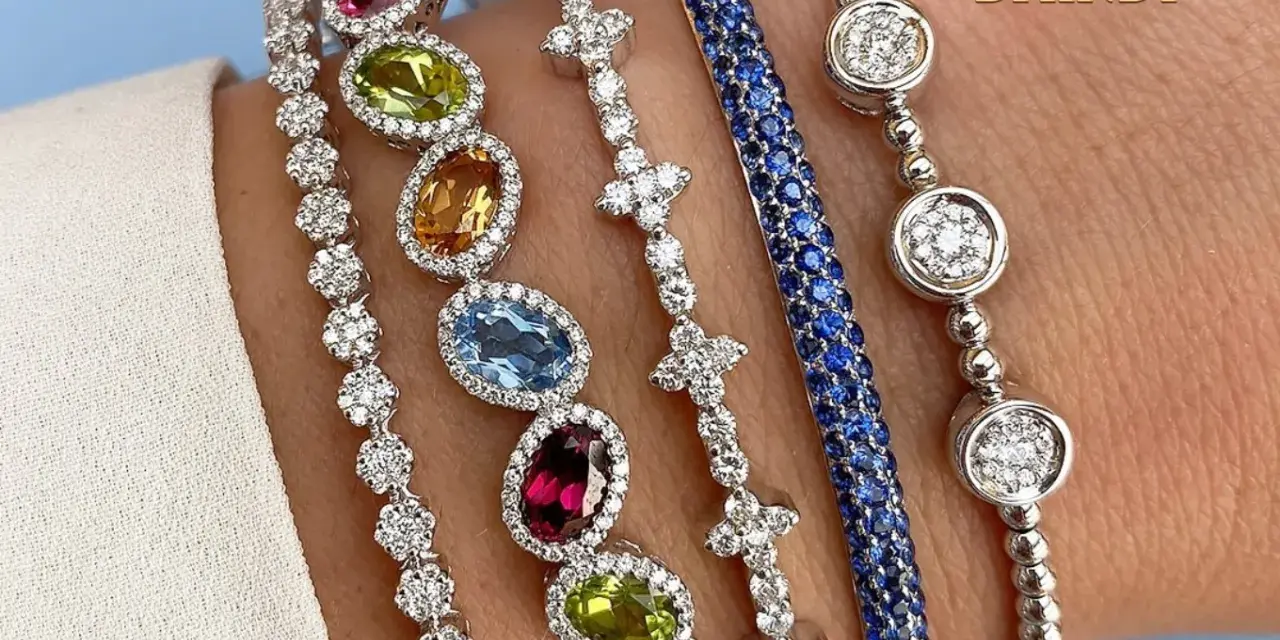
A tennis bracelet has enough sparkle to stand on its own, but it becomes much more interesting when you give it the right company. There are plenty of tennis bracelet stack ideas, yet the best versions always balance shine, texture, and comfort rather than piling on more jewellery for its own sake. In this article, I focus on the combinations that actually work, from clean everyday layers to richer evening pairings, so you can build a wrist stack that feels deliberate.
The quickest way to build a polished wrist stack
- Use the tennis bracelet as the anchor piece, then add one or two supporting bracelets.
- Mix smooth, textured, and flexible pieces so the stack has rhythm rather than repetition.
- Keep one metal dominant and use another as an accent, not a second full theme.
- Leave enough room for comfort; a stack that pinches will not get worn often.
- Pair a busy wrist with simpler rings, earrings, and necklaces so the whole look stays balanced.
- Choose smoother settings if your tennis bracelet has exposed stones or prongs.
What makes a tennis bracelet stack look intentional
I always start with hierarchy. A tennis bracelet already brings a strong visual line, so it should usually act as the anchor rather than one more piece competing for attention. As Brilliant Earth notes, a tennis bracelet works well as the foundation of a stack, and that matches how I style it: one clear focal point, then supporting pieces around it.The stack looks intentional when each bracelet has a job. One piece gives sparkle, another adds structure, and a third, if you use one, softens the whole arrangement with movement or texture. When all three pieces sparkle equally or share the same width, the wrist starts to look busy instead of styled.
In practice, I rarely push a stack beyond two or three bracelets unless everything is very slim. That gives enough presence without turning the wrist into a crowded display. Once you have that framework, the next step is choosing combinations that feel polished rather than accidental.
Four stack formulas I would actually wear
If you want something you can copy immediately, I would begin with one of these formulas. They are simple, but that is exactly why they work: each one creates contrast without losing the refined feel that makes a tennis bracelet special.
| Stack formula | Best for | Why it works | What to watch for |
|---|---|---|---|
| Classic polished | Office wear, dinners, smart-casual outfits | A tennis bracelet plus a slim chain and a plain bangle gives sparkle, movement, and structure in equal measure. | A bangle that is too chunky can overpower the delicate line of the bracelet. |
| Modern mix | Everyday wear | Pairing a tennis bracelet with a watch and a fine chain bracelet feels practical but still dressed up. | Keep the watch face modest, or the wrist loses its balance. |
| Soft contrast | Weddings, romantic looks, lighter fabrics | A pearl bracelet or a pale gemstone piece softens the sparkle and makes the stack feel less rigid. | Choose restrained pearls or stones; oversized ones can make the wrist feel top-heavy. |
| Double line | Evening events, formal dressing | Two tennis bracelets of slightly different widths create a luxurious effect without needing extra motifs. | Keep the rest of the jewellery minimal, because this formula is already visually rich. |
I like these formulas because they solve different style problems. The classic polished stack is the safest choice if you want something elegant and unfussy. The modern mix feels more lived-in and is usually the one I suggest for daily wear. The soft contrast and double-line versions are stronger statements, so they work best when the rest of the outfit is simple.
Once you know which formula suits the occasion, you can start shaping the look with metal and texture choices.
How to mix metals and textures without losing the point
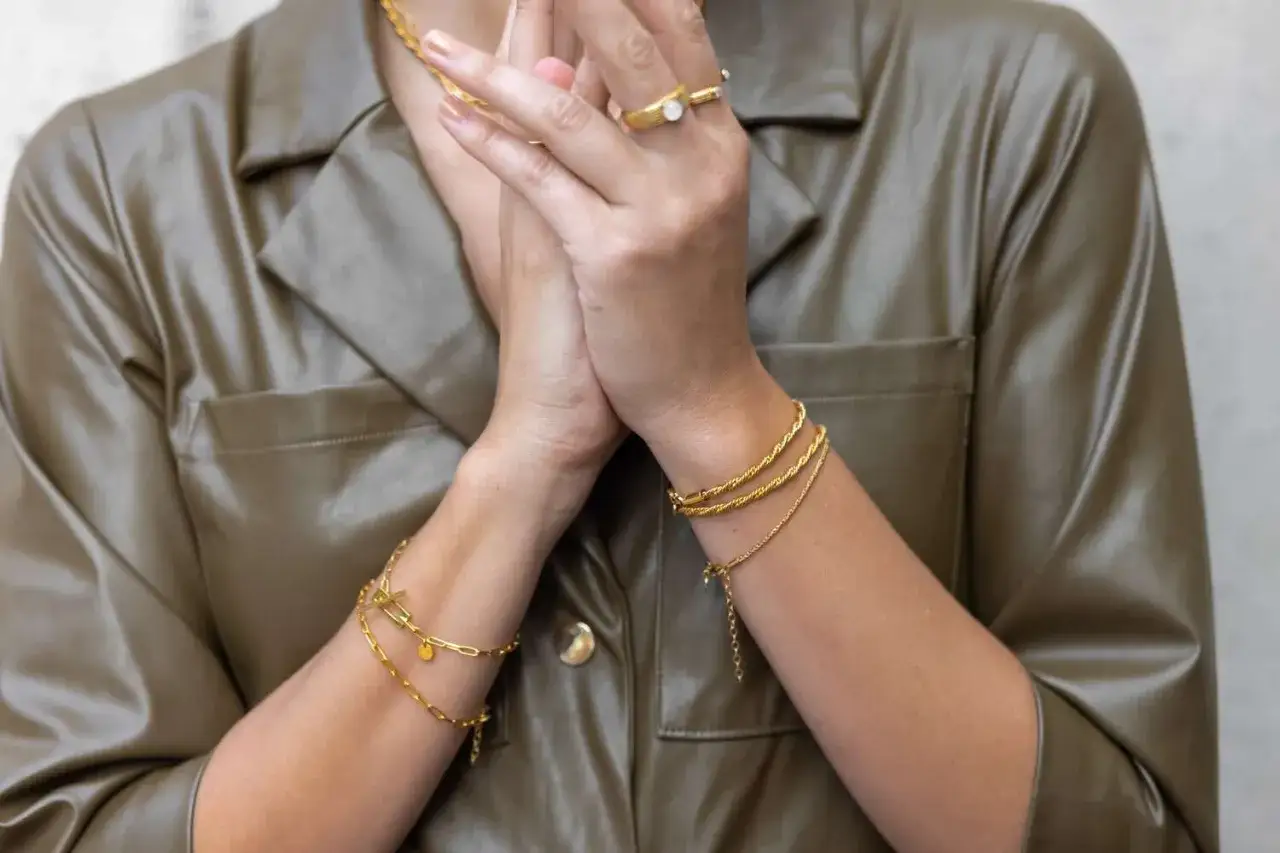
Mixing metals is easiest when one tone clearly leads. If your tennis bracelet is white gold or platinum, I would usually let that metal dominate and use yellow gold as the accent. If the bracelet is yellow gold, a single white-gold chain or bangle can keep the stack from feeling too uniform. A 70/30 balance is a useful styling rule, even if it is not a law.
Texture matters just as much as colour. A polished bangle next to a diamond tennis bracelet creates a clean, almost tailored contrast. A curb chain or fine rolo chain adds more movement. A cuff introduces weight and makes the stack feel stronger. The point is not to collect every finish at once; it is to choose two or three surfaces that make one another look sharper.
I avoid too many highly reflective pieces together because the wrist starts to flash from every angle without any pause. One smooth piece, one sparkling piece, and one textured piece is usually enough. That combination feels considered and works especially well when you want the jewellery to complement, not compete with, the rest of the outfit.
How to pair the wrist with rings, earrings, and necklaces
The wrist does not live alone, so the stack should make sense with the rest of the jewellery. If the bracelet stack is strong, I usually simplify the hands, ears, and neckline. That keeps the overall look elegant, which is especially useful for British weddings, dinners, and evening events where the outfit often already has a clear point of view.
| If the wrist stack is... | Best ring choice | Best earring choice | Best necklace choice |
|---|---|---|---|
| Sparkling and layered | A slim band, signet, or understated eternity ring | Studs or small hoops | A fine chain or no necklace at all |
| Mixed metal and textured | One sculptural ring in the dominant metal | Medium hoops or small drops | A simple pendant that echoes one metal tone |
| Two tennis bracelets | Plain band only, if any | Minimal studs | Skip the necklace if the neckline is already busy |
My rule is straightforward: if the bracelet stack is doing the heavy lifting, the rest of the jewellery should support it. If the wrist is minimal, then you can afford bolder earrings or a more noticeable necklace. That exchange between areas of the body is what keeps the whole look coherent.
There is one useful exception. If you are wearing a very simple tennis bracelet on its own, then a more expressive earring or pendant can carry the outfit without making the wrist feel underdressed. Balance matters, but it does not have to be symmetrical.
Fit, comfort, and durability rules that matter
Good styling falls apart if the bracelet is uncomfortable. VRAI’s advice to leave enough space for one finger is a sensible test, because a tennis bracelet should move slightly without sliding around the wrist. I would also try the stack on the wrist you use least during the day first, then see how it feels when you type, reach, or put on a coat.
The other practical detail is the bracelet’s construction. Flexible tennis bracelets are easier to layer than rigid pieces, and smoother settings are generally kinder to neighbouring bracelets. If your tennis bracelet has more exposed prongs, I would avoid pairing it with rough-edged cuffs or heavily textured bangles that might rub against the stones.
Fit is where most people get the proportions wrong. A bracelet that is too tight looks neat for five minutes and then becomes annoying. A bracelet that is too loose knocks into everything else and can twist the stack out of line. Standard lengths often sit around 6.5 to 7.5 inches, but the exact number matters less than how the piece actually sits on your wrist.
- Leave a small amount of movement, but not enough for the bracelet to flop over the hand.
- Keep rigid pieces smooth if they sit next to a stone-set bracelet.
- Remove the stack for the gym, swimming, gardening, and anything that creates impact or friction.
- Check how the bracelets sound as well as how they look; clinking is often a sign that the stack is too crowded.
Once fit and wearability are sorted, the final step is making the whole arrangement feel finished rather than assembled.
The small styling choices that make the whole look feel finished
The most convincing stacks usually do less, not more. I pay attention to where the eye lands first, whether there is enough negative space around the bracelets, and whether the sleeves, rings, and necklace are all asking for attention at the same time. A clean wrist stack looks expensive because it looks edited.
- Let one bracelet be the focal point.
- Repeat a metal tone once or twice, not everywhere.
- Use one bracelet with movement to soften the harder shapes.
- Keep the stack lighter when the outfit already has embellishment.
- Choose pieces that look good both together and separately.
If I had to narrow the whole approach down to one principle, it would be this: give the tennis bracelet a clear role, then let every other piece support that role. When the proportions are right, even a mixed-metal wrist feels calm, modern, and easy to wear.