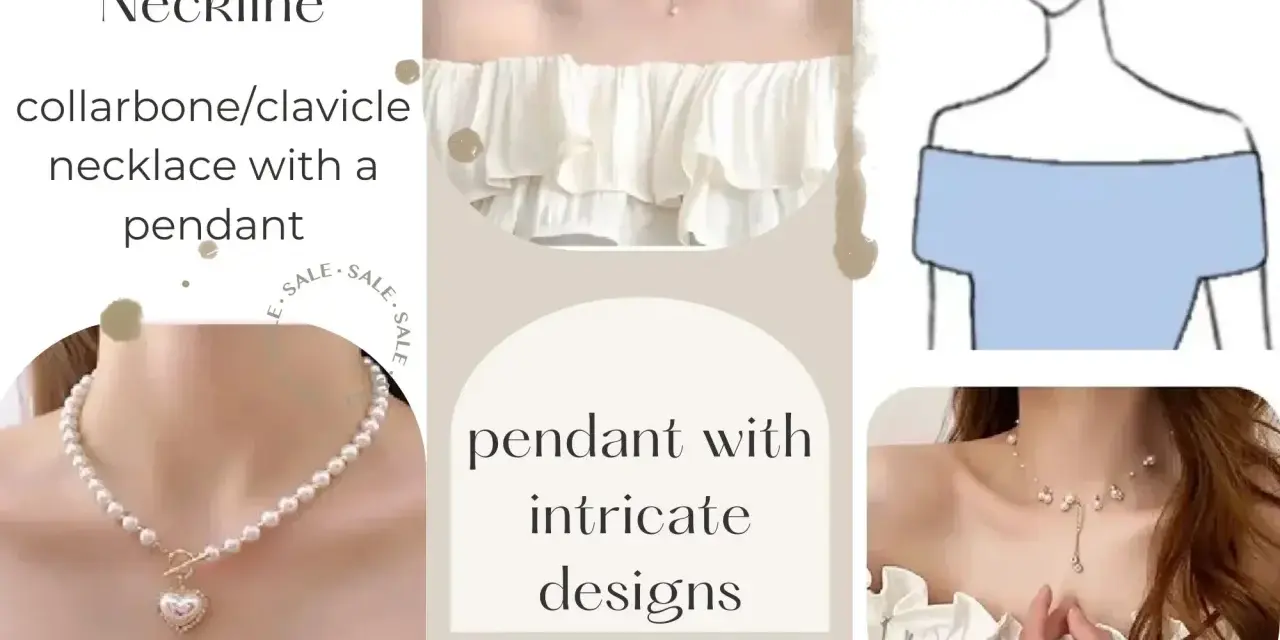
The right necklace can sharpen a neckline, soften a strong angle, or add just enough focus to keep an outfit from feeling unfinished. I like to treat the neckline first and the necklace second, because that order removes most of the guesswork. This guide shows the pairings that work most reliably, how necklace length changes the result, and when it is better to leave the neck bare.
The easiest rule is to let the neckline decide the necklace length
- Open necklines usually work best with short to mid-length pieces that echo the shape of the opening.
- Higher necklines need either a longer pendant, a long chain, or no necklace at all.
- One clear focal point usually looks better than forcing a necklace, earrings, and neckline detail to compete.
- Layering works best on plain tops and simple dresses; it gets crowded fast on embellished necklines.
- Scale matters: a delicate chain can disappear on knitwear, while a heavy statement piece can overpower a fine fabric.
How I read a neckline before choosing a necklace
When I choose jewellery for an outfit, I do not start with the necklace. I start by reading the neckline’s shape, depth, and visual weight. A neckline that opens the chest, like a V or scoop, usually wants a necklace that follows that line. A higher or straighter neckline, by contrast, often needs a longer vertical drop or no necklace at all, because a short chain can feel crowded against the fabric.
I also look at what the neckline is already doing. If it has ruffles, lace, embroidery, a bow, or an interesting collar, the necklace should usually step back. If the dress or top is simple, the jewellery can carry more of the styling work. That is the real trick: not dressing the neck for its own sake, but making the jewellery feel like part of the garment rather than an extra layer pasted on top of it. Once that logic is clear, the pairings below become much easier to use.
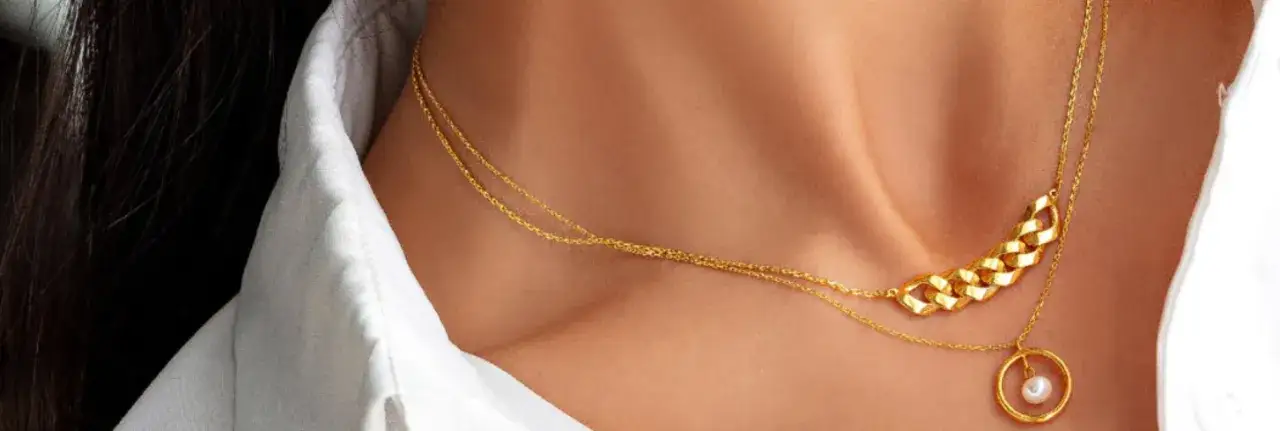
The necklace pairings I use most often
| Neckline | Best necklace direction | Why it works | Watch out for |
|---|---|---|---|
| Strapless | Choker, collar, or a short pendant that rests at the collarbone | Frames bare skin cleanly and keeps the eye near the face | Very long chains can feel disconnected unless the look is intentionally dramatic |
| Sweetheart | Soft pendant or drop that echoes the curve | Repeats the neckline’s shape without fighting it | Heavy geometric pieces can make the line feel less graceful |
| V-neck | Pendant or lariat that follows the V | Creates a longer, leaner line through the centre of the outfit | A pendant that sits too high can look awkwardly suspended |
| Scoop neck | Rounded pendant or princess-length chain | Sits inside the open space in a natural way | A necklace that is too short may compete with the curve of the neckline |
| Square neck | Simple pendant or short geometric piece | Echoes the structured edges and keeps the look crisp | Overly ornate designs can make the neckline feel busy |
| Off-the-shoulder | Choker, collar, or no necklace with stronger earrings | Keeps attention at the shoulders and collarbone | Large necklaces can crowd the open space quickly |
| Crew neck | Long pendant, layered chains, or a piece that sits clearly below the collar | Creates vertical movement against a strong horizontal line | Very short necklaces can disappear against the neckline |
| Turtleneck or polo neck | Opera length, rope chain, or no necklace | Short pieces usually get lost against the fabric; longer lines add contrast | Thin chains can vanish completely on heavy knitwear |
| Button-down shirt | Open collar with a pendant, or layered chains over the shirt | Adds shape without fighting the placket | Too many layers can look accidental rather than styled |
| Halter or one-shoulder | Minimal jewellery, or a very considered long line if the cut allows it | Lets the neckline remain the main feature | These cuts can look crowded very quickly |
For most everyday outfits, I find the safest approach is to let the neckline either be echoed or contrasted, not both at once. A curved neckline invites softness. A straight or high neckline often needs length or restraint. That is the bridge into necklace length, which is where a lot of otherwise good outfits go slightly off.
Necklace length, drop and scale make the difference
People often talk about necklaces as if they are simply short, medium, or long, but the actual length changes the whole read of an outfit. The common necklace lengths are useful because they solve different problems:
- 14 inches / about 35.5 cm often sits as a collar and works best with open-neck tops or strapless shapes.
- 16 inches / about 40.6 cm sits as a choker or near-choker and can work across many necklines, especially if you want the jewellery to feel close to the neck.
- 18 inches / about 45.7 cm is the classic princess length and usually rests on the collarbone, which makes it the most forgiving everyday choice.
- 20 inches / about 50.8 cm drops a little lower and works well with crew necks, shirts, and knitwear that need more presence.
- 24 inches / about 61 cm moves into opera territory and helps balance high necklines or evening looks.
- 30 to 34 inches / about 76 to 86 cm is rope length, which can feel elegant, dramatic, or doubled up depending on the piece.
The part I would not ignore is the drop, meaning where the pendant actually lands on the body. A necklace can be the right total length and still fail if the pendant sits exactly at the wrong point, such as right on a neckline seam or just below a garment detail. If you want one versatile buy, an 18-inch chain is usually the safest base. If you want more range, I would add a 20-inch pendant and a longer 24-inch piece so you can move between open necklines and higher cuts without starting over every time. From there, layering becomes a matter of intention rather than rescue.
Layering works best when the outfit is simple enough to support it
Layered necklaces can look effortless, but only when the clothes give them enough room to breathe. In practice, I keep most stacks to two or three pieces. Beyond that, the result often starts to feel tangled or indecisive unless each necklace is clearly different in texture, length, and weight.
The simplest way to layer is to keep the spacing deliberate. I usually aim for roughly 2 to 3 inches, or about 5 to 7.5 cm, between chains so they do not sit on top of each other. A fine chain, a mid-weight pendant, and one slightly longer line can work beautifully together. What rarely works is three necklaces of the same weight at nearly the same length; that just creates visual noise.
- Layer over a plain crew neck if you want the jewellery to become the focal point.
- Layer over a button-down shirt if you want a polished but relaxed result.
- Layer over a simple V-neck if you want the arrangement to follow the neckline naturally.
- Avoid layering over lace, ruffles, heavy beading, or ornate collars unless you want a deliberately maximal look.
In 2026, I still think the strongest layered looks feel edited rather than overloaded. That matters especially in UK wardrobes, where knitwear, tailoring, and shirt dressing tend to do a lot of work already. If the outfit is pulling hard in one direction, the necklace should usually support it rather than compete with it.
The details that decide whether the look feels finished
Once the neckline and length are sorted, the final result comes down to styling details that people often overlook. These are the ones I check most often:
- Fabric weight: silk, satin, and crisp cotton can handle cleaner, lighter jewellery; chunky knits usually need more substance.
- Hair position: if hair is up, shorter necklaces read more clearly; if hair is down, a pendant often needs more length or a stronger shape to stay visible.
- Metal tone: cool metals tend to feel sharper against black, white, and cool colours, while warmer gold tones soften cream, camel, and richer shades.
- Earrings: if the necklace is doing a lot of work, keep earrings quieter; if the earrings are statement pieces, let the necklace step back.
- Body balance: a vertical chain can lengthen the torso visually, while a short collar draws attention higher up and frames the face.
The most useful question I ask myself is simple: do I want the jewellery to frame the face, lengthen the body line, or soften the neckline? It rarely does all three at full volume. When you try to force that, the look usually loses focus. When you pick one job and let the other elements stay quiet, the outfit looks more deliberate and far more expensive, even if the necklace itself is modest.
A two-minute method I use when getting dressed fast
- Identify the neckline as open, curved, straight, or high.
- Decide what the necklace should do: echo the shape, add length, or leave the area clean.
- Pick the shortest piece that does the job properly.
- Check the result from a little distance, because jewellery can look very different in close-up than it does in a full-length mirror.
If I were building a small, versatile jewellery wardrobe for everyday use, I would start with three pieces: an 18-inch princess chain, a 20-inch pendant, and a 24-inch slim drop. That combination covers strapless dresses, shirts, crew necks, and most knitwear without repeating the same look. My last practical rule is the one people forget most often: try the necklace with the actual top, bra straps, collar, or dress you plan to wear. Those details change the line more than you expect, and they are usually the difference between a necklace that merely fits and one that genuinely finishes the outfit.