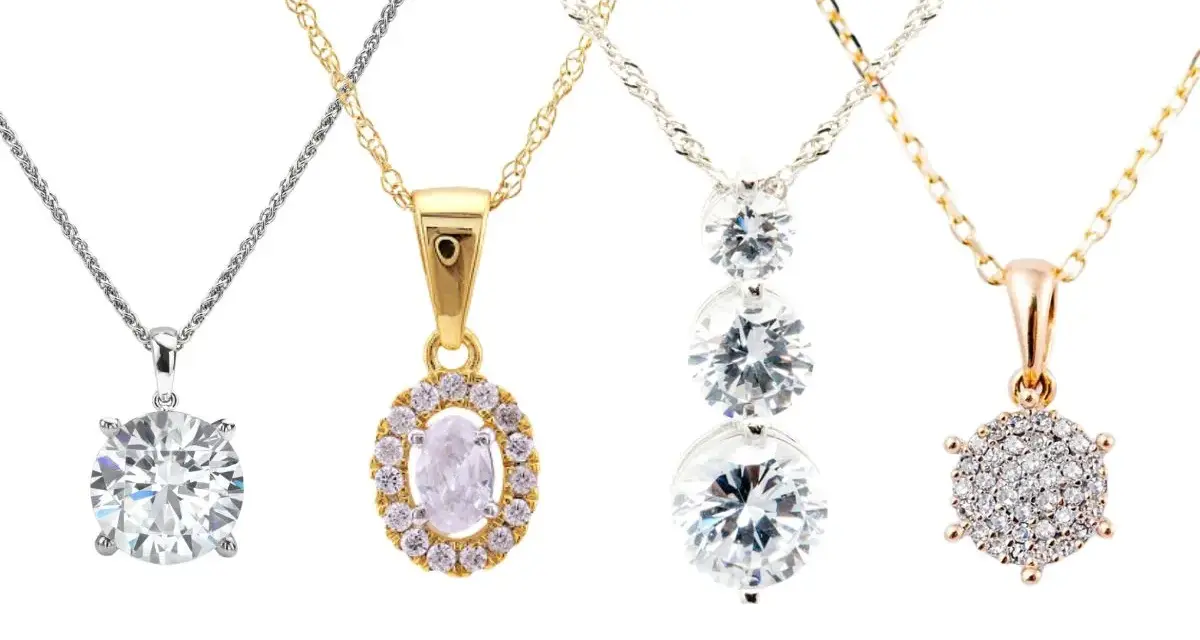
Diamond necklaces look simple at first glance, but the details underneath decide whether they feel refined, fussy, or genuinely useful. I find the main types of diamond chains split into two layers: the chain construction and the way the diamonds are arranged, and that distinction changes everything from comfort to price. This guide walks through the styles people actually compare, how they wear, what is worth paying for in the UK, and how to keep the piece looking clean rather than tired.
The fastest way to narrow the choice is to match sparkle, structure, and wearability
- Tennis and riviera styles give the strongest all-over sparkle, but they also ask for the biggest budget and the most care.
- Station necklaces and solitaire pendants are the easiest everyday options because they are lighter, subtler, and simpler to layer.
- Cable and box chains are the most practical bases for pendants; rope, wheat, and Singapore chains add more texture and visual interest.
- In the UK, 9ct gold is often the value choice, while 18ct gold and platinum sit higher up the fine-jewellery ladder.
- A 40 cm or 45 cm length solves more wardrobe problems than most people expect, especially for shirts, knits, and V-necks.
- Lab-grown diamonds can make larger-looking styles more accessible without changing the design language of the necklace.
What people usually mean by diamond necklace styles
The first thing I clarify is that a diamond necklace can be built in very different ways. Sometimes the diamonds are the whole story, as with a tennis necklace. Sometimes they are accents along a chain, as in a station or by-the-yard design. And sometimes the chain itself matters just as much as the stones, especially when the diamonds hang from a pendant.
That is why a useful comparison starts with diamond layout and chain construction, not just with the word “diamond” in the product name. A diamond-cut chain, for example, is not a chain made of diamonds at all; it is a metal chain with faceted surfaces that catch the light. It can be attractive, but it is a different category from a necklace built around actual stones.
Once that split is clear, the rest becomes much easier to read. A shopper is not just asking, “How sparkly is it?” The better questions are: How much does it weigh? Does it sit flat? Will it layer well? Does it look like everyday jewellery or occasion jewellery? That is the lens I use in the rest of this guide.
The main styles and where each one fits
The clearest way to compare diamond necklace styles is by how much of the necklace is covered in diamonds and how loudly the piece speaks. Some styles whisper. Others announce themselves across the room. Neither is better; they simply serve different wardrobes.
| Style | How it looks | Best for | My take |
|---|---|---|---|
| Solitaire pendant | One diamond on a fine chain | Everyday wear, gifting, understated polish | The safest all-rounder; it works with almost everything and never feels overdone. |
| Station or by-the-yard necklace | Small diamonds spaced along the chain | Layering, office wear, light sparkle | Very wearable and quietly elegant, especially if you want movement rather than drama. |
| Tennis or riviera necklace | A continuous line of matched diamonds | Evening wear, statement dressing, formal occasions | The most unmistakable sparkle; beautiful, but it demands budget and careful handling. |
| Diamond choker | Sits close to the neck | Open necklines, fashion-led looks, special occasions | Strong and modern, but not always the easiest piece to wear all day. |
| Decorative pendant necklace | A shaped motif, halo, or symbolic pendant with diamonds | Personal style, gifts, more expressive looks | Good if you want character, though highly themed designs can date faster than classics. |
In practice, I see most people end up choosing between a solitaire, a station piece, and a tennis-style necklace. Those three cover the broadest range of budgets and wardrobes. If you want one necklace that disappears into daily life and still looks polished, the solitaire or station format is usually the smartest place to start. If you want the necklace to be the outfit, the tennis style takes that role immediately.
The other useful distinction is subtle versus continuous sparkle. Station necklaces break the diamonds up and make the chain part of the design. Tennis necklaces place the diamonds at the centre of attention. That difference sounds small, but it changes the whole mood of the piece.
How the chain construction changes the feel
Once the diamond layout is decided, the chain itself does a lot of the heavy lifting. It changes how the necklace moves, how it sits against the skin, and how much it can tolerate daily wear. If I were choosing a diamond pendant for real-world use, I would pay almost as much attention to the chain as to the stone.
| Chain type | Character | Why I like it | Watch out for |
|---|---|---|---|
| Cable chain | Classic, light, understated | Durable, easy to wear, and ideal for pendants around 1-2 mm wide | Can look too plain if you want the chain itself to be part of the design |
| Box chain | Clean, geometric, modern | Resists twisting and gives a neat, structured line | May feel a little rigid compared with softer weaves |
| Rope chain | Textured and reflective | Strong and visually rich, so it can carry more presence on its own | Can overwhelm a very small pendant |
| Wheat or spiga chain | Woven, fluid, elegant | Looks refined and often wears beautifully as a solo chain | Fine versions need sensible handling because the structure is intricate |
| Singapore chain | Twisted, lively, slightly fluid | Adds movement and catches light nicely | Not my first choice for pendants that must sit perfectly flat |
| Franco chain | Dense, substantial, controlled | Very strong and good for a more solid feel | Heavier look, so it is better when you want presence rather than delicacy |
The rule I keep coming back to is simple: the more intricate the chain, the less likely it is to disappear visually. That can be an advantage if the chain is meant to be seen, but it is a drawback if you want the diamond to stay in focus. For pendants, cable and box chains are usually the easiest pairing. For a chain that is meant to stand alone, rope, wheat, or Singapore can be more interesting.
There is also a practical side to this. Open, jagged, or highly textured links can snag clothing more easily than smoother ones. If a necklace is going to be worn often with knitwear, blouses, or tailored shirts, I favour smoother constructions because they are easier to live with. That brings us naturally to the part most people overlook: length.
Which length suits which neckline
Chain length is not decoration; it is placement. The same necklace can look elegant at 40 cm and oddly lost at 50 cm, or vice versa. In the UK, the most useful lengths are still the familiar ones: 35 cm, 40 cm, 45 cm, and 50 cm, which roughly map to collar, choker, princess, and matinee placement.
| Length | Typical placement | Best with | Why it works |
|---|---|---|---|
| 35 cm / 14 in | Very close to the throat | High necklines and dramatic evening looks | Creates a strong, fashion-forward frame |
| 40 cm / 16 in | Short choker length | Off-the-shoulder, sweetheart, and clean open necklines | Puts the diamonds high where they read clearly |
| 45 cm / 18 in | Princess length on the collarbone | Most everyday outfits, especially shirts and knitwear | The most versatile single length I would recommend |
| 50 cm / 20 in | Matinee length | Layering and deeper necklines | Creates a more relaxed, elongated line |
For a crew neck or a fine knit, I tend to prefer 45 cm because it sits in a visible, flattering zone without competing with the clothing. For a V-neck, I like a pendant that follows the V rather than fighting it. For a strapless dress, a shorter necklace or choker can feel deliberate and clean. And if layering is the goal, a station necklace plus a shorter pendant almost always looks more considered than two heavy pieces trying to dominate each other.
If you only want one length to begin with, 45 cm is the least risky choice. It works with more necklines than people expect, and it gives you enough room to layer later. From there, the real buying decisions start to matter: metal, setting, budget, and whether you want a natural or lab-grown diamond.
What I would check before buying in the UK
When I compare diamond necklaces for UK buyers, I start with the unglamorous details because those are the ones that determine whether the piece wears well. The hallmark, the clasp, the metal, and the setting tell you far more about long-term satisfaction than a polished product photo ever will.
| What to check | What I would usually choose | Why it matters |
|---|---|---|
| Metal | 9ct gold for value, 18ct gold for a richer finish, platinum for a premium feel | Metal affects durability, weight, colour, and price more than many first-time buyers realise |
| Clasp | Lobster clasp for most daily-wear pieces | A secure clasp matters more as the necklace gets heavier or more valuable |
| Setting style | Bezel for protection, prong for maximum light, pave for dense sparkle | Each setting changes both the look and the maintenance level |
| Diamond type | Natural for tradition, lab-grown for better scale at the same budget | The design may look similar, but the value equation is very different |
| Price band | Under £500, £500-£1,500, £1,500-£5,000, and £5,000+ | These bands usually separate fashion pieces from serious fine jewellery |
Very roughly, I see the lower end of the UK market filled by silver, plated, or very small diamond accents, while the £500-£1,500 range often covers entry-level gold or better lab-grown pieces. Once you move above £1,500, the choices become more interesting: better metal, more stone coverage, or both. At £5,000 and up, you are usually looking at more substantial tennis styles, platinum pieces, or branded work with stronger finishing.
I would not treat carat weight as the only measure of quality. A well-built 0.50 ct station necklace can look more elegant than a poorly finished 2 ct piece. Clean articulation, balanced proportions, and a chain that does not fight the pendant often matter more than the headline number. In other words, the best necklace is usually the one whose engineering you forget about while wearing it.
The details that keep a diamond necklace looking expensive for longer
Diamond necklaces age well when they are treated like fine machinery, not just ornament. The people who get the most wear from their jewellery are usually the ones who build a few habits around it. I take pieces off before sleep, sport, and perfume, because repeated friction and residue are what make sparkle look duller than it should.
- Store each necklace separately so chains do not knot or rub against each other.
- Clean it with lukewarm water, mild soap, and a soft brush, then dry with a lint-free cloth.
- Check prongs, clasps, and station links every few months, especially on tennis and pavé styles.
- Avoid wearing delicate pieces under heavy knitwear if the chain is prone to snagging.
- Book a professional inspection when the piece starts to sit unevenly or lose its crisp line.
The styles that last longest are not always the loudest ones. A good cable chain, a restrained station necklace, or a thoughtfully made solitaire pendant can outwear much flashier designs because they are easier to maintain and easier to live with. If I had to narrow the whole category down to one principle, it would be this: choose the style that fits your routine first, then let the diamonds do the rest. That is the difference between a necklace you admire and a necklace you actually wear.