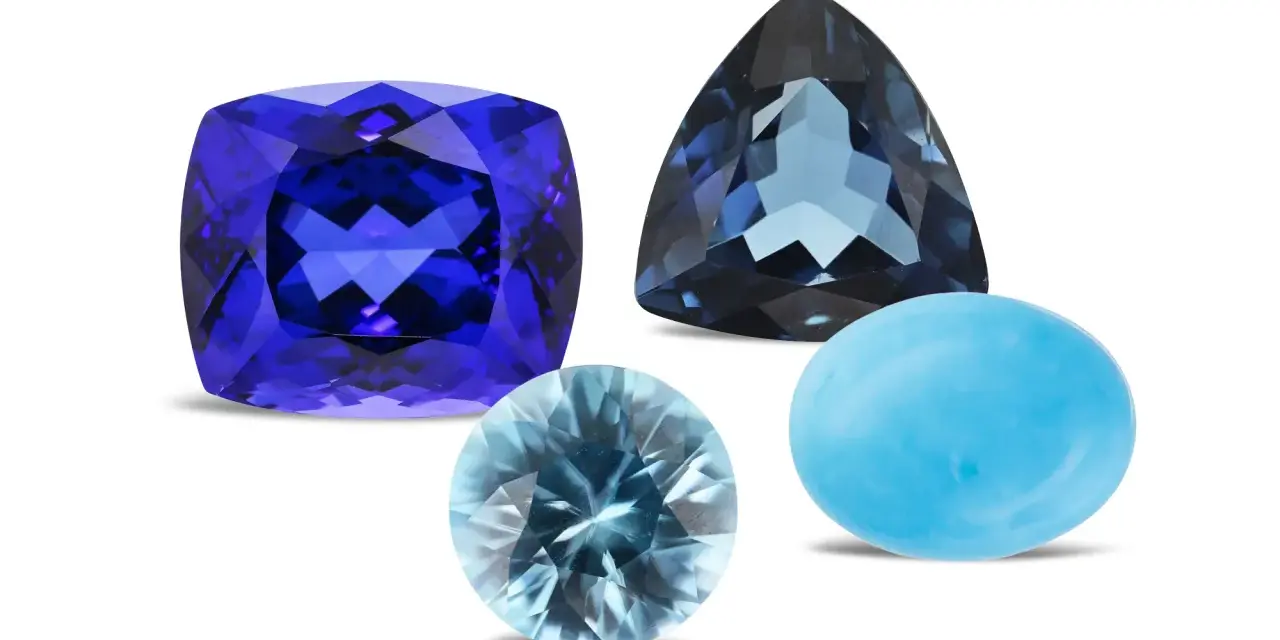
December is unusual in the birthstone calendar because it gives you more than one credible option, and each stone solves a different problem. The answer to what are december birthstones is not a single gem but a small family of blue-leaning stones that vary in history, colour and durability. If you are choosing a gift or comparing options for yourself, it helps to know which stones are traditional, which are modern additions, and which ones are easiest to wear every day.
December birthstones at a glance
- Turquoise, zircon and tanzanite are the core December birthstones in the standard modern list.
- Blue topaz is also widely included by jewellers, especially for shoppers who want a harder and more affordable blue stone.
- Turquoise is the most historic choice, but it needs the gentlest care.
- Zircon gives bright sparkle; tanzanite delivers the richest violet-blue; blue topaz is the most practical everyday option.
- The right choice usually depends on wearability first, then colour, symbolism and budget.
The short answer and why the list varies
In the standard modern list, December’s birthstones are turquoise, zircon and tanzanite. Many jewellers also add blue topaz, which is why the month can look like it has three stones in one guide and four in another. GIA currently presents turquoise, zircon and tanzanite as December’s trio, and also recognises blue topaz in its topaz guide.
That variation is not a mistake. Birthstone lists have changed over time as new gems were discovered, supply changed and jewellery tastes shifted. Once you know that the list is flexible, the month becomes easier to understand rather than more confusing. The next step is seeing why December ended up with this particular mix.
Why December has more than one birthstone
The modern birthstone chart was standardised in 1912, but it was never meant to stay frozen forever. December is a good example of how tradition and practicality overlap: older stones stay because they carry history, while newer stones are added because they fit the colour palette or are easier for modern buyers to wear.
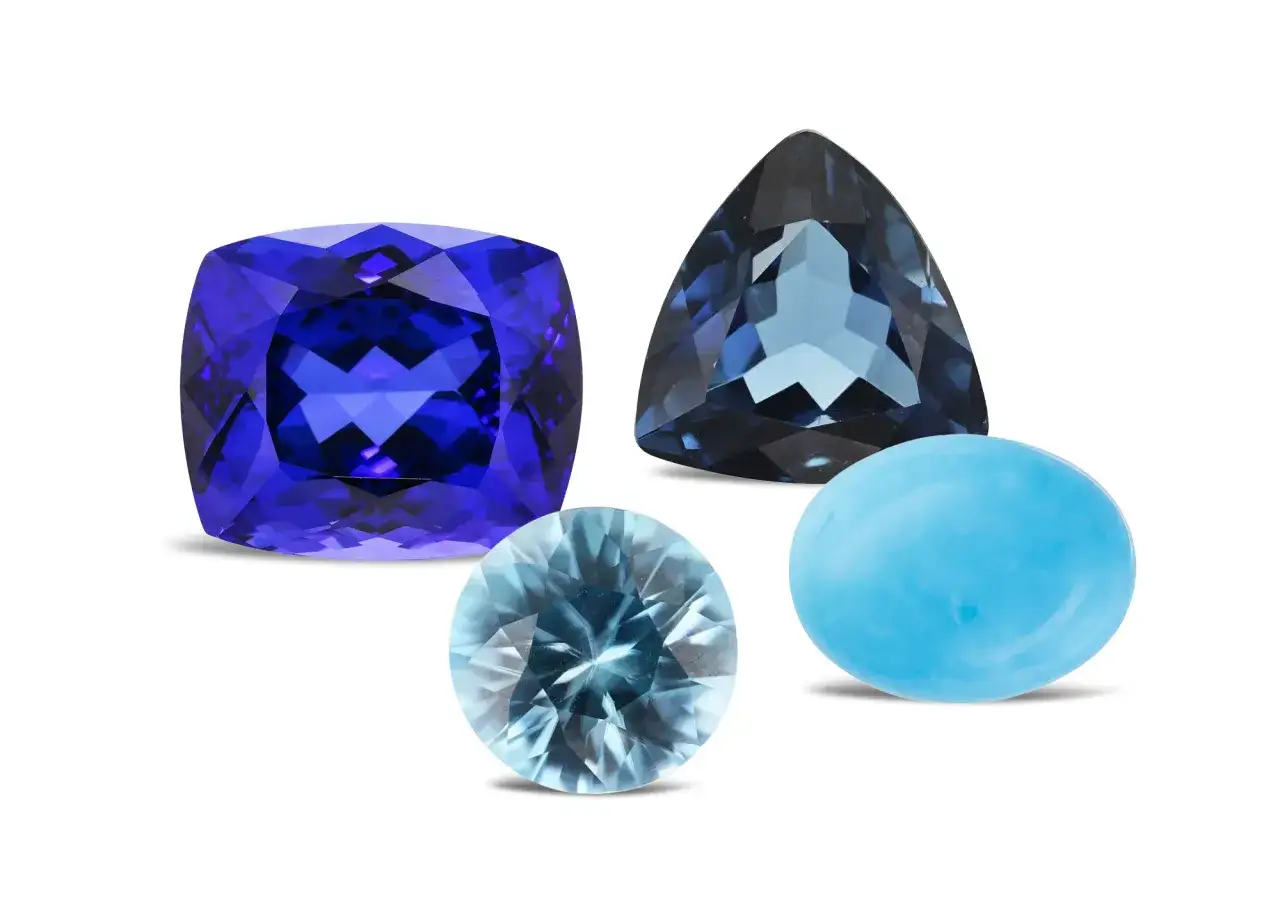
Turquoise is the historic anchor. Zircon has long been prized for its sparkle. Tanzanite is the modern newcomer, discovered in 1967 in northern Tanzania, and it quickly became associated with December because its blue-violet colour fits the month so well. Blue topaz sits slightly outside the traditional trio, but it is useful because it offers the same icy look in a more durable and usually more accessible form. That makes the list less arbitrary than it first appears: each stone solves a different need.
Once you see the logic behind the list, comparing the stones side by side becomes much more useful than memorising names alone.
How the main stones compare in real jewellery
I find a direct comparison more helpful than a general description. The Mohs scale, which measures scratch resistance, does not tell the whole durability story, but it is still a good starting point when you are deciding what belongs in a ring, a pendant or a pair of earrings.
| Stone | Look | Hardness and wear | Best use | Care note |
|---|---|---|---|---|
| Turquoise | Blue to greenish blue, often with dark veining from the host rock | Mohs 5 to 6, porous and fairly delicate | Pendants, earrings and occasional rings | Keep away from perfume, lotion, heat and rough wear |
| Zircon | Bright, lively and often intensely sparkly | Mohs 6 to 7.5, but can be brittle | Dress rings and statement pieces with secure settings | Avoid hard knocks and storage next to harder gems |
| Tanzanite | Violet-blue to bluish violet | Mohs 6 to 7, attractive but not ideal for heavy daily wear | Pendants and protective ring settings | Use warm soapy water; skip steam and ultrasonic cleaning |
| Blue topaz | Clean sky-blue to deeper blue | Mohs 8, the hardest option in this group | Everyday rings, bracelets and gift jewellery | Most blue topaz is treated; avoid sudden heat and harsh cleaning |
If I had to reduce the choice to one rule, it would be this: the softer or more brittle the stone, the more the setting matters. A protective setting can make a noticeable difference for tanzanite and zircon, while turquoise is usually happiest in pieces that do not get knocked around all day.
Which one suits a gift, ring or pendant
The best December birthstone depends on how the jewellery will actually be worn. For a birthday gift that needs to feel classic and meaningful, turquoise carries the strongest sense of heritage. For someone who loves sparkle, zircon is the most overlooked choice and often surprises people with its brilliance. For a modern, elegant look, tanzanite has depth that photographs beautifully and feels more distinctive than a standard blue stone.
For practical everyday wear, blue topaz is the easiest recommendation. It is harder than the other December options and usually easier on the budget, which is why I often think of it as the sensible choice when style matters but durability matters too. In silver or white gold, blue stones look crisp and contemporary; in yellow gold, turquoise feels warmer and more vintage. That metal choice can change the mood of the piece more than people expect.
If the jewellery is meant to be worn often, I would avoid using turquoise in a ring unless the wearer is very careful. A pendant or earring gives the stone a far easier life. That practical distinction leads straight into care, because the wrong cleaning method can undo a good purchase.
How to buy and care for December birthstone jewellery
When I buy any December stone, I ask two questions first: has the gem been treated, and how will the piece be worn? Those two answers tell you far more than the price tag alone. Turquoise is often stabilised or enhanced, and that is not automatically bad, but it does mean the stone may be more sensitive to chemicals and heat. Blue topaz is also commonly treated to achieve its colour, so a seller should be clear about what you are buying.
For cleaning, I keep things simple. Warm water, a little mild soap and a soft cloth are enough for most pieces. I would avoid steam and ultrasonic cleaners for tanzanite, be cautious with zircon, and treat turquoise as a soft, porous gem that should stay away from perfume, hand cream and harsh storage conditions. Separate pouches or lined compartments are worth using, because even harder stones can scratch softer ones when they rattle together.
One last detail matters more than many buyers realise: the setting should suit the stone. A protective setting can make tanzanite far more wearable, and a pendant setting can give turquoise the security it needs without taking away from the colour. In other words, the jewellery design is part of the durability story, not just decoration.
The easiest way to choose the one you’ll actually wear
If you want the most traditional answer, start with turquoise. If you want brilliance, start with zircon. If you want the richest violet-blue, choose tanzanite. If you want the stone that is easiest to live with, blue topaz is usually the most practical pick. That is the simplest way I can answer December birthstones without turning the month into a naming exercise.
My advice is to match the gem to the wearer’s routine before you match it to the symbolism. A birthstone should feel personal, but it should also survive real life, whether that means office wear, occasional evenings out or daily use. Get that balance right, and December’s birthstones stop being a list and become a very good piece of jewellery.