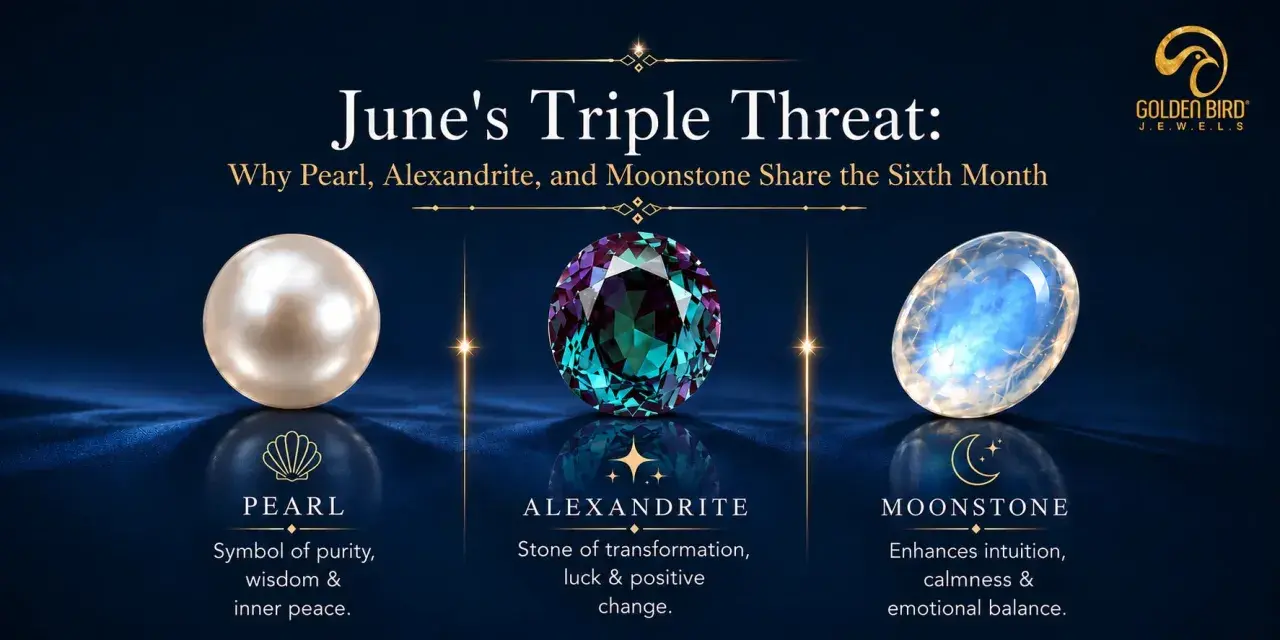
Three stones, three very different buying decisions
- June is unusual because it has three widely recognised birthstones: pearl, moonstone and alexandrite.
- Pearl is the traditional choice, while alexandrite is the rarest and toughest.
- Moonstone sits in the middle for durability, but it still needs more care than harder gems.
- For daily rings, alexandrite is the safest option; pearls are the most delicate.
- Style matters just as much as symbolism, because each stone creates a very different look.
Why June has three birthstones
The June birthstone list is one of the few that does not settle on a single gem. Pearl is the traditional choice, but modern lists also include moonstone and alexandrite, which gives June a wider range of looks, price points and wearability than most months.
I like that flexibility because it makes the month feel personal rather than prescribed. If someone loves calm, luminous jewellery, pearl makes sense. If they want a softer, moonlit effect, moonstone is the better fit. If they want something rare and technically fascinating, alexandrite is the standout.
That variety is useful, but it also means the right answer depends on style, budget and how often the piece will be worn. Once you understand why the list splits three ways, the practical comparison becomes much easier.
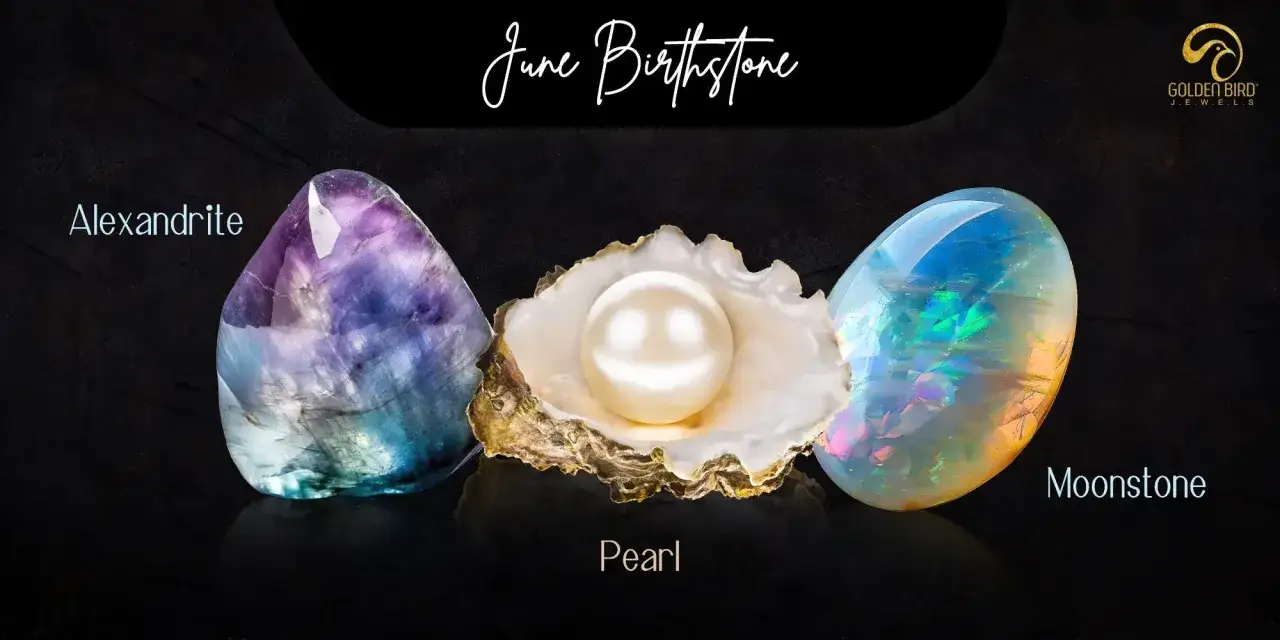
How the three June birthstones differ at a glance
When I compare these stones, I start with appearance and durability rather than symbolism. A beautiful gem that cannot handle the way you live is a poor buy, no matter how romantic its history is.
| Stone | Look | Mohs hardness | Best for | Main caution |
|---|---|---|---|---|
| Pearl | Soft lustre with a gentle, layered sheen from nacre | 2.5-3 | Studs, strands, pendants and occasion jewellery | Scratches easily and dislikes chemicals |
| Moonstone | Milky body colour with a floating inner glow | 6-6.5 | Pendants, earrings and carefully designed rings | Can chip or split if struck hard |
| Alexandrite | Colour change, often green in daylight and red or purplish under warm light | 8.5 | Rings, fine jewellery and pieces meant to be worn often | Fine natural stones can be rare and expensive |
Adularescence is the billowy light effect that makes moonstone look as if something is moving beneath its surface. Nacre is the layered material that gives pearls their characteristic lustre. Alexandrite, meanwhile, is prized for its colour-change effect, which is one of the few gemstone traits people can recognise instantly without a microscope.
Once you can see the differences side by side, the real question becomes how each stone fits a wardrobe and routine.
Which stone fits your style and routine
When I choose a gemstone for someone, I start with how they dress and how hard they are likely to wear the piece. That sounds simple, but it prevents most disappointing jewellery purchases.
Choose pearl if you want timeless restraint
Pearls work beautifully with tailoring, silk shirts, knitwear and formal pieces. They do not need to be stiff or old-fashioned either; a small pearl stud, a narrow strand or a single pendant can look very current when the design is clean. In British wardrobes especially, pearls are easy to wear because they sit comfortably between everyday polish and special-occasion elegance.
Choose moonstone if you want softness and movement
Moonstone has a gentler, more romantic feel. It suits people who like a little mystery in their jewellery, but not too much shine or sharp contrast. I tend to recommend moonstone for pendants and earrings before rings, simply because its beauty is best preserved when it is not knocked around all day.
Read Also: February 18 Birthstone - Amethyst Guide & Jewellery Tips
Choose alexandrite if you want rarity and strength
Alexandrite is the most dramatic of the three. It changes with the light, which gives it real personality, and its hardness makes it much more practical for rings than the other June stones. Natural alexandrite can be extremely rare, so lab-created stones are worth considering if you want the colour-change effect without chasing the collector’s premium.
Style is only part of the decision, though, because these gems also ask for very different care.
How to care for each stone properly
The biggest mistake I see is assuming that all gemstones can be cleaned the same way. That approach is fine for some harder stones, but it is not safe here.
- Pearls: Put them on last and take them off first. Wipe them with a soft cloth after wearing, keep them away from perfume, hairspray and cosmetics, and store them separately so harder jewellery does not scuff the surface.
- Moonstone: Use warm, soapy water and a soft cloth. Avoid ultrasonic and steam cleaners, and be careful with sudden temperature changes. I would also avoid wearing moonstone for sport, gym work or anything likely to involve impact.
- Alexandrite: Warm, soapy water is safe, and ultrasonic or steam cleaning is usually acceptable for untreated stones. If the stone has fractures or any filling, treat it more gently and ask a jeweller before using stronger cleaning methods.
If you remember only one rule, make it this: pearls need the gentlest routine, moonstone needs protection from knocks, and alexandrite needs sensible but not obsessive care. That difference is exactly why the setting matters so much.
Which jewellery settings make each stone shine
A good setting protects the stone and controls the overall look. A bad setting does the opposite: it makes a beautiful gem feel awkward, overexposed or oddly dressed up.
| Stone | Best settings | Why it works | What I would avoid |
|---|---|---|---|
| Pearl | Studs, pendants, strands, low-profile rings | Lets the lustre do the work and keeps the gem elegant | Highly exposed everyday rings and rough stacking |
| Moonstone | Bezel settings, protective halos, pendants and earrings | Reduces the chance of chips and keeps the face of the stone safe | High prongs that leave the gem exposed on all sides |
| Alexandrite | Rings, fine pendants and refined cocktail pieces | Shows the colour shift clearly and handles regular wear better | Overcrowded settings that hide the colour change |
A bezel, for example, is a metal rim that wraps around the edge of the gemstone. It adds security, which is why I like it for moonstone and for any piece that will see more than occasional wear.
With the setting sorted, the final check is making sure you buy the right quality for the right type of piece.
A smarter checklist before you buy a June piece
Before I buy any June-themed jewellery, I check a few practical things instead of relying on the label alone. That usually saves both money and disappointment.
- For pearls, look at lustre, surface quality, shape, size, nacre thickness and matching if the piece is a pair or a strand.
- For moonstone, look for a clean body colour and a strong, even glow rather than a dull milky look with no movement.
- For alexandrite, ask whether the stone is natural or lab-created and whether the colour change is visible in both daylight and indoor light.
- For rings, check how high the stone sits above the finger. A lower, better-protected setting usually wears more comfortably.
- For gifts, think about the wearer’s wardrobe first. Pearls suit classic dressing, moonstone suits softer and more romantic styles, and alexandrite suits someone who likes a little drama.
If you are buying in the UK and you are unsure, I would usually lean towards a pearl pendant or a small pair of pearl studs. They are easy to wear, easy to gift and difficult to get wrong, which is more useful than chasing novelty for its own sake.
The simplest way to choose the right June stone
If I had to make the choice in real life, I would rank the stones by purpose rather than by beauty. Alexandrite is the best all-round option for a ring, moonstone is the most atmospheric choice for pendants and earrings, and pearl remains the most timeless option for classic jewellery. The best piece is the one that fits the wearer, the occasion and the amount of care it will actually receive.
That is the real value of the June birthstone list: it gives you three different ways to mark the same month, without forcing every buyer into the same style. Choose the stone that matches the life it will live, and it will feel personal for far longer than the birthday it was bought for.