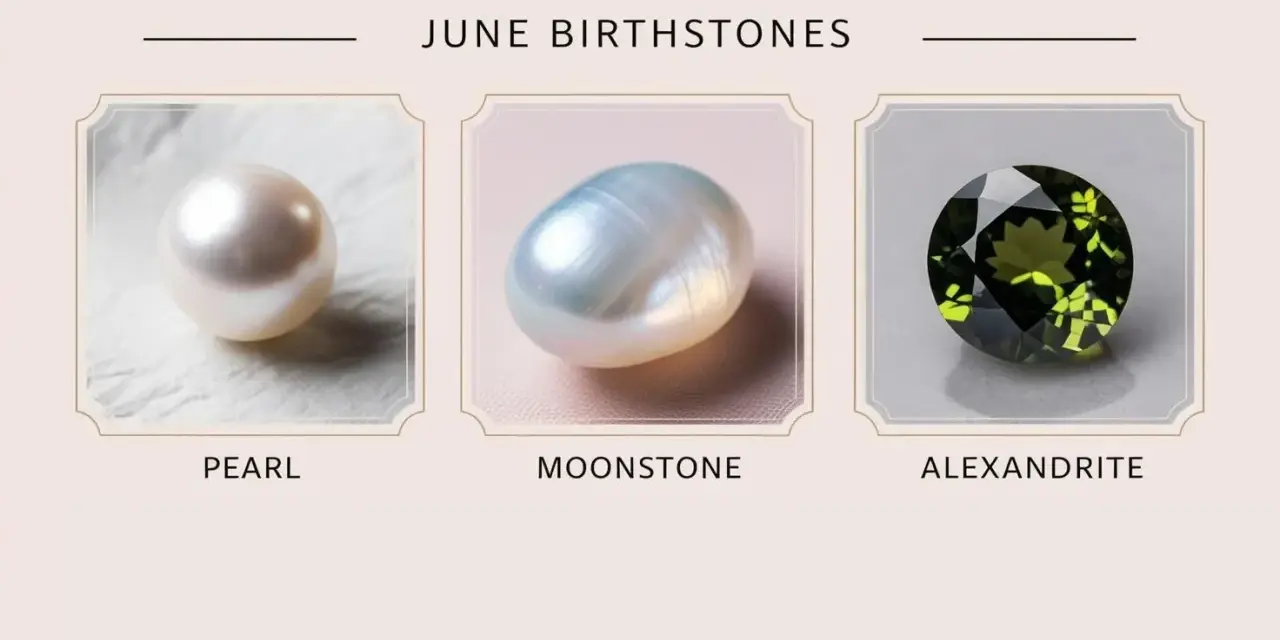
The june birth stine topic is really about one of the most versatile birthstone stories in jewellery: June is linked to pearl, alexandrite and moonstone. That matters because each gem behaves differently, ages differently and suits a different kind of wearer. In this guide, I explain what June’s birthstones are, how they compare, which one works best for everyday jewellery and how to care for each without damaging it.
June has three birthstones, and each one serves a different style and budget
- Pearl is the softest and most traditional choice, with a classic look that works beautifully in necklaces and studs.
- Moonstone gives a glowing, misty effect and is best treated as a delicate-to-moderate wear gem.
- Alexandrite is the rarest and hardest of the trio, and it stands out for its colour change under different light.
- If you want daily wear, the stone matters, but the setting matters just as much.
- The best June piece is the one that matches how often it will actually be worn, not just how pretty it looks in a box.
June is not a single-stone month
June is one of the few birth months with three accepted stones, so the answer is not simply “pearls” or “moonstone”. According to GIA, the trio is pearl, alexandrite and moonstone, which is why June jewellery can feel classic, romantic or strikingly modern depending on the stone you choose.
That variety is useful, not confusing. It means the birthstone can match different tastes, different budgets and different wear patterns, which is exactly why the June birthstone search often leads to more than one good answer. Once that is clear, the real question becomes which stone actually fits the person who will wear it.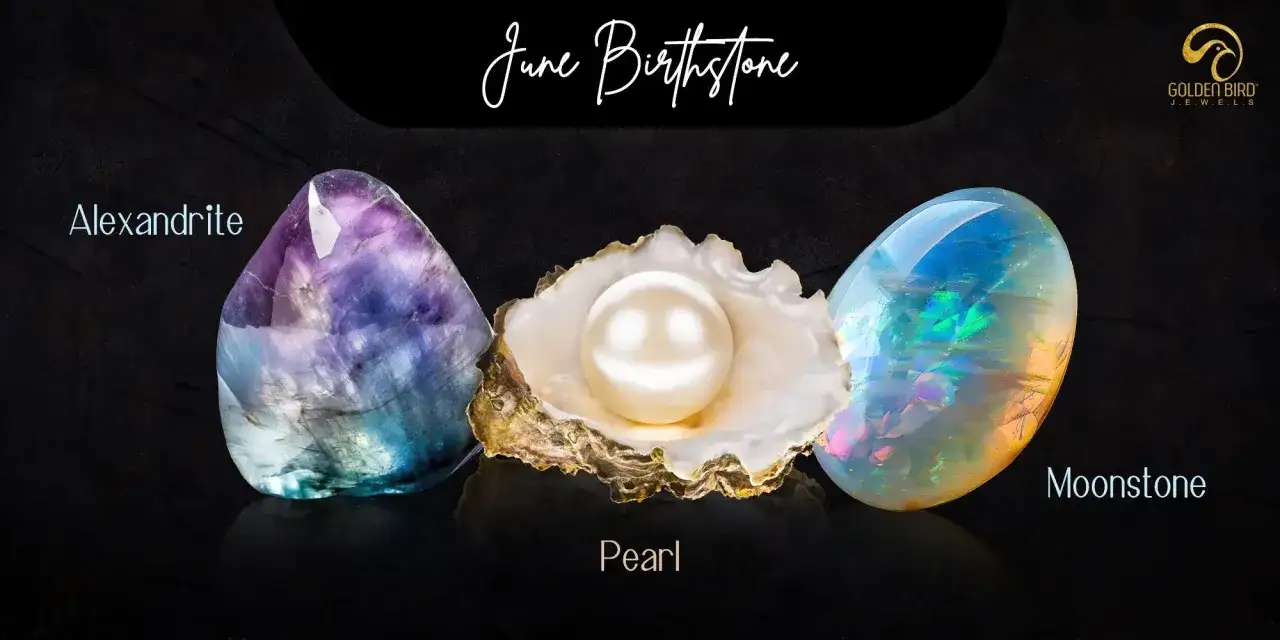
The three June birthstones and what makes each one different
The easiest way to understand June’s birthstones is to compare how they look, how they wear and how much care they need. I find that once people see the differences side by side, their choice becomes much easier.
| Stone | Look | Mohs hardness | Best use | What to know |
|---|---|---|---|---|
| Pearl | Soft lustre, creamy white to black, pink, lavender and more | 2.5-3.0 | Necklaces, studs, bridal pieces, special-occasion rings | Organic and delicate; avoid abrasion, acids and perfume |
| Moonstone | Milky body colour with a floating glow called adularescence | 6.0-6.5 | Pendants, earrings, protected rings | Often cut as a cabochon to show the glow; needs gentle cleaning |
| Alexandrite | Green to bluish green in daylight, red to purplish red under incandescent light | 8.5 | Everyday rings, heirloom pieces, statement gifts | Rare, durable and highly prized for its colour change |
My shorthand for the trio is simple: pearl is the traditionalist, moonstone is the mood piece and alexandrite is the collector’s gem. That is why the next decision is less about tradition and more about how the jewellery will be worn in real life.
How to choose the right one for everyday wear
If the piece will be worn often, durability should narrow the field quickly. Pearl sits at 2.5-3.0 on the Mohs scale, so it is the most delicate of the three. Moonstone is stronger at 6.0-6.5, but it still prefers gentle treatment. Alexandrite, at 8.5, is the safest choice for a ring that will face regular wear.
That does not make alexandrite the automatic winner. It is usually the rarest and most expensive option, so it tends to sit at the specialist end of the market. The American Gem Society points out that June’s stones cover a wide spectrum of price points, which is exactly why June works so well for gifting: there is a real choice between accessible, mid-range and collector-grade jewellery.
- Choose pearl if you want timeless style, a soft glow and easy pairing with formal clothing.
- Choose moonstone if you want an ethereal look and prefer something more subtle than a bright coloured gemstone.
- Choose alexandrite if you want rarity, durability and a stone that genuinely changes character in different light.
Once the stone is chosen, the setting becomes the next decision, and that is where many buyers make or avoid their biggest mistake.
How to care for June jewellery without damaging the stone
Care is where many June pieces are unintentionally ruined. The mistake is treating all gemstones the same, even though pearl, moonstone and alexandrite live in very different durability ranges.
Pearls need the gentlest routine
Pearls are beautiful, but they are also the most vulnerable stone in the trio. I would always tell a buyer to put pearls on last and take them off first. Wipe them with a very soft cloth after wearing, keep them away from perfume, hairspray, cosmetics and acids, and never use an ultrasonic or steam cleaner. If they need a deeper clean, warm soapy water is the safest option.
Moonstone needs protection from impact
Moonstone is tougher than pearl, but it is not a hard-wearing stone in the way sapphire or diamond is. Warm soapy water is the only cleaning method I would recommend, and ultrasonic or steam cleaning should be avoided. In jewellery, moonstone is happiest in settings that protect the edges, especially if the piece is worn frequently.
Alexandrite is durable, but not indestructible
Alexandrite is the most practical of the three for regular wear, and warm soapy water is always safe. Ultrasonic and steam cleaners are usually safe too, but I would still check whether the stone has any fractures or special treatment before assuming a harsher clean is fine. Even a hard gemstone can chip if the setting leaves it exposed.
That is the key point: durability is not the same as invulnerability. A good setting can make a moderate stone wearable, while a poor setting can make even a strong stone disappointing. From there, the question becomes which styles actually suit each gem best.
The best settings and styles for each stone
When I choose June jewellery, I look at exposure first. Pearls are happiest when they are not knocked around, moonstone benefits from a protective mount and alexandrite can carry more open, structured designs because the stone itself is already doing the visual work.
- Pearls are excellent in studs, pendants, strands and dress pieces that are not subject to daily friction.
- Moonstone works beautifully in cabochon rings, pendants and soft, organic designs with a little visual space around the stone.
- Alexandrite shines in solitaires, halo rings and cleaner settings that let the colour change take centre stage.
In the UK market, cultured pearl jewellery is usually the easiest to find on the high street, while alexandrite is often a specialist or made-to-order purchase. That makes the styling choice practical as well as aesthetic, because availability is part of the decision too.
A simple way to choose a June piece that still feels right in 2026
If you want one piece of advice that cuts through the noise, use this: choose the stone according to wear, then choose the design according to the person. For a sentimental gift, pearl is the safest classic. For a softer, more atmospheric look, moonstone is the most interesting. For something rarer and more robust, alexandrite is the strongest all-round answer.
I also think it helps to buy the setting with the future in mind. A pendant is kinder to pearl and moonstone than a ring. A ring is more realistic for alexandrite than for pearl. And if you want a piece that feels special without being fragile, a protected moonstone pendant or a pearl pair worn occasionally is often the best balance of beauty and practicality. In the end, the right June birthstone is the one that suits the wearer’s habits, not just their month.