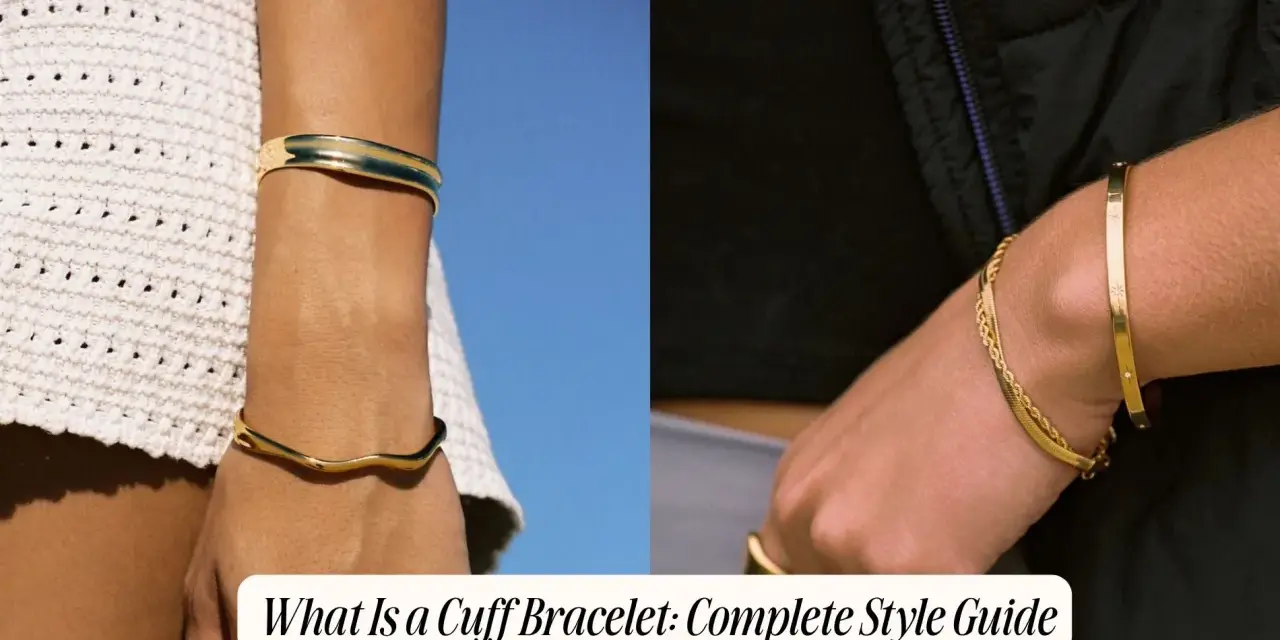
A cuff bracelet is one of the easiest wrist pieces to recognise at a glance, and understanding what a cuff bracelet is helps you judge fit, comfort, and style without getting distracted by marketing language. In this guide I break down the shape itself, how it differs from bangles and chain bracelets, which materials work best, and what to check before you buy one in the UK. I also cover the small details that separate a piece you wear once from one you reach for constantly.
The essentials at a glance
- A cuff bracelet is usually a rigid or semi-rigid band with an open side that sits around the wrist.
- Its open shape makes it easier to put on than a closed bangle, but fit matters more than most people expect.
- Common versions are made from sterling silver, gold, plated metal, leather, or mixed materials.
- In the UK, fashion cuffs often start around £20-£65, while precious-metal pieces can move into three or four figures.
- The best cuff balances width, weight, and opening size so it feels secure without pinching or spinning.
A cuff bracelet is a structured band that frames the wrist
In jewellery terms, a cuff is a bracelet designed to hold its shape rather than drape like a chain. Most cuffs are open-ended, so you slide them on from the side of the wrist and let the gap do the practical work. That open construction is what gives the piece its character: it feels architectural, deliberate, and a little more sculptural than an ordinary bracelet.
I usually think of cuffs as the meeting point between ornament and structure. A slim polished cuff reads clean and minimal; a wider one makes more of a statement; a textured or engraved version adds personality without needing gemstones. The important thing is that the form is visible even before the decoration is noticed, and that is what gives the cuff its place in jewellery style.
One small nuance matters here: some brands use the term loosely for any rigid wrist piece, even if it has a hinge or a partial closure. In everyday use, though, the classic cuff is the open style, and that is the version most readers are usually trying to identify. Once that shape is clear, the next step is seeing how it differs from the other wrist styles people mix up with it.
It looks similar to a bangle, but the fit and structure are different
The confusion between cuffs and bangles is understandable, because both are rigid and both can be worn alone or stacked. The difference is in the opening and how the piece behaves on the wrist. A bangle is typically a closed ring that slips over the hand or hinges shut, while a cuff usually has an opening that makes it easier to put on and take off.
| Style | Structure | How it feels on the wrist | Best for |
|---|---|---|---|
| Cuff bracelet | Rigid or semi-rigid, open-ended | Secure but often slightly adjustable | Statement looks, easy wear, sculptural styling |
| Bangle | Closed circle or hinged ring | More fixed in shape, often looser in movement | Stacking, classic minimal styling, smoother silhouette |
| Chain bracelet | Flexible links with a clasp | Soft, drapey, and adaptable | Everyday wear, layered looks, lighter visual weight |
The practical difference is more than technical. A cuff can change the line of your outfit because it has presence; a chain bracelet usually blends in more easily; a bangle sits somewhere in between depending on width and finish. If you want one piece to feel bold and intentional, the cuff is usually the strongest option. If you want movement and softness, a chain bracelet usually wins. With that distinction in place, material choice becomes much easier to read.
Material and finish change the entire mood
A cuff is not one look. The same basic shape can feel modern, romantic, bohemian, or formal depending on what it is made from and how it is finished. I pay attention to that combination first, because it tells me far more about the piece than the label does.
| Material or finish | What it suggests | What to watch for |
|---|---|---|
| Polished sterling silver | Cool, clean, versatile | Can show scratches over time, but polishes well |
| Gold or gold-plated metal | Warm, classic, often dressier | Plating needs gentler care than solid gold |
| Hammered or brushed metal | Textured, artisanal, slightly less formal | Usually hides minor wear better than mirror polish |
| Leather | Relaxed, earthy, sometimes unisex | Should stay away from water and heavy perspiration |
| Gemstone or mixed-media design | Decorative, expressive, often statement-led | Check that stones sit securely and do not catch on sleeves |
For me, hammered finishes are especially practical because they age more gracefully than highly reflective surfaces. A gemstone cuff can be striking, but it only works if the setting is well made; otherwise the design looks precious in theory and fussy in real life. Once you know the material language, choosing the right cuff for your own wrist and wardrobe becomes much more straightforward.
The right cuff should suit both your wrist and your routine
Fit is where many people get cuff bracelets wrong. Because the design is open, it is tempting to treat it as flexible enough to solve itself, but that is not true. A good cuff should slide on without force, sit securely without digging in, and stay visually balanced rather than looking squeezed or overly loose.
- Choose a shape that follows your wrist line. A slightly curved cuff often sits more naturally than a flat one.
- Check the opening. It should feel intentional, not like a gap that was left by mistake.
- Match the weight to your habits. If you type, travel, or wear watches often, a very heavy cuff can become annoying quickly.
- Think about proportion. Slim wrists usually suit slimmer or more tapered cuffs, while broader wrists can carry wider designs more easily.
- Pick a finish that works with your everyday jewellery. A matte cuff can soften a bold outfit; a polished one sharpens it.
If a cuff needs frequent bending to stay on, it is probably not the right piece. Repeated adjustment weakens the metal over time, and that is especially true for softer alloys. I would rather see someone choose a slightly different size or profile than keep forcing the same bracelet into shape. Once the fit is right, styling is the part that makes the cuff feel effortless rather than technical.
Styling a cuff works best when the rest of the wrist stays disciplined
The cuff is strongest when it has visual room. Because it already has structure, it usually does not need competing pieces on the same wrist. That does not mean you must keep everything minimal, but it does mean you should be selective about what shares the space.
Here is how I would style it in real life:
- Wear a wide cuff with a simple knit, blazer, or sleeveless dress so the shape stays visible.
- Pair a slim cuff with a chain bracelet only if the finishes complement each other.
- Keep a bold cuff on one wrist and a watch on the other if you want balance without clutter.
- Use textured cuffs with plain clothing, because busy fabrics can fight with the bracelet’s outline.
- Let one strong cuff do the work at formal events instead of stacking several small pieces that blur together.
In other words, the cuff should look chosen, not crowded. That single decision often matters more than the rest of the styling combined. After styling, the final piece of the puzzle is care and buying detail, especially if you are choosing one in the UK market.
Good buying and care habits matter more than the label on the box
In the UK, cuff prices vary widely. Fashion cuffs and plated designs often sit around £20-£65, sterling silver pieces are commonly found around £80-£150, and solid gold or designer cuffs can move well above £1,000, with some heavy gold pieces reaching around £3,000 or more. That range is normal; what matters is whether the price matches the metal weight, workmanship, and finish.
When I am checking quality, I look for three things first: clean edges, a secure opening, and honest metal information. For precious metals, proper hallmarks and clear descriptions are essential. For plated or fashion pieces, I want to know how thick the plating is and whether the surface is likely to handle daily wear. The cuff’s shape makes flaws easy to see, so poor finishing shows up fast.
- Keep plated cuffs dry and away from perfume, hand cream, and cleaning products.
- Polish silver gently and avoid over-cleaning, which can wear detail away.
- Store rigid cuffs separately so they do not scratch each other.
- Do not force the opening wider and wider; that shortens the life of the piece.
- If the cuff has stones, inspect the settings regularly because the open design can catch on sleeves and bags.
A well-made cuff should feel like a finished object, not a compromise. That is the reason it keeps earning a place in jewellery collections: it is simple enough to wear often, but distinctive enough to change the whole line of an outfit. If you remember only one thing, make it this: the best cuff is the one that fits cleanly, suits your wardrobe, and looks more considered the longer you wear it.